Chipotle just had its best sales day ever, and the reason had almost nothing to do with a new menu item. A single marketing stunt was enough to spike demand past anything a normal promotional calendar could produce, according to reporting on the campaign. For anyone who runs a brand, that's the real story: a well-designed moment can outperform months of steady-state marketing spend, if the brand's systems are ready to catch the attention it generates.
This matters beyond fast food. Any founder, CMO, or growth lead watching a Chipotle marketing stunt turn into a record sales day should be asking the same question: what would happen if our brand created a moment like this tomorrow? Would the website hold up? Would the offer be clear in three seconds? Would social media carry it further, or would it stall?
Short Stereo works with brands on exactly this intersection of design, motion, and digital experience, the unglamorous infrastructure that decides whether a big marketing moment converts or just trends for a day. With that lens, here's what the Chipotle stunt actually teaches, and how to apply it to your own brand this week.
What the Chipotle Marketing Stunt Actually Was
The core mechanic was simple: a bold, limited, easy-to-understand promotional moment, timed and packaged to spread on its own. It wasn't reliant on a huge paid media budget. It relied on clarity, timing, and a hook simple enough that people wanted to talk about it before they'd even tried it.
That's the pattern behind most successful brand stunts, regardless of industry: a clear idea, a tight window, and a payoff that's easy to explain in one sentence. Complexity kills stunts. If a customer has to read three paragraphs to understand the offer, the moment is already dead.
Restaurant marketing ideas often fail for the opposite reason of “not enough budget”, they fail because the offer is muddy, the window is vague, or the brand treats the stunt as a discount bolt-on instead of a designed experience. Chipotle's best sales day ever is a reminder that experiential marketing and digital brand identity have to move together.
Why a Stunt, Not an Ad Budget, Broke the Sales Record
Paid media can amplify a weak idea; it rarely turns a weak idea into a cultural moment. The Chipotle sales record story is less about spend and more about participation: people had a reason to act now, tell someone, and share the moment. That is growth marketing at the level of psychology, not just media mix.
The Psychology of a Limited-Time Moment
Scarcity and timing do work that ad spend alone can't. A limited window creates urgency; urgency creates conversation; conversation creates reach that a media budget would otherwise have to buy. The stunt effectively turned customers into distribution, a classic guerrilla marketing dynamic updated for social feeds and app-based ordering.
Limited-time offers (LTOs) only work when the constraint is real and the payoff is obvious. Fake urgency trains audiences to ignore you. Real urgency, paired with a simple hook, is what makes a viral marketing campaign feel worth joining rather than worth scrolling past.
Why Timing Beat Spend
Chipotle didn't need a bigger ad budget to beat its own sales record, it needed a moment worth reacting to. That's a lesson worth sitting with: marketing effectiveness is increasingly about designing a moment people want to participate in, not about outspending competitors on the same tired formats.
Social media stunt marketing works when the brand already has enough trust that the audience is willing to play along. Without that trust, a stunt looks like a gimmick. With it, the same mechanic looks like a gift. Brand loyalty programs, app ecosystems, and consistent visual identity all quietly load the gun before the stunt ever fires.
7 Lessons Every Brand Can Take From Chipotle's Playbook
These lessons apply whether you run a QSR chain, a D2C brand, or a B2B product. The scale changes; the design principles do not.
1. Design the Moment, Not Just the Menu
Treat the promotion itself as a designed product, with a beginning, a peak, and an end, rather than a bolt-on discount. A Chipotle marketing strategy moment works when the campaign has structure: how it launches, how it peaks, and how it closes cleanly so it doesn't dilute the brand afterward.
Ask: what does the customer do in the first ten seconds? What do they screenshot? What do they tell a friend? If those answers are fuzzy, you have a discount, not a moment. Brand experience design starts with that storyboard, not with a media plan.
2. Make the Offer Impossible to Misread
If your audience needs more than a glance to understand what's on the table, the offer is too complicated. Simplicity is what makes a stunt shareable. One sentence should carry the whole idea, no footnotes, no multi-step conditions that only make sense on a landing page.
- One hook, not three stacked incentives fighting for attention
- One action, order, claim, show up, or share, not a maze
- One window, so urgency is real and the story has an end
Fast-casual branding wins when the customer can retell the offer without opening the app twice. That same standard applies to software free trials, limited drops, and event-based campaigns.
3. Let Social Media Do the Amplifying
The best stunts are built assuming they'll be filmed, screenshotted, and reposted. Design for that from day one instead of treating social as an afterthought. Creative should look good in a vertical frame. Captions should work as standalone posts. The brand voice should be ready to reply in real time as the moment spreads.
If your team only schedules content a week ahead and cannot react same-day, you are not built for stunt-scale attention. Pair the creative system with social media systems built for moments like this so amplification is an operating capability, not a scramble.
4. Build the Digital Experience Before the Rush Hits
A stunt is only as good as the ordering flow, landing page, or checkout behind it. If the site or app buckles under sudden demand, the brand moment turns into a brand complaint. Customer experience design is not a separate workstream from the campaign, it is the campaign's conversion layer.
Stress-test capacity, simplify paths to purchase, and remove friction that only shows up when traffic spikes. A confusing offer, a slow website, or a broken promo code can erase the goodwill the stunt just bought. This is where brand experience design on the web either protects the moment or wastes it.
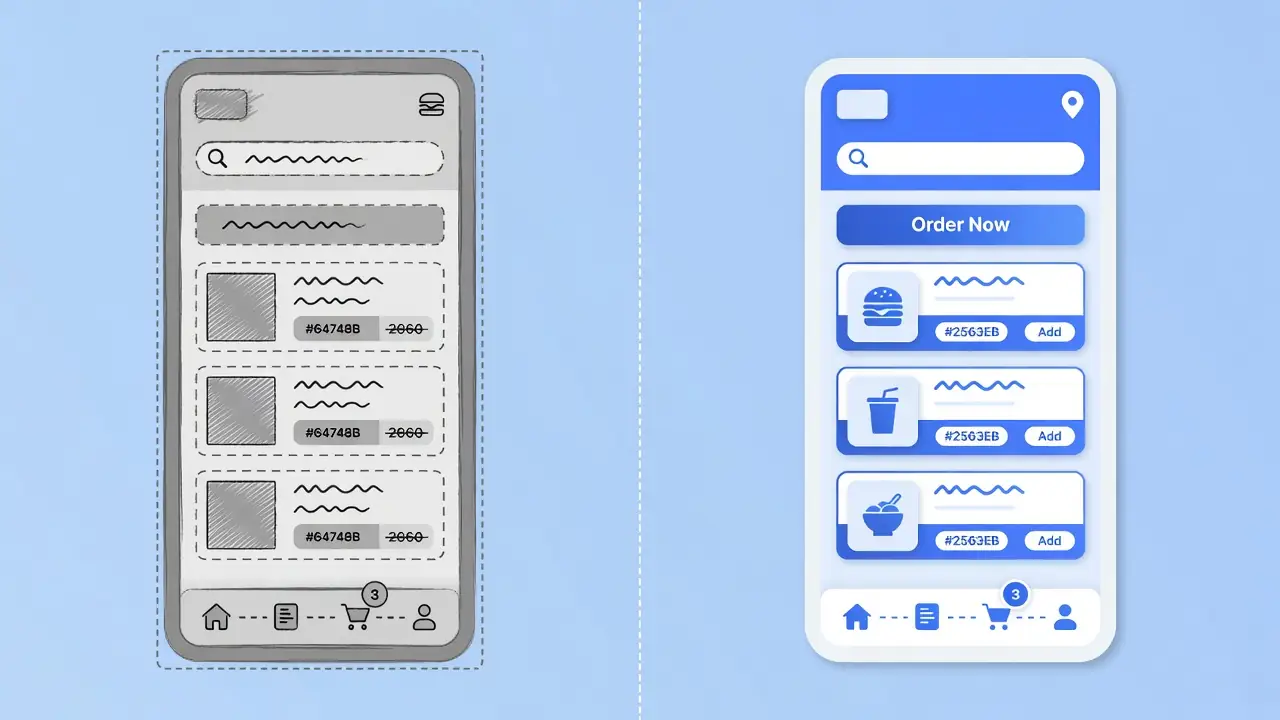
5. Treat the Stunt as a Brand System, Not a One-Off
The strongest brands repeat this kind of moment on a cadence, building an expectation with their audience that something worth paying attention to is coming again. That does not mean constant gimmicks. It means a system: visual language, offer architecture, social playbooks, and measurement that can be reused.
A Chipotle rebrand conversation often focuses on logos and colors. The deeper rebrand is operational: can the brand run high-attention moments without reinventing process every time? Digital brand identity plus playbooks beats hero-campaign heroics.
6. Measure Beyond the Single Day
A record sales day is a headline. The real win is what it does to repeat visits, app downloads, or loyalty sign-ups in the weeks after. Track that, not just the spike. Otherwise you optimize for fireworks and miss whether the stunt built a habit or only a blip.
- Day-of revenue and order volume (the headline metrics)
- App installs, loyalty enrollments, and email/SMS opt-ins
- Repeat purchase rate and cohort behavior over the next 2, 4 weeks
- Sentiment and share of voice, did the moment help or hurt trust?
7. Know When a Stunt Fits Your Brand, and When It Doesn't
Not every brand should chase a viral moment. A stunt has to match the tone and trust level customers already have with you, or it can feel forced instead of fun. Luxury brands, regulated categories, and early-stage startups with thin trust all face different risk profiles.
If your brand promise is calm reliability, a chaotic flash sale may undercut the very equity you spent years building. If your brand is playful and participatory, silence during a cultural window can feel like absence. Fit is strategy, not morality, choose moments that reinforce who you already are.
What This Means for Branding and Experience Design
A moment like this puts pressure on three things at once: the brand's visual identity (does the promotion look and feel unmistakably “you”?), the digital experience (can the website or app absorb a traffic spike without breaking the illusion of ease?), and the social presence (is the brand ready to respond in real time as the moment spreads?).
Businesses that treat these as one connected system, rather than three separate departments, are the ones who can turn a single stunt into a record day. This is where experience design and branding strategy stop being separate line items and start being the same job.
Marketing trends will keep favoring participation over interruption. Brands that only buy attention will keep losing to brands that design something people want to join. That shift rewards teams who can ship clear offers, durable design systems, and AI-assisted content and growth workflows that keep the conversation going after the spike cools.
Your 1-Week Action Checklist
Use this as a practical sprint, not a deck. One week is enough to stress-test readiness even if you don't launch yet.
- Pick one clear, limited-time hook, no more than one sentence to explain
- Stress-test your website or ordering flow for a sudden traffic spike
- Brief your social team to react in real time, not just to schedule posts in advance
- Set a measurement plan that looks past the single day
- Decide, honestly, whether this stunt fits your brand's existing trust with customers
If your brand is planning its own version of this kind of moment, the parts most likely to break are rarely the idea, they're the website, the social systems, and the follow-through. That's the layer Short Stereo works on: brand and website experience design, social media systems built to react in real time, and AI-assisted content workflows that keep momentum going after the spike.
Conclusion
Chipotle's record sales day is a reminder that a marketing stunt lives or dies on execution, not budget size. The brand-side decisions, how clear the offer is, how ready the digital experience is, how fast social can amplify it, decide whether a moment becomes a headline or a missed opportunity.
Any business, in any category, can apply the same design thinking the next time it wants a moment worth talking about. Design the moment, make the offer impossible to misread, prepare the digital path, let social amplify, measure past day one, and only run the stunt if it fits the brand you already own. That is the Chipotle marketing stunt playbook reduced to something you can actually use.
How Short Stereo Helps Brands Apply This
At Short Stereo, we turn insights like these into design systems, digital experiences, and content workflows that stay on-brand, so strategy does not stop at the article.
Frequently Asked Questions
What made Chipotle's stunt work so well?
A simple, easy-to-understand offer combined with tight timing, which made it easy for customers to talk about and share without needing an explanation.
Can smaller brands run a stunt like this?
Yes, the mechanics (clarity, timing, and a digital experience ready for demand) matter more than budget size, which makes this approach accessible to smaller brands too.
Is a marketing stunt the same as a rebrand?
No. A stunt is a time-limited moment; a rebrand is a longer-term shift in identity. A stunt can support a brand, but it isn't a substitute for a consistent brand system.
How do you measure whether a stunt actually worked?
Look past the single-day sales number. Repeat visits, app downloads, and loyalty sign-ups in the following weeks are better indicators of lasting impact.