Every month, marketers hunt for the best campaigns that actually cut through. Famous Campaigns' roundup of the 15 best campaigns we saw in April is useful less as a trophy list and more as a pattern library: KitKat headline theater, river-shaped identity systems, guerrilla truth-telling, and experiential ideas people film on sight.
This article reframes April's strongest work for founders, CMOs, and design leads. Short Stereo works with brands on website design, social systems, video, and AI content when campaign ideas need to become durable identity systems, but the first job here is extracting seven practical lessons from the month's standout campaigns.
What Made April's Best Campaigns Worth Studying?
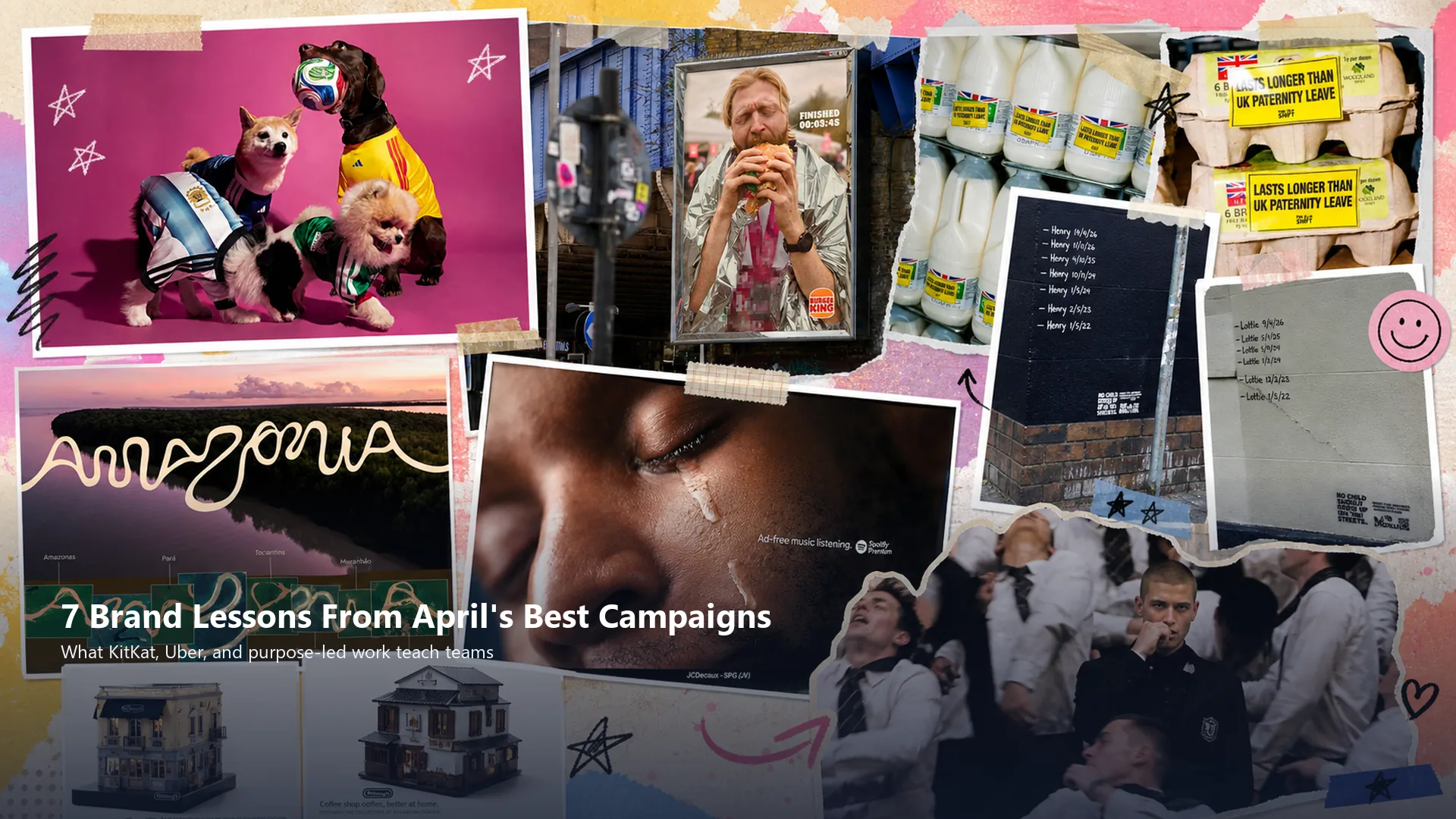
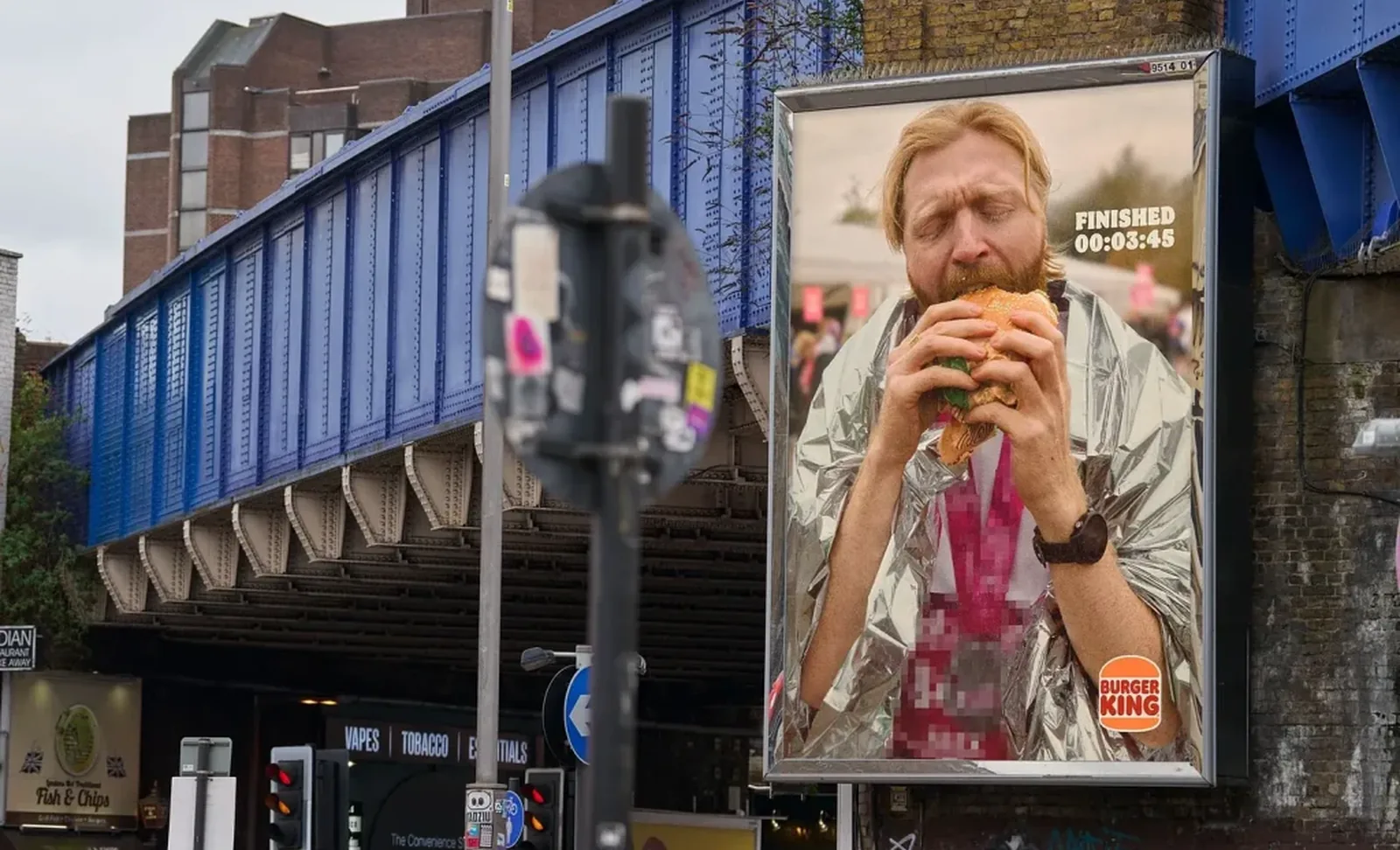
The April roundup mixes PR-ready moments and crafted brand systems. Nestlé's KitKat story showed how a stolen truckload of product can become free marketing when memes and brand responses take over the agenda. Elsewhere, a Brazilian Amazon identity project built letterforms from the real curves of the river using satellite imagery. The Dad Shift used guerrilla stickers, posters, and balloons to make UK paternity leave feel instantly visible. Experiential and OOH ideas, from Uber Reserve's holiday sunbed scramble to National Geographic bee hotels, proved that physical cleverness still feeds social distribution.
Across those examples, the winners shared one trait: the idea was simple enough to retell, and the craft was strong enough to believe.
1. Turn Real Moments Into Brand Theater
KitKat's theft-to-meme arc is a reminder that brands do not always invent the story. Sometimes they inherit it. The branding decision is whether you freeze, deny, or stage a response that feels on-brand. Growing companies should keep a light response playbook for unexpected headlines so social and PR do not invent a new personality under pressure.
Practical move
Write three approved response frames before you need them: clarify, playfully acknowledge, or redirect to product truth.
2. Make Identity Systems Do Cultural Work
The Amazon River identity project is a craft lesson: digital brand identity can carry place, meaning, and recognition without a long manifesto. Most brands still treat logos as static files. April's best design work treated identity as a system that can generate letters, patterns, and stories.
If your mark cannot flex across packaging, social, and motion, campaign ideas will always feel bolted on.
3. Use Guerrilla Clarity for Hard Truths
Dad Shift's "Things That Last Longer Than UK Paternity Leave" worked because the insight was uncomfortable and the format was public. Guerrilla clarity beats soft purpose language when the audience already knows the problem. Brands tackling policy, trust, or category friction should look for one visual device that makes the truth unmissable.
4. Design Experiences People Can Film
Uber Reserve's sunbed scramble and National Geographic's living bee boards succeed because they are naturally shareable. Experience design is not only an app flow. It is the physical or spatial moment that becomes content. Before you brief an activation, ask what a phone camera will capture in three seconds.
Then make sure your website design continues the same story after the clip ends.
5. Align Social, OOH, and Website Destinations
April's strongest campaigns rarely lived in one channel. Outdoor devices, social memes, and brand responses all pointed toward recognition. Growing teams often break that chain: a clever Reel, a mismatched landing page, and no follow-up offer. Align creative, destination, and CTA before launch.
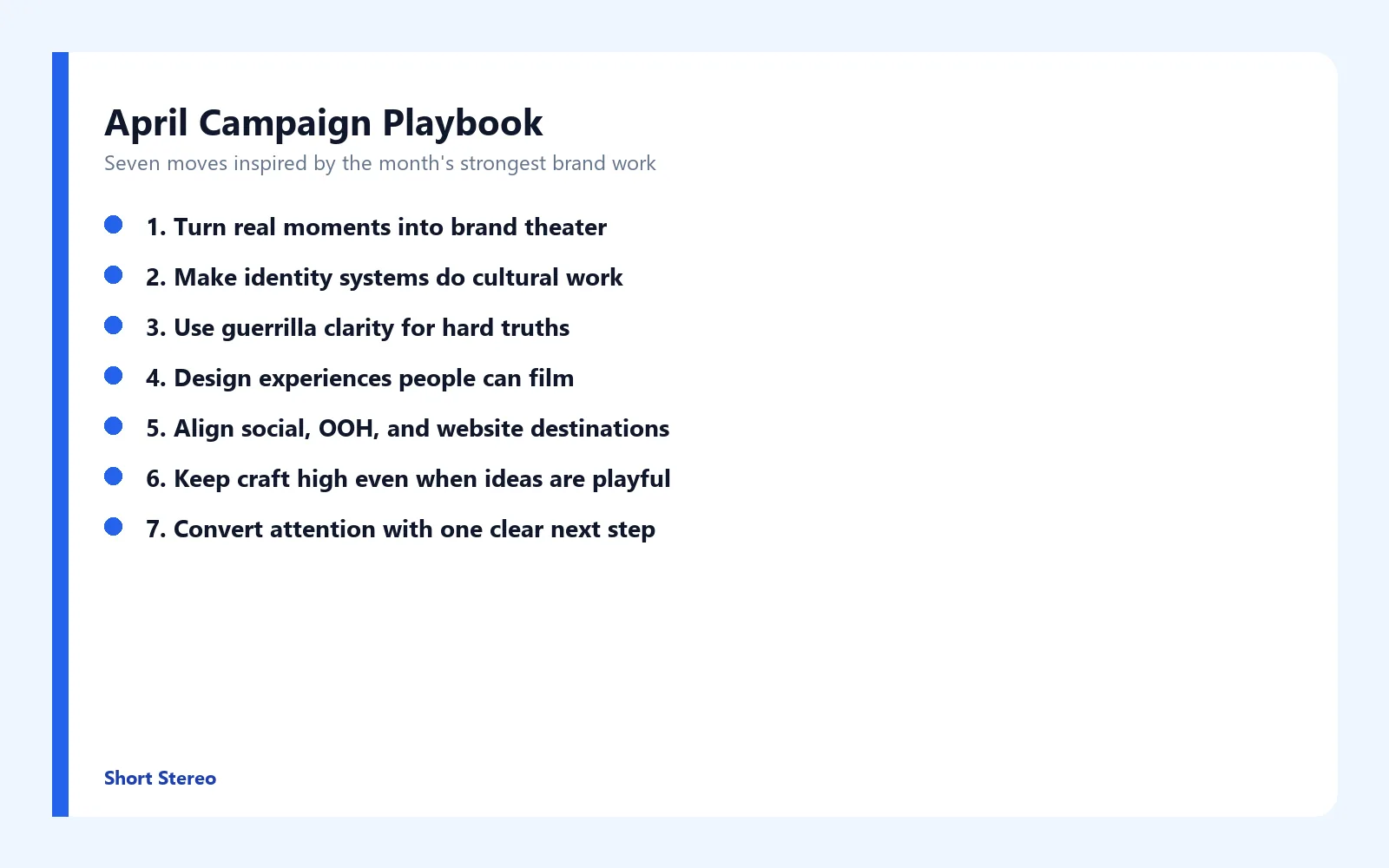
6. Keep Craft High Even When Ideas Are Playful
Playfulness without craft looks cheap. Craft without a sharp idea looks expensive and forgettable. April's best work balanced both: music-video level production in some cases, and simple sticker systems in others. Match craft level to the idea's ambition, then stay consistent across every touchpoint.
7. Convert Attention With One Clear Next Step
A best-campaign roundup can create false confidence: if it went viral for them, it will work for us. Attention still needs a destination. Pair every campaign idea with one next step and support faster iteration with AI content workflows that stay on approved brand language.
How Short Stereo Helps Brands Apply April's Campaign Lessons
After a roundup like the 15 best campaigns we saw in April, the brands that benefit are the ones that translate patterns into process: sharper briefs, clearer identity rules, and social systems that can ship. Short Stereo helps teams connect those pieces so inspiration becomes recognition, and recognition can become a next step.
Conclusion
April's best campaigns, from KitKat headline theater to Amazon River identity craft, Dad Shift guerrilla clarity, Uber experiences, and National Geographic's living OOH, show that attention still follows simple ideas with strong craft. Brand leaders should borrow the patterns, not the budgets: real-moment theater, flexible identity, filmable experiences, aligned destinations, and one CTA. None of these moves guarantee rankings, sales, or virality. They improve the conditions under which good work can travel. If you want help turning that playbook into design and content execution, visit shortstereo.com.
Frequently Asked Questions
How can a design agency help with the best campaigns you saw?
A design agency helps translate roundups like April's best campaigns into systems your team can actually run: clearer brand identity, social and video templates, and website experiences that convert attention after a clever idea lands. The goal is not to copy KitKat or Uber stunts. It is to make your next idea travel with craft and a destination.
What branding changes should businesses make after studying the best campaigns?
Tighten digital brand identity so playful ideas still look intentional, align OOH and social with website UX, and build response playbooks for unexpected PR moments. April's strongest work rewarded brands that could move fast without looking unfinished once people clicked through.
How to use social media and video content for campaign ideas like April's best?
Treat social and video as the distribution layer for one sharp idea: short clips, repeatable formats, and end cards that send people to one page. Guerrilla and experiential concepts travel best when the capture assets are designed before the stunt goes live.
Which April campaigns are most useful for growing brands to study?
Useful case patterns include KitKat turning a theft headline into brand theater, Amazon River-inspired identity craft, Dad Shift's guerrilla clarity on paternity leave, Uber Reserve's experiential sunbed scramble, and National Geographic's living bee billboards. Study the pattern, not just the production budget.
Do best-of-month campaign lists guarantee results for my brand?
No. Roundups are inspiration, not a promise of rankings, sales, or virality. The practical value is spotting reusable principles: cultural timing, identity systems, experience design, and a clear next step after attention arrives.