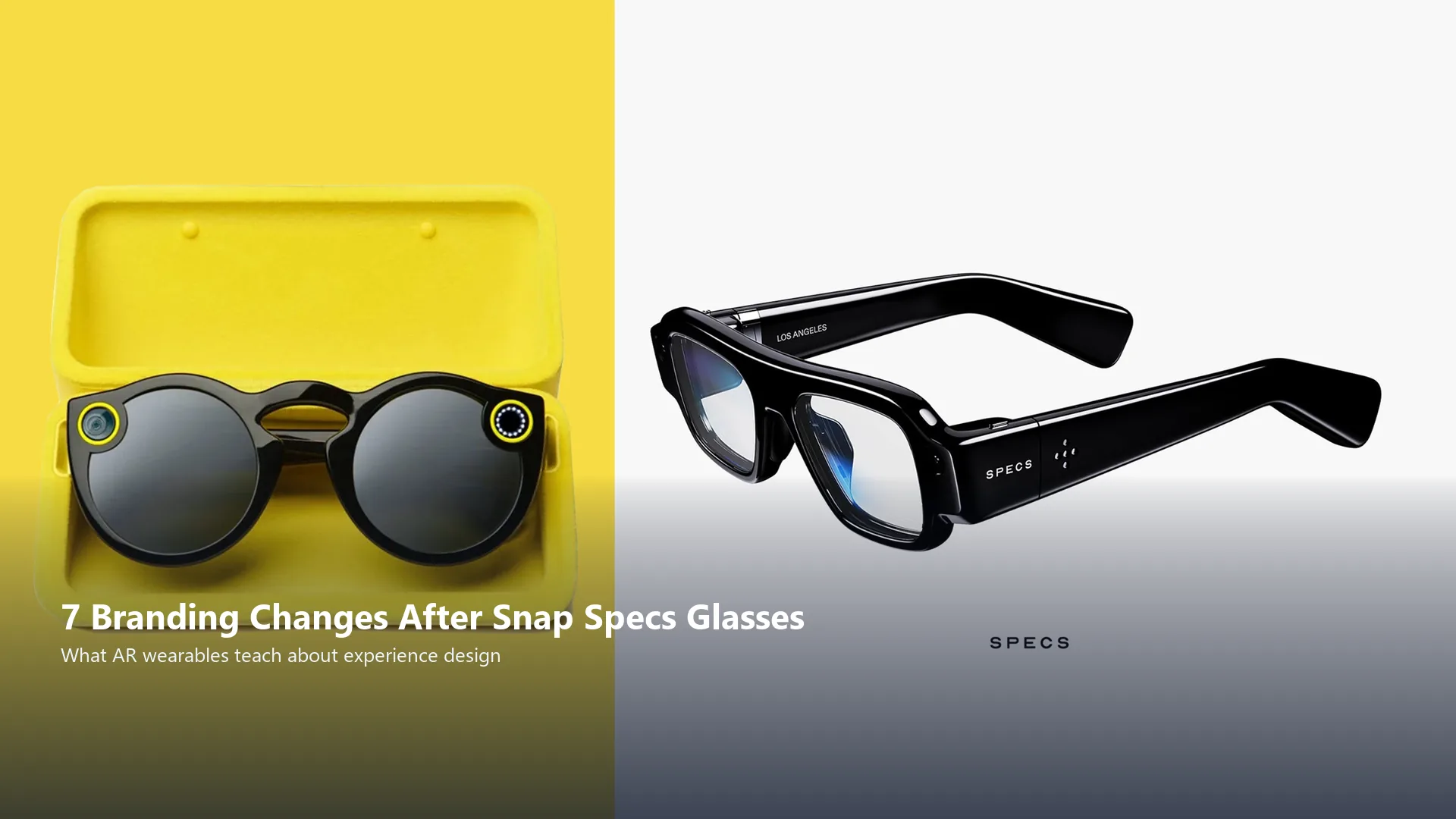
Snap's Snap Specs glasses are now in pre-order conversations, and Verizon is offering wearable data plans around them. That is not only a gadget launch. It is a branding and experience-design signal: AR is being sold as a connected product with retail demos, financing paths, and glanceable interfaces.
This article reframes the Snap Specs news for founders, CMOs, and design leads. Coverage points to standalone AR glasses priced around $2,195, a Connected Case bundle near $2,395, and Verizon plans starting around $10 a month for existing customers or $20 for others. Short Stereo works with brands on website design, social systems, video, and AI content when those pieces need to move together, but the first job here is translating the launch into seven practical branding changes.
What Happened With Snap Specs Glasses and Verizon?
Snap opened consumer pre-orders for Specs, its standalone AR glasses, with shipping expected later in the fall for markets including the United States, United Kingdom, and France. The frames are positioned as self-contained wearable computers with see-through displays, dual processors, voice and gesture controls, and prescription-ready options. Verizon enters as the exclusive U.S. carrier partner for connected-case data plans, store try-ons, and financing support.
Enterprise partners such as Nvidia, AWS, and Salesforce also appear in the broader Specs narrative. That mix matters for brand teams: consumer curiosity and workplace proof are traveling in the same news cycle.

1. Rewrite Offers for Glanceable, Heads-Up Reading
AR glasses train people to scan short, contextual information. Dense homepage paragraphs start to feel outdated next to that expectation. Brands should rewrite offers so the promise, proof, and next step fit a glanceable hierarchy on phones first, then scale to wearable contexts later.
Practical move
Audit your top three landing pages for first-screen clarity. If a stranger cannot explain your offer after five seconds, Snap Specs-era attention will bounce.
2. Redesign Website UX for AR-Curious Traffic
Pre-order news sends mixed intent: price questions, carrier questions, comparison shopping, and "is this real?" skepticism. Your website design should answer those intents with modular sections, demo media, and one primary CTA instead of a novelty splash page.
Also prepare for partner-path traffic. If customers discover you through a retail, carrier, or marketplace story, the site has to continue the same language they just heard.

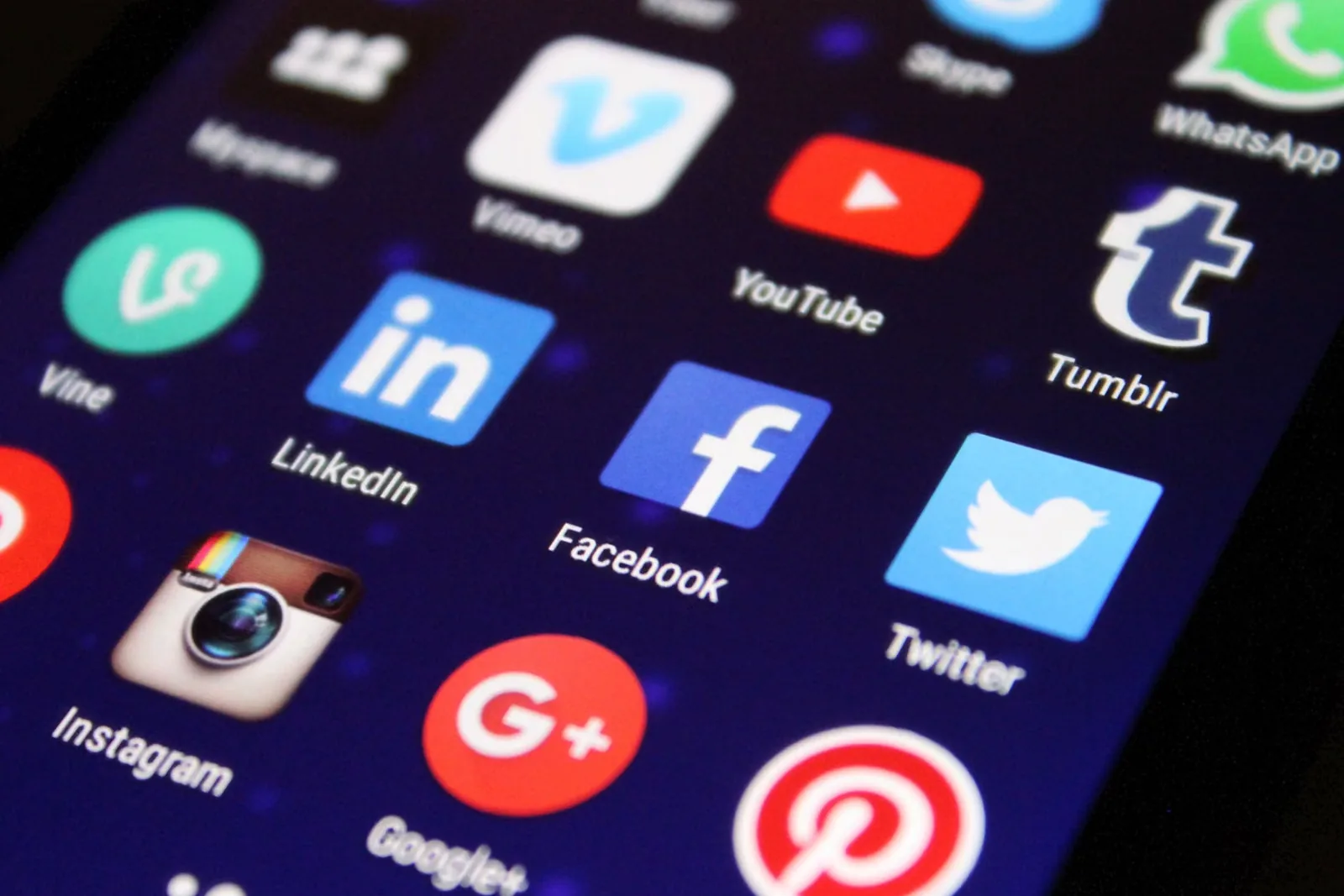
3. Build Social and Video Demos of Real Use
People Also Ask interest already points to social media and video content around Snap Specs glasses. Brands should take the hint. Abstract lifestyle montages underperform next to demos that show a real task: navigation, translation, shopping assistance, or workplace guidance.
- Film 15 to 30 second clips that start with the problem, not the product logo
- Keep end cards identical across posts so recognition compounds
- Send every strong clip to one page, not three competing offers
4. Update Digital Brand Identity for Wearable Scale
Logo systems designed only for websites and billboards can fail on tiny lenses, status chips, and muted autoplay. Digital brand identity after Snap Specs glasses should include high-contrast marks, short wordmarks, and motion rules that stay legible in first-person video.
If your brand still relies on long taglines to feel premium, compress them. Wearable interfaces reward clarity over poetry.
5. Treat Carrier and Retail Partners as Brand Channels
Verizon's role, try-ons at select stores, financing options, and connected-case pricing show that distribution is part of the brand experience. Many companies still treat partners as a sales footnote. In a wearable launch, the partner channel becomes a trust signal and a demo stage.
Map every partner touchpoint: who owns the script, which creative assets travel, and which URL captures interest after the demo. Inconsistency here creates the feeling that the product is unfinished even when the hardware is not.
6. Prepare an Enterprise Story, Not Only a Consumer Ad
Specs coverage also points toward enterprise collaboration. Even if your company is not selling AR hardware, buyers now ask how new interfaces change training, field service, retail, or creative workflows. Have a short B2B narrative ready: problem, workflow, proof, next step.
- Name one workplace use case your category can honestly support.
- Show the handoff from wearable moment to software or service.
- Keep privacy language plain because wearable cameras raise trust questions quickly.
7. Connect AR Attention to One Clear Next Step
Curiosity about Snap Specs glasses will not automatically become pipeline for unrelated brands. The businesses that benefit are the ones that intercept adjacent intent with a useful explanation and a single CTA: book a demo, compare plans, download a guide, or start a project.
Support that path with AI content workflows that stay on approved brand language so your team can publish demos and FAQs quickly without inventing a new voice every week.
How Short Stereo Helps Brands Respond to Snap Specs Moments
After a launch like Snap Specs glasses, the winners are rarely the teams that publish the fastest press-style post. They are the teams that update identity, demos, and destinations together. Short Stereo helps connect website experience, social and video systems, and AI-assisted content so wearable-era attention can become recognition and a next step.
Conclusion
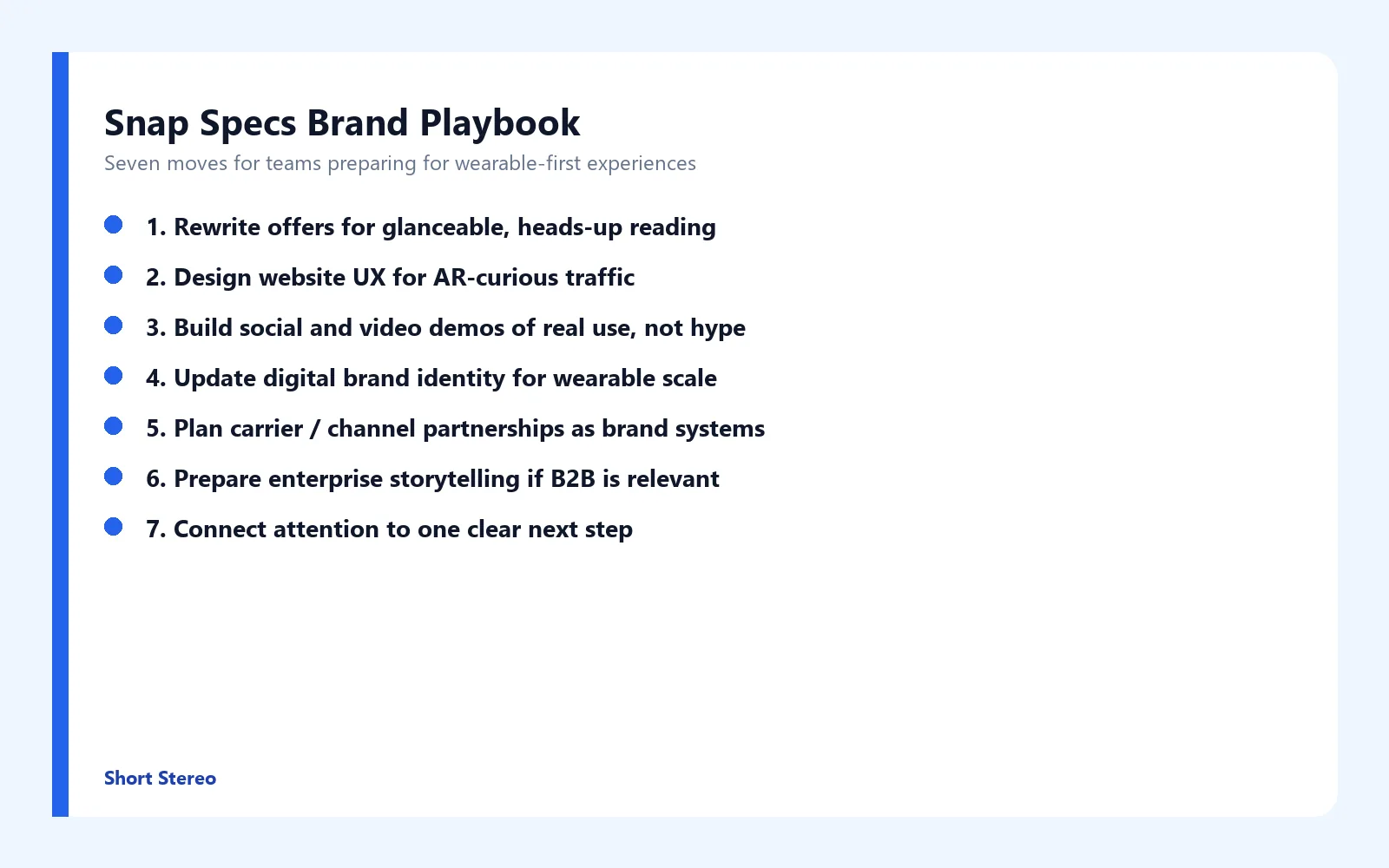
Snap Specs glasses and Verizon's data-plan push mark a shift from AR as spectacle to AR as a connected product with retail and partner paths. Brand leaders should respond with glanceable offers, stronger website UX, real-use social video, wearable-ready identity, partner-channel discipline, enterprise storytelling, and one clear CTA. None of these moves guarantee rankings, revenue, or conversions. They improve the conditions under which curiosity can turn into trust. If you want help turning that playbook into design and content execution, visit shortstereo.com.
Frequently Asked Questions
How can a design agency help with Snap Specs glasses?
A design agency helps translate Snap Specs glasses hype into usable brand systems: clearer product storytelling, website experiences that explain wearable value in seconds, and social or video templates that show real use instead of vague futurism. The goal is not to copy Snap's hardware. It is to make your own offer readable when customers arrive curious about AR and connected wearables.
What branding changes should businesses make after Snap Specs glasses?
After Snap Specs glasses enter pre-order conversations, businesses should tighten digital brand identity for glanceable screens, simplify offers for heads-up reading, and align website UX with social demos. Carrier-style partnerships and enterprise tech stories also raise the bar for trust signals. Update packaging, landing pages, and content cadence so wearable curiosity converts into a clear next step.
How to use social media and video content for Snap Specs glasses?
Use social media and video to show context, not just the product silhouette: on-face demos, before-and-after workflow clips, and short explainers of why connectivity matters. Pair those assets with one destination page and consistent end cards. Teams that need help packaging that into a repeatable system can lean on social media systems and AI content workflows that stay on approved brand language.
Why does Verizon's Specs data plan matter for brand teams?
Verizon's Specs data plans signal that AR glasses are being sold as connected products, not accessories. For brand teams, that means experience design now includes carrier channels, financing stories, and retail try-on moments. If your category could be bundled, demonstrated in-store, or explained through a partner network, your website and content need to support that path.
Are Snap Specs glasses only a consumer story?
No. Coverage also points to enterprise partnerships involving names like Nvidia, AWS, and Salesforce. That mix matters because B2B buyers watch consumer launches for proof that a platform is real. Brands in services and software should prepare both a public-facing story and a practical demo narrative for workplace use cases.