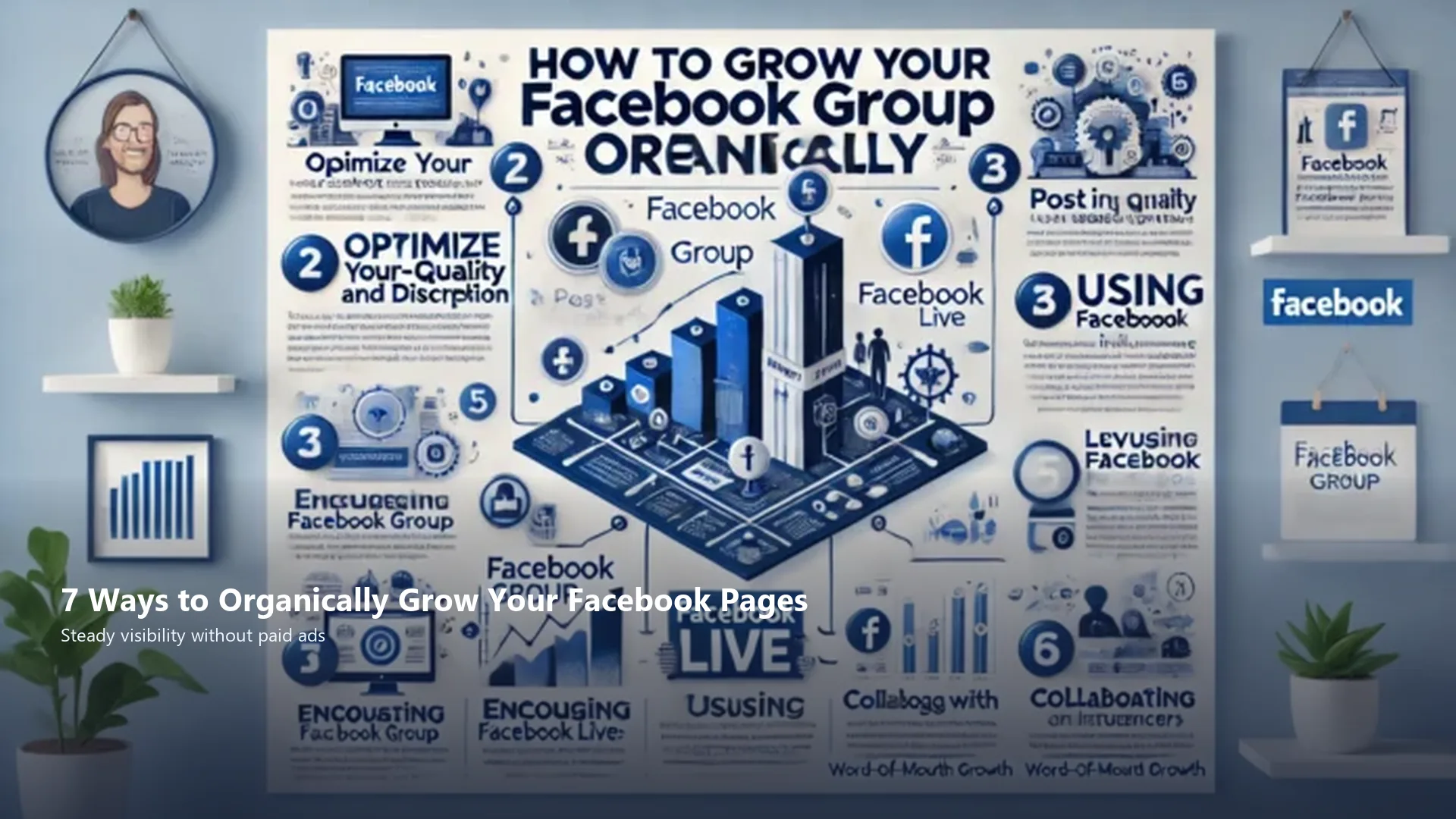
If you have asked how to organically grow Facebook pages, you are probably already posting a few times a week and still watching thin reach. Niche pages sit with a handful of followers. Product posts barely move. Budgets rule out ads. What you want is steady, linear visibility that makes the brand easier to find without buying every impression.

That exact pain shows up often in operator communities, including an r/socialmedia thread from someone running several niche Facebook pages for product visibility without paid ads. Teams that treat social as a designed system, spanning page identity, creative templates, video, and website follow-through, usually outperform teams that only upload more posts. The first job here is a practical playbook that never pretends follower counts are guaranteed.
Why Posting Alone Does Not Organically Grow Facebook Pages
Facebook distributes content that earns attention signals: watches, comments, shares, saves, and profile visits that convert into follows. Random posts with mixed offers and weak creative rarely earn those signals. Posting three times a week with unclear branding is still invisible if nobody stops, understands, or trusts the page.
The branding and experience-design question is simple: can a stranger understand the page promise in five seconds and trust the next click? If the answer is no, volume only amplifies confusion. Organic growth starts when the page feels like a coherent brand experience, then content earns distribution on top of that foundation.
1. Pick One Niche Promise Per Page, Not Seven Mixed Offers
Several niche pages can work if each page owns one clear promise. Mixing unrelated products on the same page confuses Facebook and visitors. Name the page after the outcome or category people search. Write the About section in plain language: who it is for, what it helps with, and what happens next.
When product visibility is the goal, the page should feel like a category expert, not a random shop window. That focus also helps Instagram and website messaging stay aligned, so people who discover you on one surface recognize you on another.
Practical move
Audit every page this week. If two products need different audiences, separate them. If they share one buyer, keep one stronger page and merge the rest. Rewrite the first three lines of About so a stranger can repeat your promise out loud.
2. Make the Page Look Like a Brand Storefront in Five Seconds
Organic growth stalls when the cover photo, profile image, and pinned post look unfinished. Digital brand identity is a growth asset because recognition reduces bounce. Match colors, logo usage, and offer language to your website design. Use real product or process photos over generic stock clutter.
Treat the cover as a billboard: outcome, audience, and proof cue. Treat the profile image as a logo lockup that stays readable at tiny sizes. Pin one post that explains the offer and shows a clear next step. Visitors who land from a Reel should feel they entered the same brand world, not a different business.
3. Post for Search Intent and Saves, Not Empty Volume
A few posts per week can work if each post answers a real question buyers ask. Teach, compare, show process, or prove results. Soft product mentions belong after value. Caption structure matters: clear headline, short paragraphs, one ask. Support drafting with AI content workflows, then edit for accuracy and brand voice.
Build a simple topic map from customer questions: how it works, who it is for, common mistakes, before/after stories, and comparison explainers. Those posts earn saves and shares because they help. Product catalogs alone rarely earn the same engagement, especially on cold audiences.
4. Design Thumb-Stopping Creative Systems, Not One-Off Posts
Organic distribution favors recognizable patterns. Build a small template set: educational carousel, before/after, myth vs fact, short demo cover. Keep type hierarchy readable on mobile. Brand accents in blue and clean whitespace help consistency without looking like spam.
Operators who rely on social media systems usually win because design decisions are made once and reused, not reinvented every upload. A system also speeds production when you are managing several niche pages, because each page can share layout rules while keeping its own niche promise.
Practical move
Create four reusable frames this month. Document fonts, margins, and logo placement. Then batch-produce two weeks of content in one sitting so cadence stays steady even on busy weeks.
5. Use Short Video and Reels to Earn Distribution Without Ads
Short video is often the fastest organic path when budgets block ads. Open on the problem or result in the first second. Keep branding visible. End with a next step: visit the site, message, or save the tip. Repurpose one strong demo into a Reel, a static tip, and a longer caption post.
Talk to the camera or show the product in motion. Add captions for silent scrollers. Keep length tight enough that completion rate stays healthy. Video does not replace branding. It amplifies a clear offer into more feeds. Without a coherent page destination, even strong clips leak attention.
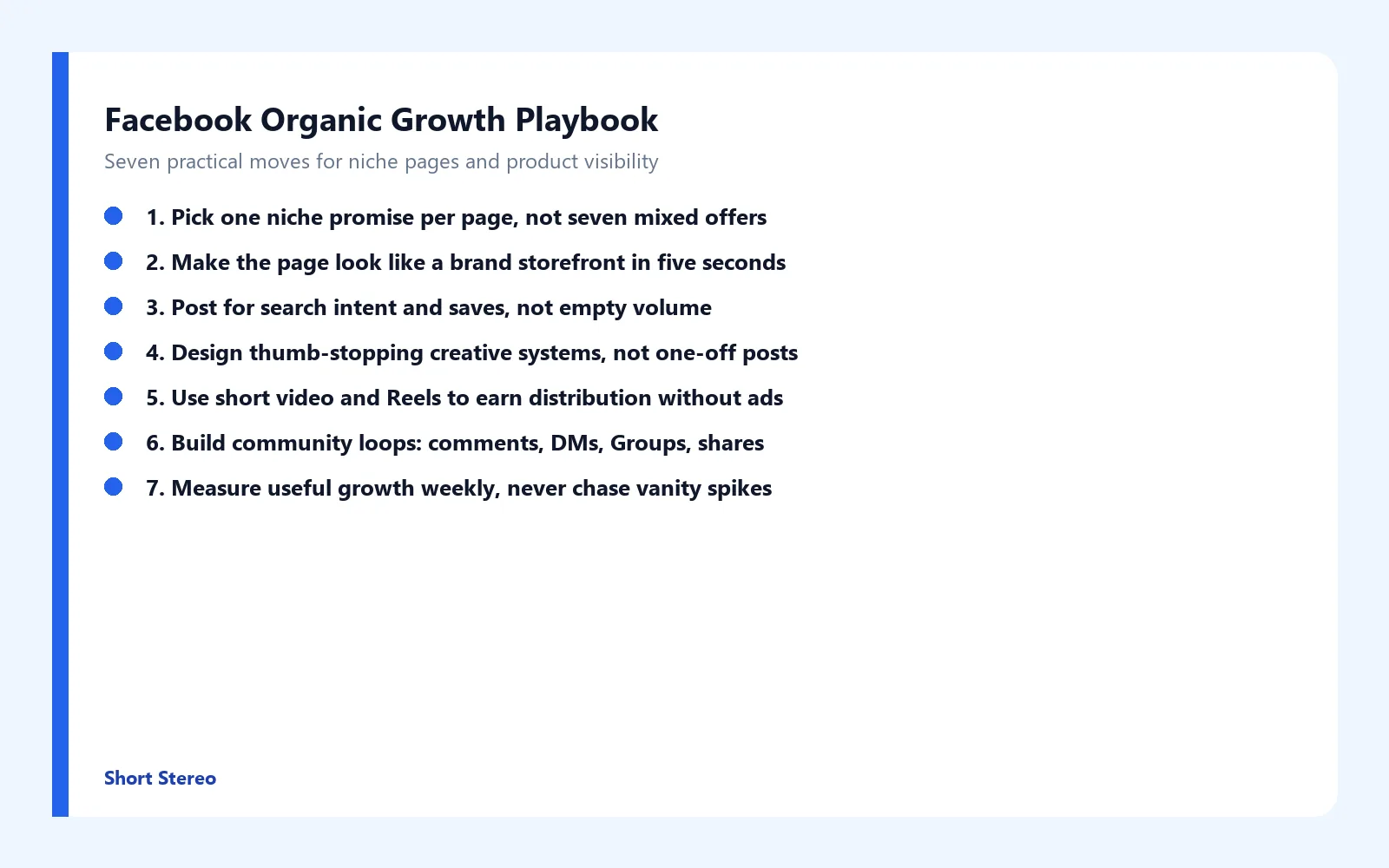
6. Build Community Loops: Comments, DMs, Groups, and Shares
Pages grow when people talk back. Reply to comments with specifics. Invite saves and shares when a tip is useful. If Groups fit your niche, contribute answers without hard selling. Product visibility improves when the page becomes a helpful hub, not a silent catalog.
Community loops also feed experience design: every repeated question becomes a better FAQ post, a website section, or a short video script. That feedback cycle is how organic channels get smarter over time without paid amplification.
7. Measure Useful Growth Weekly, Never Chase Vanity Spikes
Track profile visits, link clicks, message starts, saves, and follower change week over week. Linear growth is a valid goal. Ignore anyone promising overnight virality. What you can control is clarity, creative quality, cadence, and response speed. Those improve the conditions under which organic reach can rise.
Review one metric that connects to business outcomes each week, such as website sessions from social or inbound messages that mention a specific post. If reach rises while messages stay flat, tighten the offer and next step. If messages rise while the site under-converts, fix website UX next.
How Short Stereo Helps Brands Grow Organic Social Visibility
After founders ask how to organically grow Facebook pages, the teams that make progress usually fix niche clarity, page branding, and content systems together. Short Stereo helps connect those pieces so social visibility becomes easier to earn and easier to convert on the website.
Conclusion
You organically grow Facebook pages by making each page unmistakable: one niche promise, a brand-ready storefront, intent-led posts, reusable creative, short video, community loops, and honest weekly measurement. None of these moves guarantee followers, sales, or conversions. They improve the conditions under which people, and the algorithm, can trust you. If you want help turning that playbook into design and content execution, visit shortstereo.com.
Frequently Asked Questions
How do you organically grow Instagram followers?
The same principles apply across platforms: one clear niche promise, consistent visual identity, content that answers search intent, and short video that earns distribution. On Instagram, prioritize Reels hooks, saves, and profile clarity so visitors understand the offer before they follow. Cross-posting alone rarely compounds unless the brand system is coherent.
Does organic marketing mean natural growth without ads?
In social media, organic usually means reach earned through content, community, and search inside the platform, not paid placement. It does not mean random or effortless. Organic growth still needs a designed brand system, a posting cadence, and measurement. Paid ads can amplify later, but they cannot fix a vague page.
How can a design agency help you organically grow Facebook pages?
A design partner helps by clarifying the offer, building a coherent page identity, designing reusable creative templates, and wiring website, social, and video into one system. That makes organic distribution easier to earn because visitors recognize the brand and understand the next step. Agencies do not guarantee follower counts or sales.
What branding changes should businesses make for organic Facebook growth?
Tighten the page name and about section to one niche promise, align cover and profile visuals with the website, standardize offer language, and stop mixing unrelated products on the same page. Brand consistency turns occasional posts into a recognizable storefront people can trust and share.
How to use social media and video content for organic Facebook page growth?
Treat short video as the distribution engine and static posts as proof and depth. Lead with a problem or result in the first second, keep branding visible, and end with a clear next step to a website or message. Pair that with a repeatable content calendar so growth stays linear instead of bursty.