If you have asked how a small business can improve its Google ranking, you are usually past the basics. You already have a website. What you want next is practical local search visibility: showing up when nearby customers look for your service, comparing options, and deciding who feels trustworthy.

That exact question shows up often in owner communities, including a recent r/smallbusiness thread asking what to focus on for better local search visibility beyond simply having a site. Short Stereo works with brands on website design, social systems, video, and AI content when visibility needs to become a durable brand system, but the first job here is a practical playbook that never pretends rankings are guaranteed.
Why a Website Alone Does Not Improve Google Ranking
Google needs more than a live URL. It needs a clear entity: who you are, where you serve, what you offer, and whether customers trust you. A homepage with vague copy, slow mobile load, inconsistent names, and no Google Business Profile leaves searchers, and search engines, guessing.
So the branding and experience-design question is simple: can a stranger understand your offer in five seconds and verify it in five more?
1. Make Google Business Profile as Clear as Your Storefront
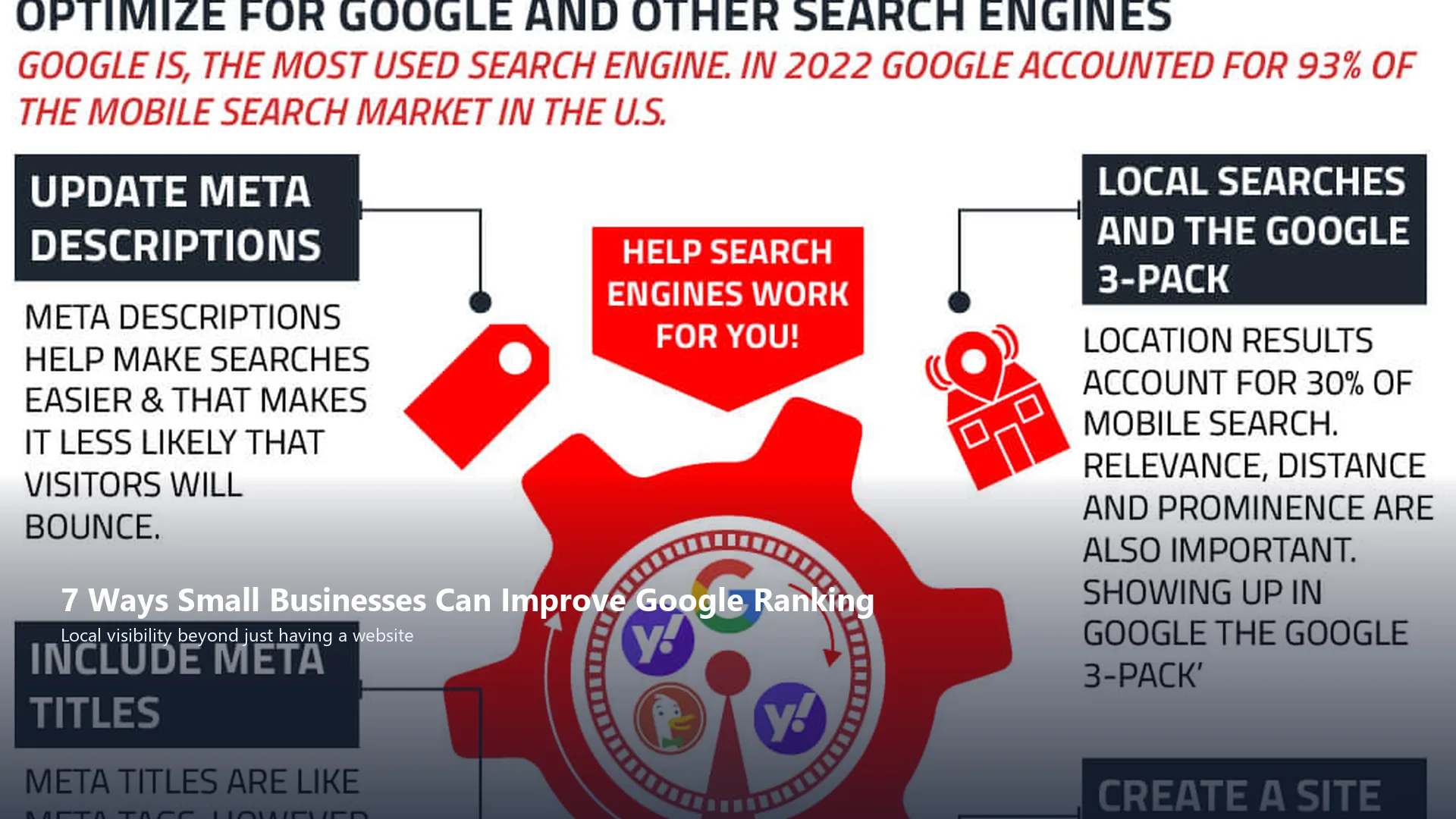
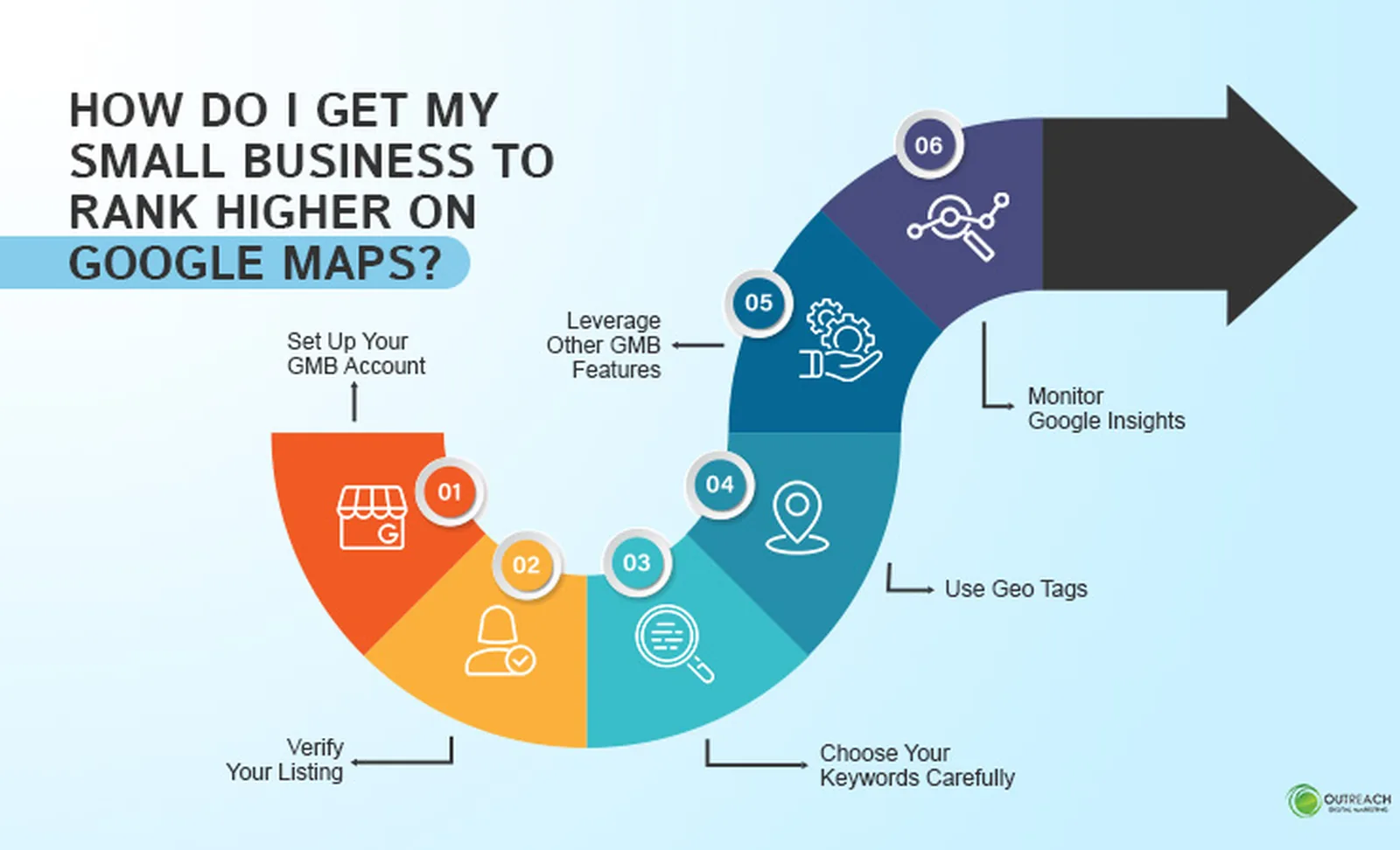
For many small businesses, Google Business Profile is the real first page. Complete categories, services, hours, photos, and description in plain language. Keep the same business name, address, and phone number you use everywhere else. Ask for reviews after good work, and reply with specifics.
Practical move
Audit your profile weekly for wrong hours, outdated offers, and missing photos of real work.
2. Fix Website UX for Local Intent and Mobile Speed
Searchers who click from Google expect immediate clarity: service, area, proof, and next step. Your website design should prioritize mobile speed, readable headlines, service pages, and contact paths. Fancy animation that hides the offer hurts ranking efforts by hurting engagement.
Create one page per core service and city or service area you actually serve. Do not invent locations.

3. Align Digital Brand Identity So Searchers Recognize You Fast
If your Google listing, website, Instagram, and WhatsApp each look like a different company, trust drops. Digital brand identity is an SEO asset because recognition reduces bounce and increases contact. Keep colors, logo usage, and offer language consistent.
4. Publish Local Pages and Service Proof, Not Vague Blogs
Owners often publish generic "tips" posts that never match what customers search. Better content answers local intent: service explainers, before/after proof, FAQs, and process pages. Pair those with photos of real work and clear CTAs.
Support faster drafting with AI content workflows, then fact-check every claim. AI can accelerate production. It cannot invent local trust.

5. Use Social and Video to Earn Mentions and Trust Signals
Social media systems do not replace SEO, but they feed it. Short demos, project stories, and review clips make it easier for customers to share your brand and for other sites to mention you. Keep end cards and offers identical so Google and people see one business.
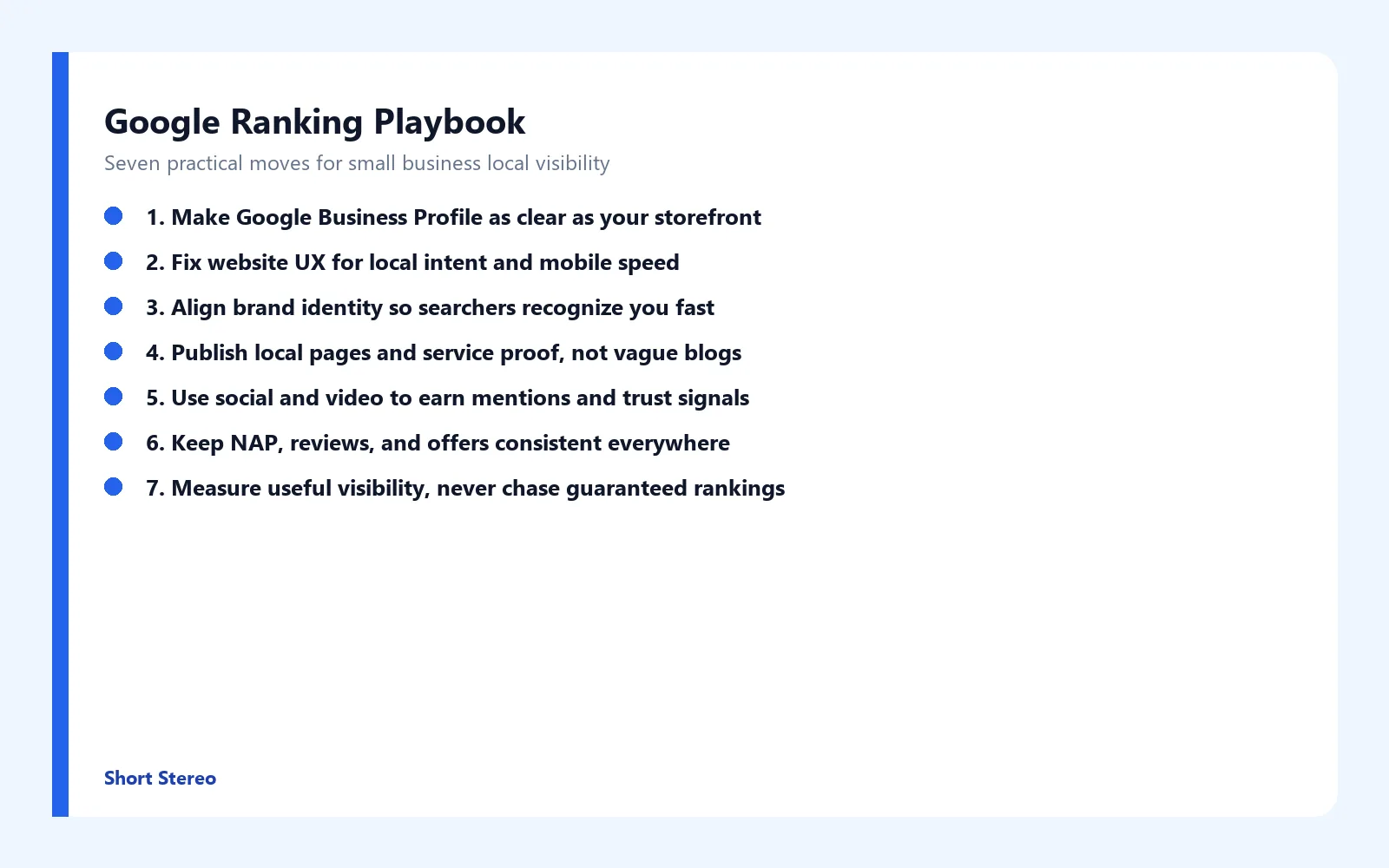
6. Keep NAP, Reviews, and Offers Consistent Everywhere
Directories, maps, WhatsApp, social bios, and invoices should match. Inconsistent NAP (name, address, phone) confuses local ranking signals. Same with offers: if Google says one promo and your site says another, customers hesitate.
7. Measure Useful Visibility, Never Chase Guaranteed Rankings
Track calls, form fills, map actions, and branded search interest. Do not buy into anyone who guarantees page-one rankings. Search changes. What you can control is clarity, proof, speed, and consistency. Those improve the conditions under which ranking can rise.
How Short Stereo Helps Small Businesses Improve Search Visibility
After owners ask how a small business can improve its Google ranking, the teams that make progress usually fix identity, website UX, and content systems together. Short Stereo helps connect those pieces so local visibility becomes easier to earn and easier to convert.
Conclusion
Small businesses improve Google ranking by making local identity unmistakable: a complete Business Profile, fast mobile website UX, consistent branding, useful local pages, social and video proof, clean NAP, and honest measurement. None of these moves guarantee rankings, leads, or sales. They improve the conditions under which customers, and Google, can trust you. If you want help turning that playbook into design and content execution, visit shortstereo.com.
Frequently Asked Questions
How can small businesses compete with big corporations on Google?
Compete on clarity and locality, not budget. Big brands win broad terms, while small businesses can win specific service-plus-area searches with cleaner websites, stronger Google Business Profiles, and consistent proof. Focus on being the obvious local answer.
How can small businesses use AI to improve Google visibility?
Use AI to draft local page outlines, FAQs, review replies, and social captions faster, then edit for accuracy and brand voice. AI helps production speed. It does not replace website UX, NAP consistency, or genuine customer proof.
How can a small business improve its Google ranking beyond having a website?
Complete and maintain Google Business Profile, publish clear local service pages, collect reviews, keep NAP consistent, and support search with social and video proof. Ranking improves when Google can trust who you are, where you serve, and what customers say.
How do small business loans, grants, or accounting topics relate to Google ranking?
They usually do not change rankings directly. They matter because operators often search those questions while also needing visibility. Keep finance pages separate, then invest ranking effort in brand clarity, website UX, and local proof that helps customers find you.
How should a design agency help a small business improve Google ranking?
A design partner helps by making the brand recognizable, the website fast and clear, and the content system consistent across web and social. That foundation supports local SEO work without promising guaranteed rankings or overnight jumps.