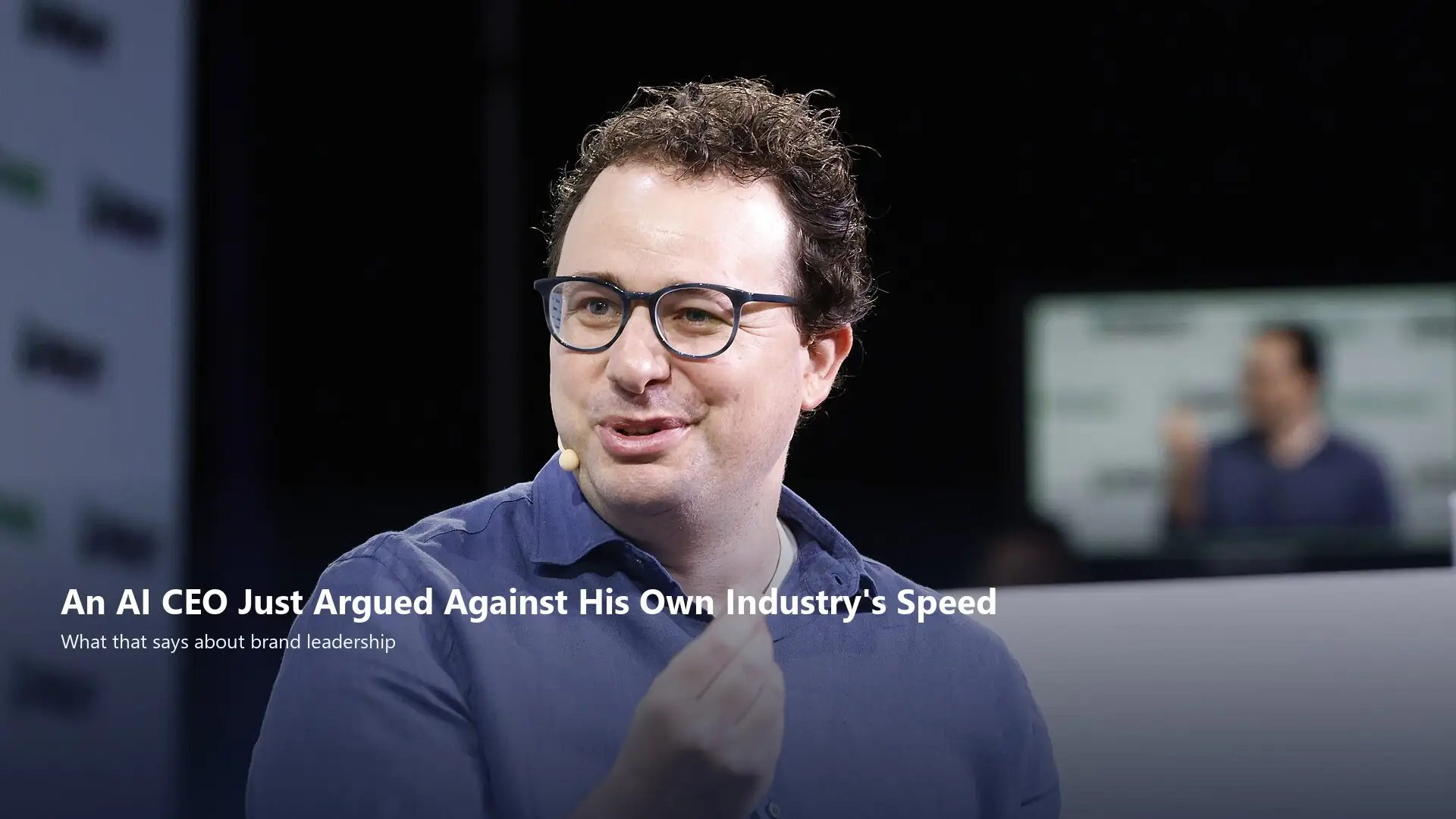
A CEO publicly arguing his own industry should move slower is rare enough to be a brand lesson on its own, regardless of what you think about AI. Founders and CMOs searching Anthropic CEO Dario Amodei this week are not only reading a policy story. They are watching how a leadership stance becomes brand trust in public.
Anthropic CEO Dario Amodei published an essay this month arguing that AI companies, including his own, need to slow the pace at which they improve model capabilities. He proposed a three-step framework: independent reviewers embedded inside frontier AI companies, coordination among AI firms on shared safety standards, and international cooperation on managing risk.
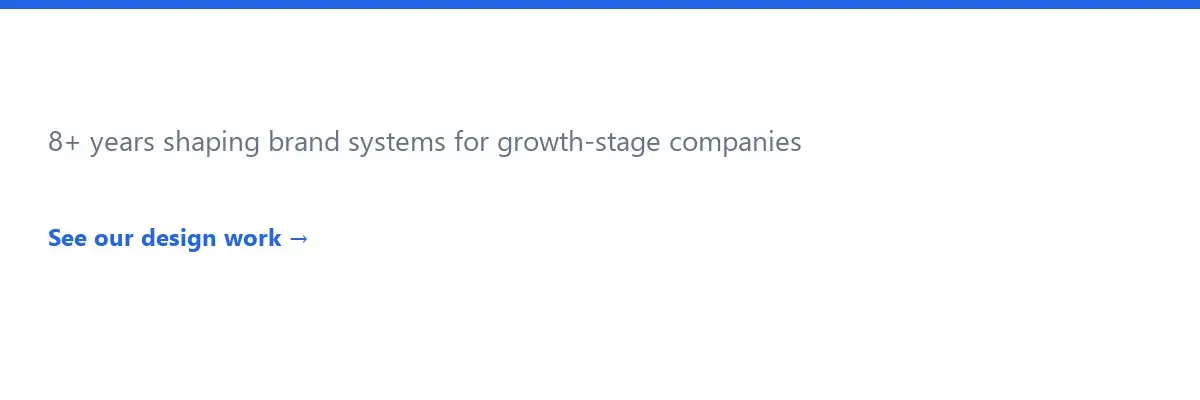
What makes this notable isn't just the content of the warning. It's who delivered it and how competitors responded. Both Elon Musk and OpenAI's Sam Altman publicly agreed with Amodei's call, a rare moment of alignment among companies that normally compete aggressively on the same capabilities Amodei was asking everyone to slow down on.
Short Stereo helps brands figure out how to turn a leadership point of view into something the whole brand, website, content, social, carries consistently, which is exactly the discipline this story is a useful example of, regardless of the underlying AI policy debate. Coverage of "Anthropic CEO urges AI companies to slow model development amid fears over misuse" is the attribution source; read the Reuters report on Amodei's call to slow AI model development for the original reporting.
The News: Anthropic's CEO Asked the Entire AI Industry to Slow Down
Amodei's essay framed pacing as prudence, not a halt. Progress would still feel fast, he argued, if companies used the gained time to align and safeguard models and let third-party evaluators confirm those steps. For brand leaders, the searchable story is how Anthropic CEO Dario Amodei attached a plan to the warning instead of stopping at a slogan.
That combination, a named executive, a concrete framework, and rival agreement, is why the piece traveled beyond AI policy circles into branding and thought-leadership conversations.
Why a CEO Arguing Against His Own Industry's Speed Is a Brand Signal
A three-step framework, not just a warning
Amodei didn't just say "slow down." He attached a specific, structured framework to the statement: independent reviewers, cross-company coordination, and international policy engagement. That distinction matters for any brand making a public statement. A vague warning invites skepticism. A specific plan invites scrutiny of substance instead.
Competitors publicly agreeing is the rare part
Public agreement from rivals is the part of this story worth studying most closely. It's genuinely unusual for competing companies to align publicly on anything that could slow their own competitive pace. When it happens, it tends to carry outsized credibility precisely because it isn't self-serving on its face.
What This Kind of Public Stance Does for Customer and Investor Trust
Amodei's essay came the same week Anthropic released a threat intelligence report detailing real-world misuse of its own Claude models, a moment when many companies would choose to stay quiet rather than draw more attention to a problem. Instead, the timing reinforced the stance rather than undercutting it: a company disclosing its own product's misuse risks, in the same window as arguing for industry-wide caution, reads as consistent rather than defensive.
6 Brand Leadership Lessons From Amodei's Public Stance
Lesson 1, Naming a risk before it's forced on you builds more trust than reacting to it
Amodei's essay came from Anthropic itself, not from a regulator or a forced disclosure. Proactive framing almost always lands better than a response to external pressure.
Lesson 2, A specific framework beats a vague warning
Attaching concrete steps (independent reviewers, coordination, international engagement) gave the statement something to evaluate, rather than just something to react to emotionally.
Lesson 3, Timing a stance around your own disclosure shows consistency, not opportunism
Pairing the call to slow down with Anthropic's own threat intelligence report, rather than separating them, reinforced that the stance applied to Anthropic too, not just competitors.
Lesson 4, Getting competitors to agree publicly is the real signal of credibility
Any brand can make a bold statement about its own values. Far fewer can get rivals to agree with it in public. That's the harder, more valuable outcome to aim for.
Lesson 5, A stance against your own short-term speed reads as long-term confidence
Arguing for a slower pace in a fast-moving, competitive industry signals confidence that the company can win on a longer timeline, a useful reframe for any brand tempted to chase every short-term trend.
Lesson 6, Leadership statements are brand content, whether or not marketing wrote them
An essay published on a personal account still becomes part of a company's brand story the moment it's picked up by Reuters, HuffPost, and dozens of other outlets. Brand and communications teams should plan for that reality rather than treat executive statements as separate from "the brand."
Most companies don't have a plan for what happens when a founder's or CEO's personal statement suddenly becomes the brand's most visible piece of content that week. Short Stereo's brand-led website experiences are built to help a company's owned channels stay ready to carry that kind of moment consistently, rather than scrambling once the story is already trending.
What Brands Should Implement Before Taking a Public Stance
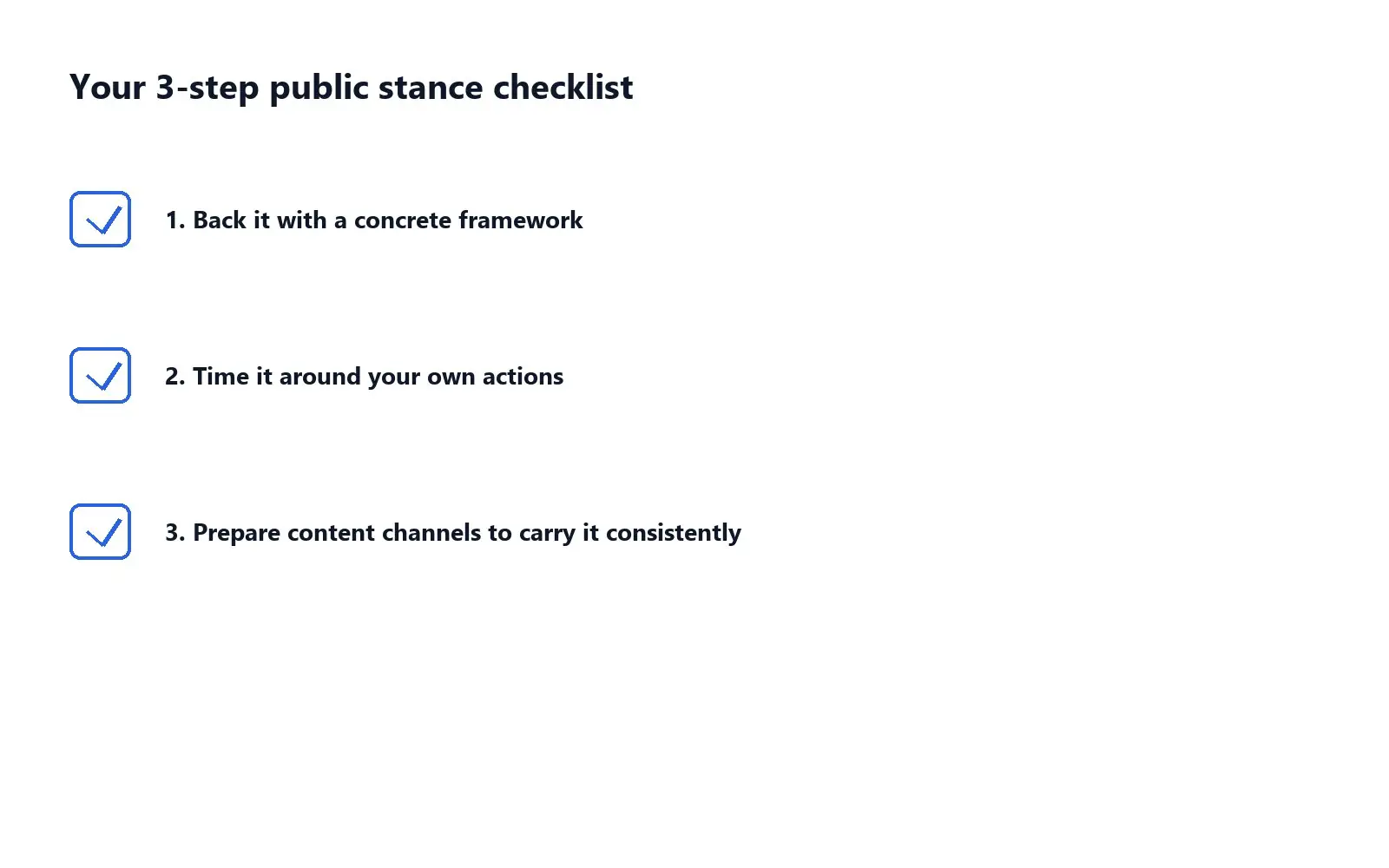
You don't need to run an AI company to apply this thinking. Start with three moves:
- Back the stance with a concrete framework, not just an opinion. A specific plan gives your position something to be evaluated on, rather than just agreed or disagreed with emotionally.
- Time it around your own actions, not just the news cycle. Pairing a public stance with something your own company is doing about it builds more credibility than commentary alone.
- Prepare your website and content channels to carry the message consistently. If a leadership statement takes off, your owned channels should already be ready to reinforce it, not catch up to it days later.
Consistency across every channel matters here too. A strong public stance falls flat if a company's own website or social presence doesn't reflect it. This is where social content systems built for brand consistency tend to make the visible difference fastest. Scale that reinforcement with AI-assisted content and growth workflows that stay on the approved stance language instead of inventing a new tone every hour the story trends.
Where Most Brands Get This Wrong
The most common mistake is treating a founder's or CEO's public statement as separate from brand strategy, something PR reacts to instead of something the brand plans around. Amodei's essay worked as a brand moment because it was specific, backed by a real framework, and consistent with Anthropic's own disclosures that same week. A vague statement with no plan behind it, or one that contradicts a company's own recent actions, tends to read as opportunistic instead.
If your brand's leadership is considering taking a public stance and needs help making sure the rest of the brand carries it consistently, Short Stereo's design and motion work spans design, motion, and AI-led content to help companies turn a leadership moment into a coherent brand story.
How Short Stereo Helps Brands Carry a Public Leadership Stance
Short Stereo helps teams translate executive points of view into practical brand systems: clearer websites, consistent social content, and AI-assisted workflows that keep the message intact after the news cycle moves on. After moments like Anthropic CEO Dario Amodei's essay, the brands that win are the ones whose owned channels were already ready.
Conclusion
Anthropic CEO Dario Amodei's call for the AI industry to slow down is a genuinely significant moment in AI policy, but it's also a clean case study in public leadership stance-taking that applies well beyond AI. A specific framework, timing that reinforced rather than undercut the message, and a rare moment of public agreement from competitors all worked together to make the statement land as credible rather than self-serving. Any brand considering its own public stance can borrow the same discipline: be specific, be consistent with your own actions, and make sure your brand's owned channels are ready to carry the message the moment it takes off. If you want help turning that into a practical brand and website system, visit shortstereo.com.
Frequently Asked Questions
What did Anthropic CEO Dario Amodei actually say?
In an essay published in September 2026, Amodei called on AI companies to slow the pace at which they advance model capabilities, proposing a three-step framework involving independent reviewers, industry coordination, and international cooperation on AI safety.
Did other AI leaders agree with Amodei's call to slow down?
Yes. Both Elon Musk and OpenAI CEO Sam Altman publicly said they agreed with Amodei's position, a notable moment of alignment among companies that typically compete closely on AI capabilities.
Why does a CEO's public stance matter for brand strategy?
A CEO's or founder's public statement quickly becomes part of a company's brand story once it's picked up by media, which means brand and communications teams benefit from planning for that reality rather than treating it as separate from marketing.
Can a smaller brand use this same kind of public leadership stance?
Yes. The underlying discipline (a specific framework, timing tied to your own actions, and consistent messaging across owned channels) scales down to companies of any size, even without the same media reach.