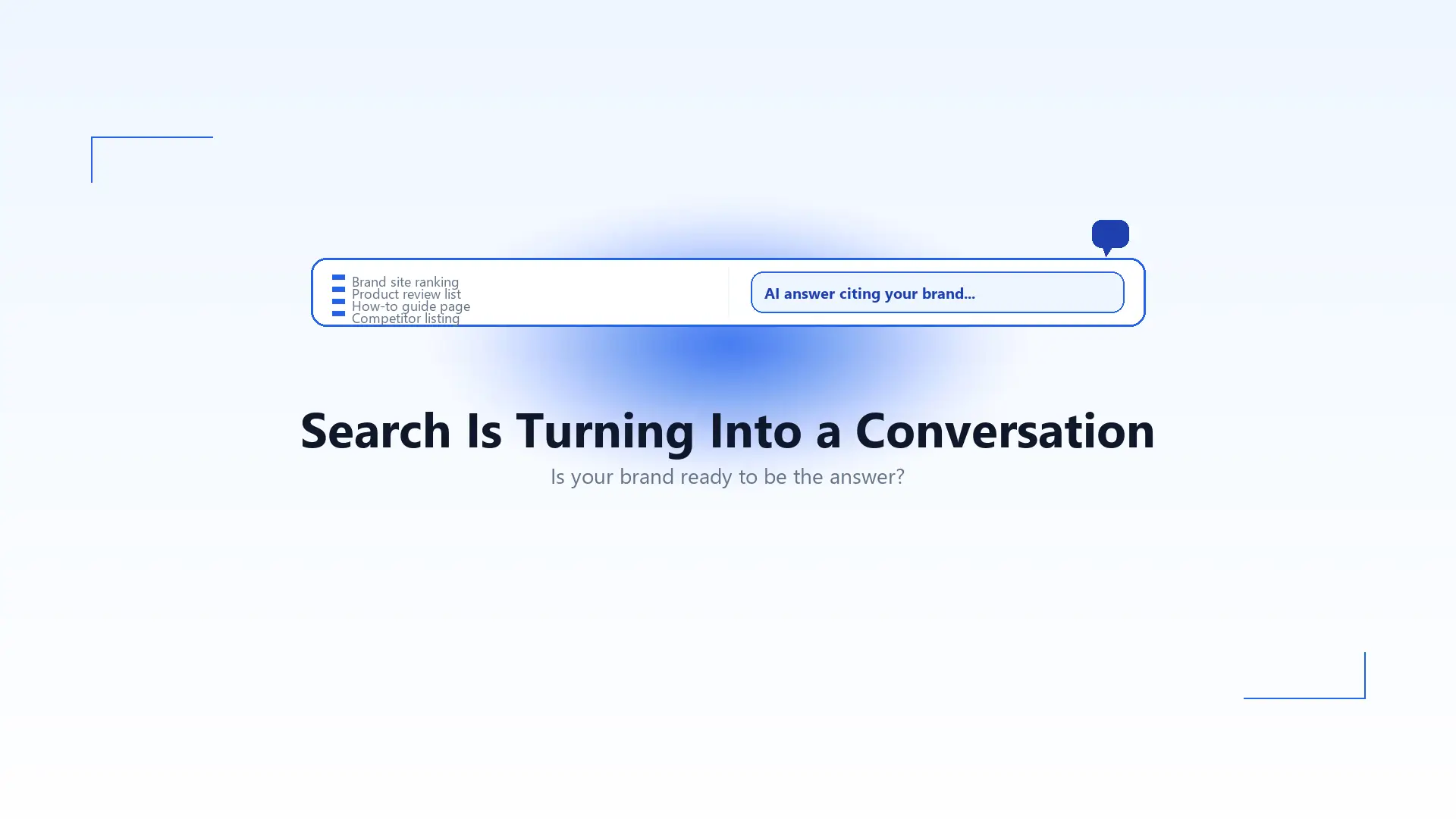
Search is quietly turning into a conversation. Here's what that means for your brand, your website, and your next design decision.
Some marketers are already scaling Generative Engine Optimization (GEO), the practice of getting brands mentioned inside AI-generated answers, faster than they can prove it's working. That might sound like a problem. It isn't, not really. It's a sign that search itself is changing shape, and brands that move now, even without perfect measurement, will be the ones ChatGPT and Google AI Overviews reach for when someone asks a question in your category. This piece breaks down what's actually changing, what it means for your brand and website, and seven concrete moves to make before AI answers become the default front door to your business.

Short Stereo has spent years building brand systems, websites, and content for companies navigating shifts like this one, from mobile-first design to short-form video to, now, AI-driven search. Explore website design services if you're weighing where to start.
Why “GEO” Is Suddenly Everywhere in Marketing Meetings
Generative Engine Optimization has moved from an obscure acronym to a phrase founders and CMOs bring up in nearly every planning meeting. The reason is simple: people increasingly ask ChatGPT, Google AI Overviews, Gemini, or Perplexity a question instead of typing a keyword into a search box and clicking through ten links.
That's a real change in behavior, not a passing trend. And it explains why marketers are scaling GEO efforts, new content structures, brand mentions, AI-readable pages, faster than their measurement tools can keep up. Rankings and click-through rates were built for a link-based web. AI answers don't always leave a click behind.
What Happens When ChatGPT and Google AI Overviews Replace the Search Results Page
The Consumer Experience Has Already Changed
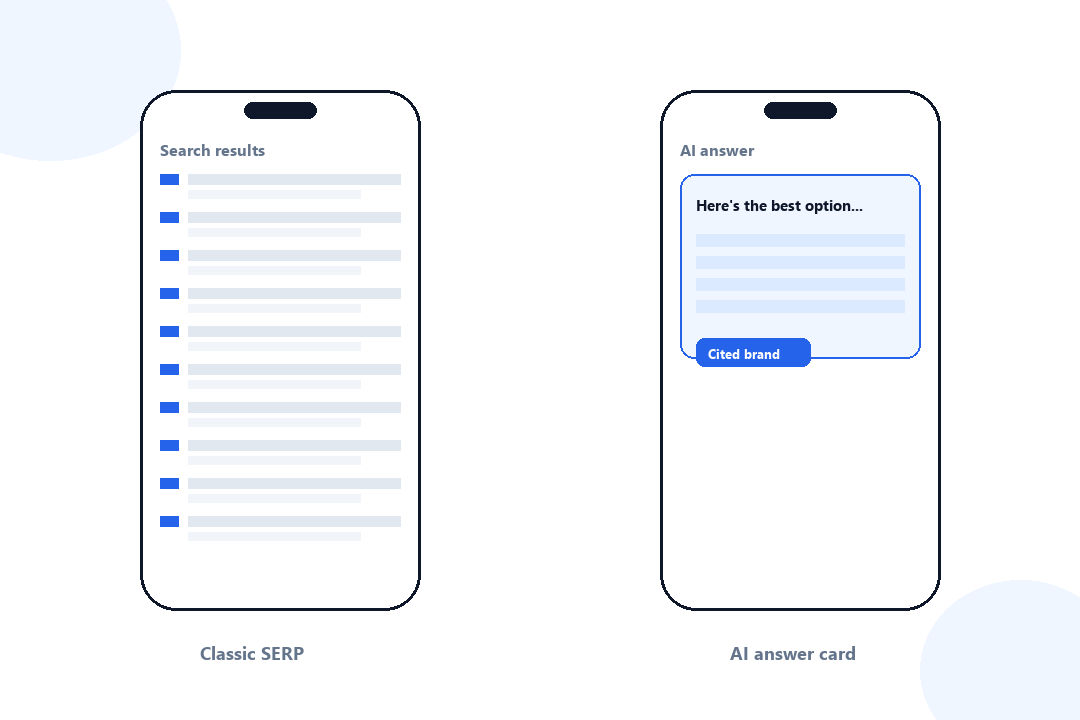
For years, “showing up on Google” meant ranking on a page of ten blue links. Increasingly, it means being the brand an AI system chooses to mention, by name, inside a single generated answer, sometimes without the reader ever visiting your site.
That's a fundamentally different experience for consumers. They ask a question, get a synthesized answer, and move on. If your brand isn't part of that answer, you're invisible at the exact moment someone was deciding what to buy, book, or try. This is why “explained” content, clear, direct, well-structured pages that answer a question in the first few lines, is starting to outperform keyword-stuffed, SEO-only copy built for the old rules.
7 Brand Moves to Make Before ChatGPT Becomes Your Homepage
Here's the practical part. These are the seven decisions brand and marketing teams are making right now, in roughly the order that matters most.
1. Write for the Answer, Not Just the Click
Structure your most important pages so the first two or three sentences fully answer the question a reader (or an AI system) is asking. Save the persuasion and detail for after that.
2. Rebuild Your Brand Identity to Survive Without a Logo
An AI answer usually mentions your brand name in plain text, not your logo or color palette. That means your name, tagline, and the specific language you use to describe what you do now carry more brand-recognition weight than your visual identity alone.
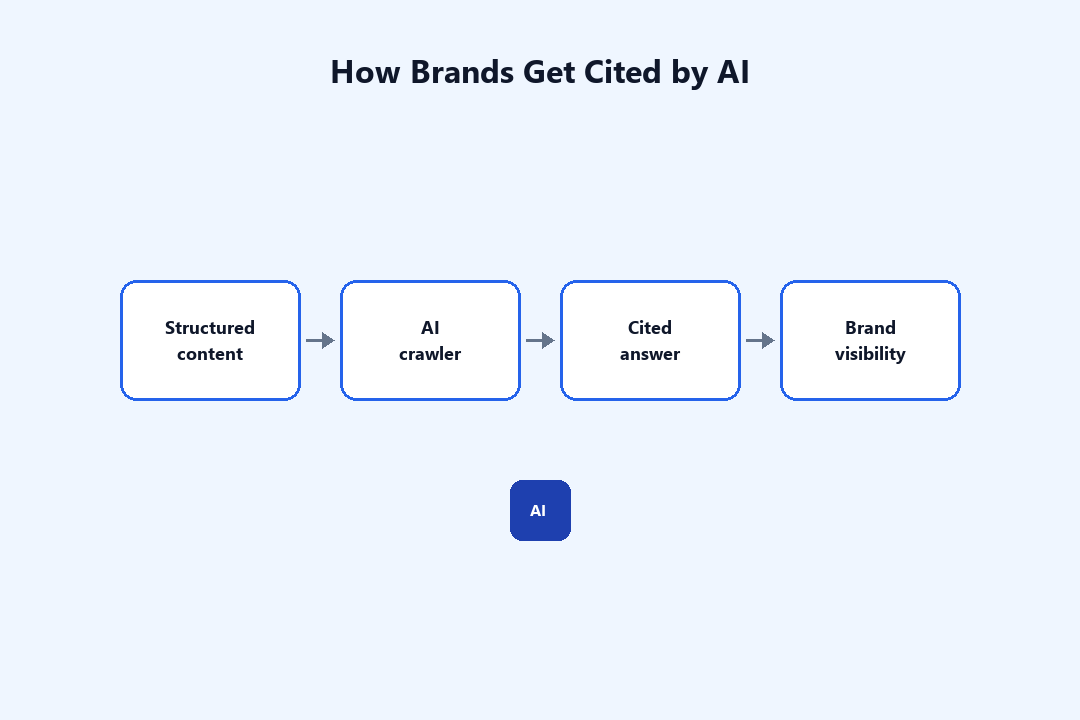
3. Turn Your Website Into a Source AI Wants to Cite
Clear headings, short paragraphs, FAQ sections, and accurate, specific claims all make a page easier for an AI system to parse and quote correctly. Messy, vague, or overly promotional pages are harder to cite, and easier to skip.
4. Make Your Social Proof Machine-Readable
Reviews, case studies, and testimonials that are written in plain, specific language (“cut onboarding time by 40%”) are far more useful to an AI system than a vague quote in a rotating carousel image.
5. Give Every Page a Clear, Structured Answer
Every service page, product page, and blog post should be able to stand alone and answer a specific question completely, because that's often the only “page view” an AI-referred visitor will ever see.
6. Track Mentions, Not Just Rankings
Start monitoring how often your brand shows up inside ChatGPT, Google AI Overviews, or Perplexity answers for questions relevant to your category, not just where you rank on a traditional results page. This is a core practice in Generative Engine Optimization (GEO).
7. Decide What “Measured” Even Means for Your Brand
This is the honest one. Full GEO measurement tooling is still maturing industry-wide. Rather than waiting for perfect attribution, most marketing teams are agreeing internally on a few directional signals, brand mentions, referral traffic from AI tools, and direct-traffic lift, and moving forward with those.
Branding and Experience Design Implications
This shift touches more than SEO. It touches branding strategy and experience design directly. A brand's visual identity, digital brand identity, and the way its website is structured now all serve two audiences at once: human readers and AI systems reading on their behalf.
That means design decisions, page structure, content hierarchy, even how a headline is written, carry SEO weight they didn't carry two years ago. Social media branding is affected too: platforms are testing their own AI-generated summaries of posts and profiles, so a brand's voice needs to be consistent and specific enough to survive being paraphrased by a machine. Among marketing trends in 2026, this dual-audience design standard is one of the sharpest changes teams face.
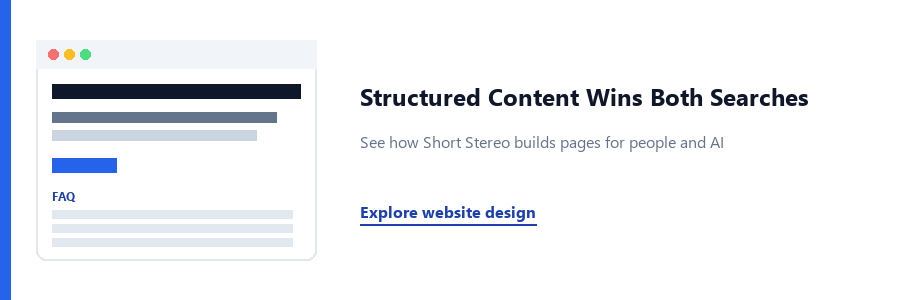
Pages built with clear structure and direct answers tend to perform better in both classic search and AI-generated answers, that's the core idea behind good experience design. If you're rebuilding a site with this in mind, explore website design services built around structure as much as style.
What Businesses Should Implement This Quarter
Design and Content
Audit your top ten pages. Rewrite the opening of each so it answers the core question in the first three sentences, in plain language.
Social and Video
Keep captions and video descriptions specific and factual, AI systems increasingly pull from these when summarizing what a brand does. A social media system built for consistency helps here.
AI Content Systems
Set up a lightweight process for producing and updating structured, question-and-answer style content regularly, rather than treating it as a one-off project. AI content and growth support can help build this as a repeatable system rather than a scramble.
How Short Stereo Helps Brands Prepare for GEO
Short Stereo turns shifts like this into practical brand systems: websites structured for answers, content that AI tools can cite cleanly, and design systems that still feel human. Whether you need a rebuild or a focused page audit, the goal is the same, show up when ChatGPT and Google AI Overviews become the first stop in your category.
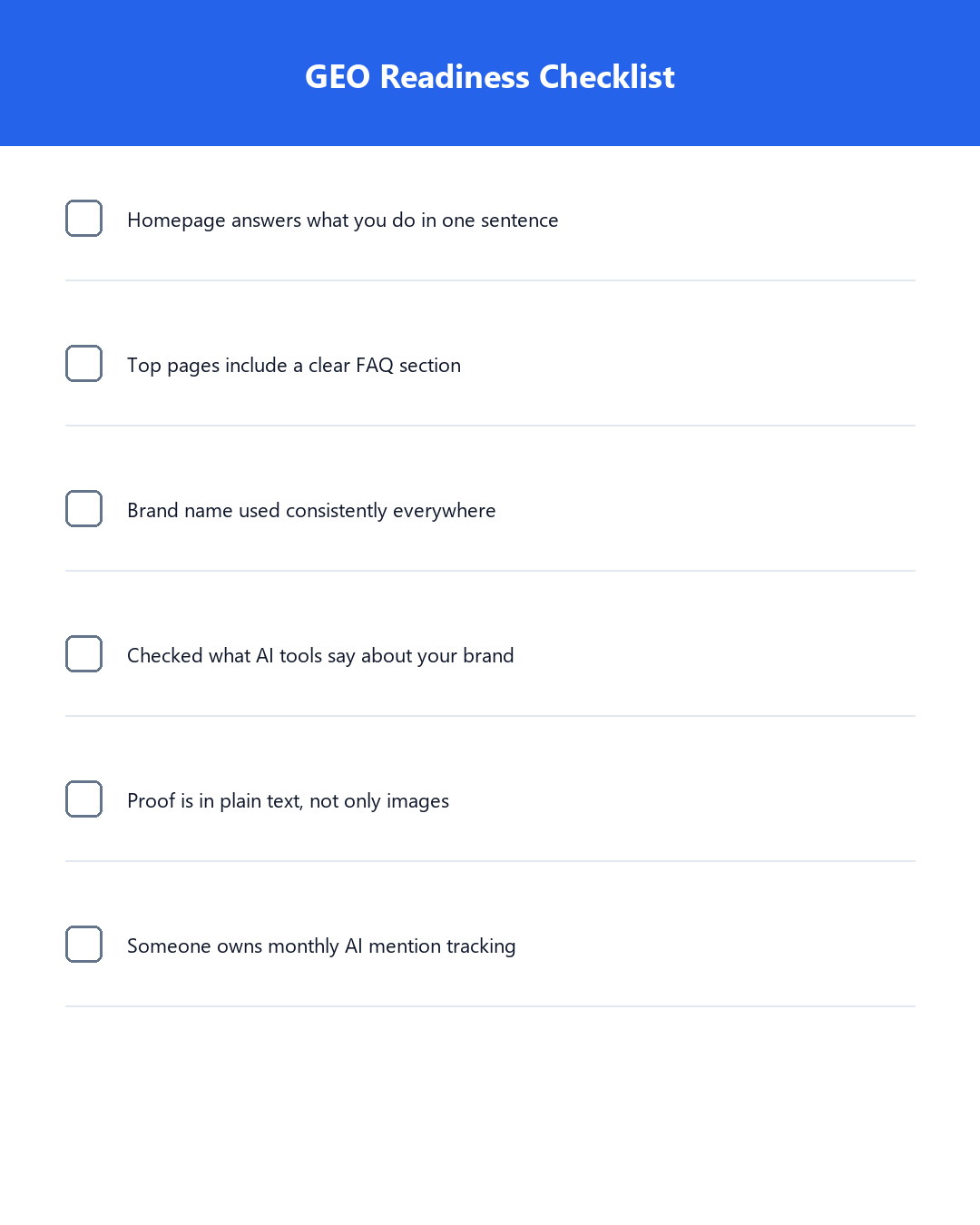
A Simple GEO Readiness Checklist
Use this as a quick gut-check this week:
- Does your homepage answer “what does this company do” in one sentence?
- Do your top pages have a clear FAQ section?
- Is your brand name used consistently, without variation, across your site and profiles?
- Have you checked what ChatGPT or Google AI Overviews currently say about your brand?
- Is your most important proof (reviews, results, case studies) written in plain text, not just images?
- Do you have one person or team responsible for tracking AI mentions monthly?
Search is changing shape faster than most measurement tools can prove it. The brands that adjust their content, structure, and identity now, without waiting for perfect data, are the ones AI systems will reach for first. If you want help turning this shift into a brand system, website, and content engine that holds up, Short Stereo can help you get there.
Conclusion
Some marketers scale Generative Engine Optimization (GEO) faster than they can measure it, and that's genuinely fine, waiting for perfect measurement means waiting too long. ChatGPT and Google AI Overviews are already changing what “showing up in search” means for consumers, which means it's changing what good branding strategy and experience design look like too. The seven moves above, from rewriting your opening lines to tracking brand mentions instead of just rankings, are practical steps any team can start this week. The businesses that treat this as a design and content decision, not just a technical one, will be the ones AI mentions by name.
Frequently Asked Questions
What does GEO mean in marketing?
GEO stands for Generative Engine Optimization, the practice of structuring content and brand information so AI systems like ChatGPT, Google AI Overviews, Gemini, and Perplexity are more likely to mention or cite a brand in their generated answers.
Is GEO replacing SEO?
Not entirely. Many of the same fundamentals, fast, well-structured, clearly written pages, support both traditional SEO and GEO. GEO adds new priorities on top, like writing in direct-answer format and making claims specific enough for an AI system to quote accurately.
How do I know if ChatGPT is mentioning my brand?
Ask ChatGPT, Google AI Overviews, and similar tools direct questions in your category and note whether your brand appears. Some teams also track referral traffic coming from AI tools in their analytics as a directional signal.
Do I need a new website for GEO?
Not necessarily a new one, but most existing sites benefit from restructuring key pages, clearer headings, shorter opening answers, and stronger FAQ sections, rather than a full rebuild.
How long does GEO take to show results?
There is no fixed timeline yet, since measurement tools are still maturing industry-wide. Most teams treat it as an ongoing content and structure practice rather than a campaign with a fixed end date.