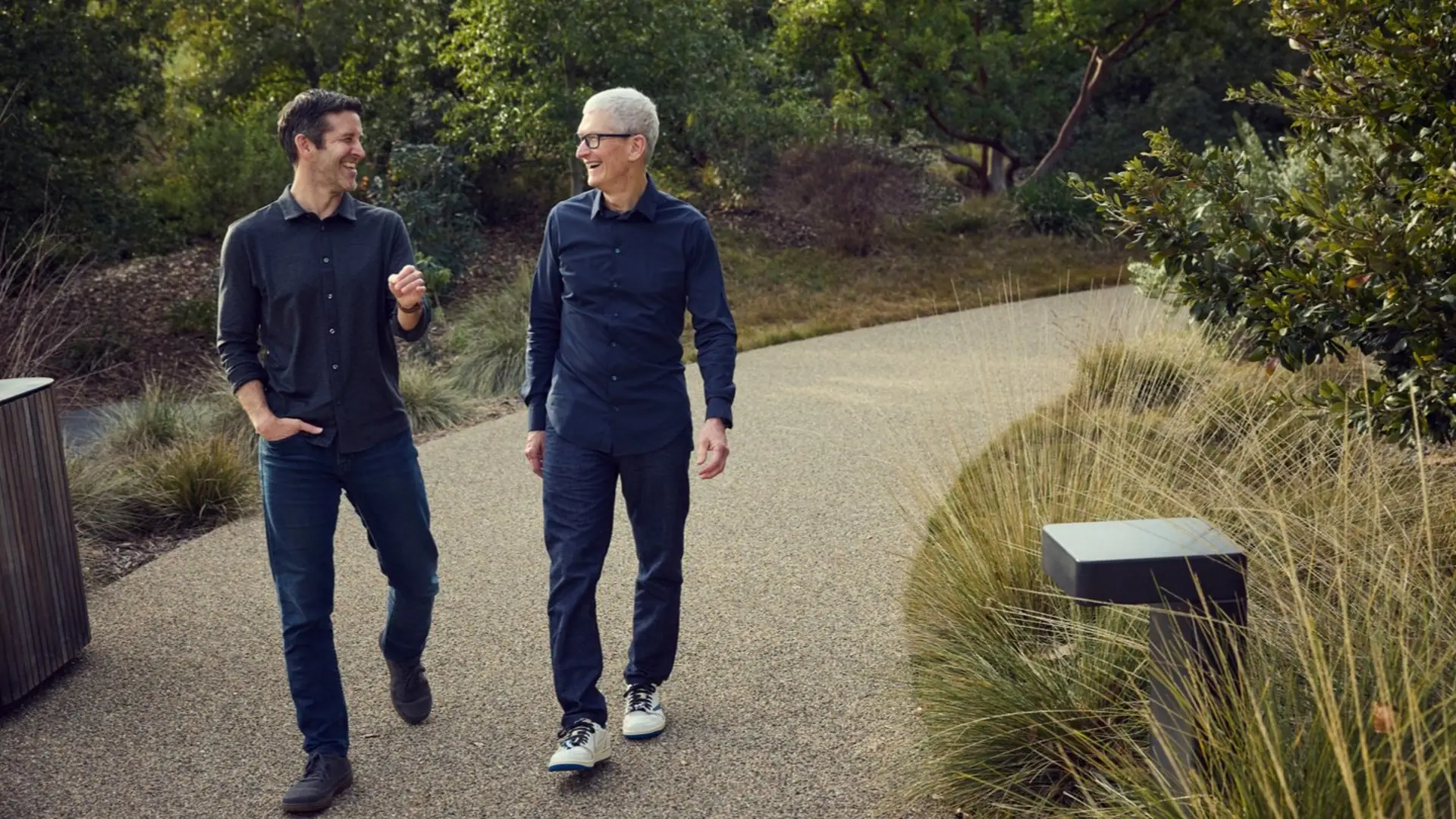
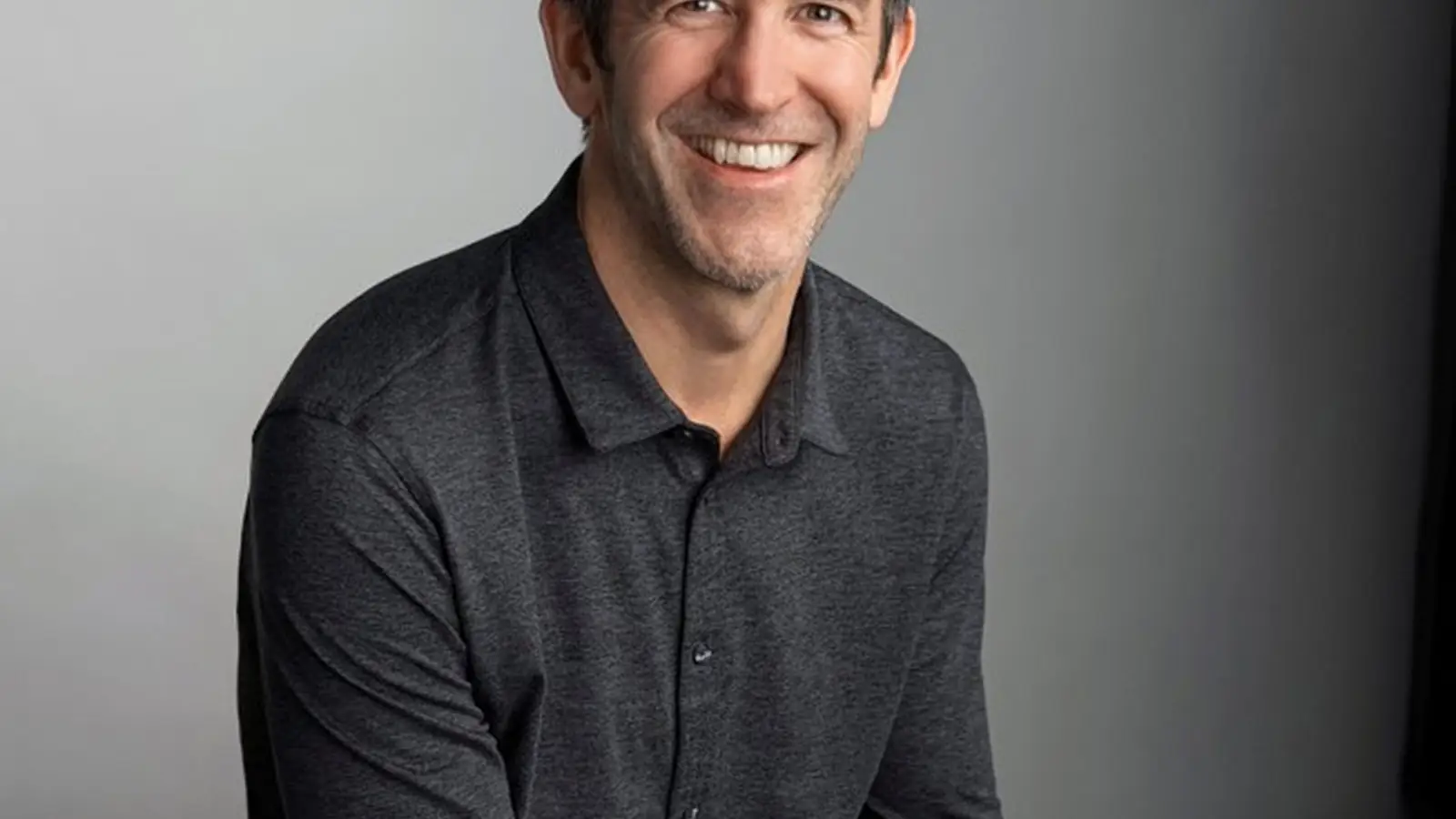
On September 1, 2026, Apple CEO John Ternus takes the reins from Tim Cook after a planned succession Apple announced in April. Searchers are not only asking who Ternus is. Founders, CMOs, and design leads want to know what a hardware-first CEO changes for branding, product experience, and the business decisions that follow a 15-year Cook era.
Ternus joined Apple in 2001, rose through Hardware Engineering, and helped shape products across iPhone, Mac, iPad, AirPods, and newer materials work such as recycled aluminum compounds and 3D-printed titanium. Cook moves to executive chairman. That handoff is mainstream news with direct brand implications: when the world's most watched product company changes leaders, customer expectations for polish, clarity, and trust move with it.
Apple's official announcement and weekend profiles such as Yahoo Finance frame Ternus as the insider prepared for an AI-heavy product decade. Coverage also notes Cook's scale story: services growth, wearables, Apple Vision Pro, and a multi-trillion market. For brand teams, the useful question is not "who wins the news cycle." It is which experience and visual rules must tighten before your next campaign ships beside Apple's next chapter.
Why Apple CEO John Ternus Matters to Searchers
People search Apple CEO John Ternus because the company sits at the center of weekly consumer and business intent: iPhone launches, Mac design cues, privacy claims, retail theater, and marketing craft. When a famous brand changes CEOs, related queries spike around biography, stock reaction, Tim Cook's hits and misses, and what changes next.
Brand leaders search the same story for a different payoff. They want portable lessons: how a product-led company manages succession messaging, how interim websites and FAQs stay calm, and how competitors should respond without copying Apple's look. Famous entities create demand; your job is to convert that demand into clearer experience design and branding strategy for your own customers.
That search pattern also explains why wire-style recaps underperform. Readers already know the headline. They stay for decisions: what to change on the homepage this week, which social proof still feels current, and how to talk about AI without sounding like every other tech brand. Reframe the Ternus news as an operating brief for your brand system, not a biography recap.
What Changes for Consumer Experience After Tim Cook
Cook's years trained customers to expect durable products, privacy-forward claims, and a services layer that feels continuous across devices. Ternus arrives as a hardware engineer with a public reputation for detail and materials. Consumers will watch whether software experiences, packaging, and store storytelling feel as intentional as the aluminum and titanium stories Apple already tells.
Expect sharper scrutiny on launch days. If AI features, hearing health tools, thinner devices, or repairability claims appear in keynotes, people will test whether websites, support flows, and ads match the product story. Experience design becomes the proof layer. A mismatch between a hardware narrative and a clunky checkout or vague FAQ will read as brand risk, not a small UX bug.
That is where a coherent website design system and disciplined social media branding matter for every business influenced by Apple's design language: keep claims, proof, and journeys aligned before the news cycle forces a scramble.

Brand and Visual System Implications of a Hardware-Led Apple
A hardware-led CEO does not automatically mean louder logos. It often means tighter systems: fewer accidental visual dialects across packaging, retail, motion, and digital brand identity. If Apple pushes design shake-up energy, as some reporting has suggested Ternus understands is needed, adjacent brands will feel pressure to raise craft without borrowing Apple marks.
Visual systems should prepare for three pressures. First, product photography standards rise again. Second, motion and interface polish become table stakes for any app or site that sits near Apple hardware in the customer's day. Third, sustainability and materials storytelling need honest visuals, not stock metaphors that undercut claims. Branding strategy in this moment is less about novelty and more about coherence under a famous spotlight.
Retail and packaging teams feel the same pressure. If Apple leans harder into thinness, durability, or recycled materials as storytelling pillars, customers will compare those cues to whatever sits next to Apple products in carts, unboxings, and social feeds. Build a simple quality bar for photo, type, and motion so your brand does not look accidental beside the week's most shared product film.

7 Brand Lessons From Apple CEO John Ternus
1. Treat succession as a brand product, not only an HR event
Apple published a clear timeline, roles, and quotes months before September 1. Brands of every size can copy the structure: name the date, name the owners, and give customers a calm path for questions. Ambiguous leadership news creates rumor UX. Clear succession messaging reduces it.
2. Put product proof next to leadership claims
Ternus's public story is built on Mac momentum, iPhone lineup work, AirPods advances, and materials innovation. When you introduce leaders, pair biography with shipped proof. Customers trust builders they can see in the product, not titles alone.
3. Design interim states for websites and support
During transitions, people land on About, News, and FAQ pages first. Update those surfaces early. Explain what changes and what does not. Keep contact paths visible. An interim state that looks intentional beats a homepage still celebrating yesterday's era.
4. Expect higher craft standards in experience design
Hardware detail culture raises the bar for apps, packaging, and microcopy. Audit your digital brand identity for friction that suddenly feels outdated next to Apple-level polish. Fix the journeys customers actually use this week, not a speculative redesign for next year.
5. Keep AI messaging grounded in use cases
Coverage frames Ternus's era against AI upheaval. Brands that overpromise AI lose trust fast. Lead with specific user outcomes, privacy boundaries, and support coverage. Then scale creative with AI content workflows that stay on-message instead of inventing claims.
6. Separate admiration from imitation
Studying Apple marketing is useful. Copying Apple's visual language is not a strategy. Borrow principles: hierarchy, restraint, materials honesty, and system rules. Keep your own marks, photography, and voice distinct so you do not look like a tribute brand.
7. Assign one owner for claims across channels
Cook remains involved as executive chairman while Ternus runs the company. Dual visibility can confuse outsiders if messages diverge. Your team needs a single approval owner for pricing, product, and leadership claims across web, social, PR, and sales decks.
What Businesses Should Implement This Week
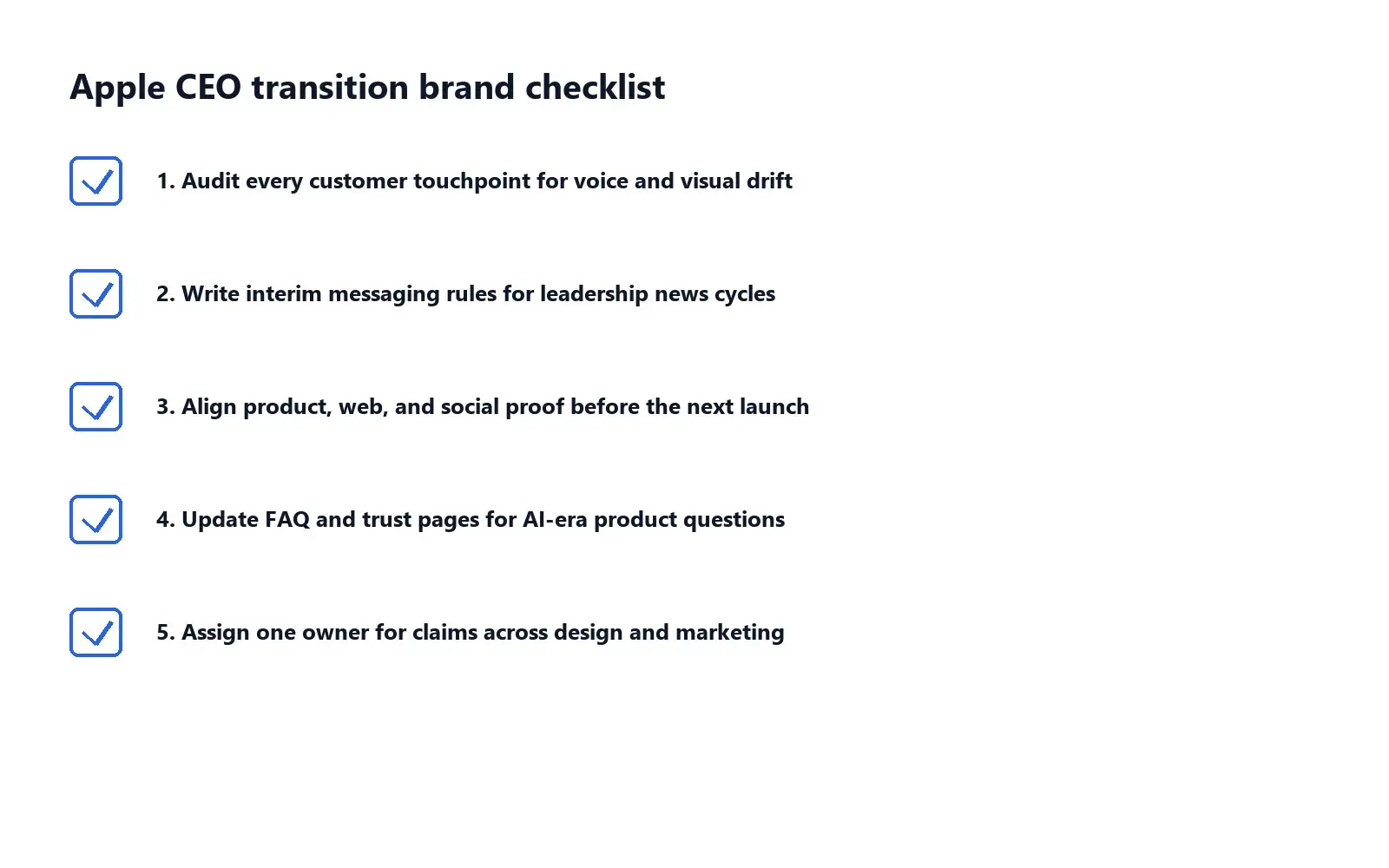
- Write a one-page interim messaging brief for leadership or market news that could touch your category.
- Audit homepage, pricing, FAQ, and support for claim drift against current product reality.
- Refresh social creative guidelines so AI and product posts share one voice.
- Inventory packaging and photography standards that still look current beside Apple-level craft.
- Name one owner who can approve both design and marketing claims in the same day.
- Schedule a 30-day follow-up after September 1 to adjust based on Apple's first Ternus-era signals.
Consistency during transition matters more than a dramatic rebrand. Customers forgive a calm interim system. They punish confused promises. Use the Apple CEO John Ternus moment as a forcing function to tighten your own operating rules. If your category will be compared to Apple on craft this fall, schedule a lightweight design and copy QA pass before your next major campaign, not after comments start pointing out the gaps.
How Short Stereo Helps Brands Apply Apple-Level Consistency
Short Stereo helps teams translate mainstream business trends into practical identity systems: clearer websites, on-brand social, and AI-assisted content that does not invent claims. After news like Apple CEO John Ternus taking over, the brands that win are the ones that can keep one promise intact across product, web, and campaigns while the market watches the famous company for cues.
Conclusion
Apple CEO John Ternus matters because Apple sets the craft and trust bar for millions of daily experiences. The Tim Cook era built scale, services, and privacy-forward expectations. Ternus brings a hardware builder's lens into an AI decade. The seven lessons above, succession as a product, proof beside biography, interim web states, higher experience standards, grounded AI claims, distinct identity, and single-owner approvals, help any business respond without chasing headlines. Close those gaps now, while you can still design the system instead of reacting under launch pressure. If you want help turning that into a practical brand and website system, visit shortstereo.com.
Frequently Asked Questions
Who is Apple CEO John Ternus?
John Ternus is Apple's next chief executive officer, effective September 1, 2026. He joined Apple in 2001 on the product design team, became VP of Hardware Engineering in 2013, and SVP of Hardware Engineering in 2021. Apple credits him with work across iPhone, Mac, iPad, AirPods, and materials innovation.
When does John Ternus replace Tim Cook as Apple CEO?
Ternus becomes CEO on September 1, 2026. Tim Cook continues as CEO through the summer transition, then becomes executive chairman of Apple's board. Arthur Levinson becomes lead independent director on the same date.
What does the Apple CEO transition mean for branding teams?
A hardware-led CEO often signals tighter product, packaging, and experience coherence. Brand teams should refresh interim messaging, align web and social proof with upcoming launches, and treat leadership news as a trust test, not only a PR beat.
How should businesses respond to Apple CEO John Ternus news?
Audit customer journeys for voice drift, publish clear FAQs for AI-era product questions, keep service and support claims consistent, and prepare creative systems that can absorb Apple-driven design expectations without copying Apple's marks.