On Aug 25, 2026, Oklahoma City unveiled OKC 2028 Olympics branding under a simple banner: Team OKC. The launch is not only civic PR. For founders, CMOs, and design leads, it is a live case study in how a host city turns a multi-year sports calendar into an identity system that residents, businesses, and visitors can join.
OKC will host two sports and seven events for LA28: the entire softball tournament plus slalom paddle (the discipline formerly known as canoe slalom after the International Canoe Federation rebranded as Paddle Worldwide). It is the only city outside Southern California hosting an entire Olympic sport for 2028. That scale forces branding choices most companies face in quieter form: what belongs to the global mark, what belongs to the local story, and how early you invite partners in.
Local coverage from KFOR and The Journal Record describes a brand built with VI Marketing and Branding and the city, championed by Mayor David Holt, and led operationally by Team OKC President Michael Byrnes. The athlete village is planned at Oklahoma City University. Merch is planned later, and a separate LA28 logo for OKC is also coming later. The sequence is the lesson: community identity first, commerce and co-brand layers when the system can support them.
Why OKC 2028 Olympics Branding Matters to Searchers
People search OKC 2028 Olympics branding because Oklahoma City is suddenly part of a global sports narrative without being Los Angeles. Searchers want the facts: which sports, which venues, who owns the brand, and what businesses can join. Brand teams want the playbook behind those facts.
City branding and sports branding queries spike together when a host city launches early. The famous event is the hook. The business intent is how to build a shared identity that can survive two years of procurement, volunteering, tickets, and partner noise without fracturing into competing logos.
If your organization sponsors venues, runs hospitality, sells tourism, or designs destination brands, Team OKC is a public brief. It shows how a mid-size market claims Olympic relevance with a local voice instead of waiting for the global mark to do all the talking.
What Changes for Consumer and Fan Experience
Before Team OKC, Olympic interest in Oklahoma City was mostly news and venue updates. After the launch, fans get a named community to belong to. Byrnes framed "We are Team OKC" as more than a campaign line: an invitation that the Olympic movement in Oklahoma City belongs to the whole community, not one venue or organization.
That changes how people expect to encounter the brand. Volunteers look for paths at la28.org. Local businesses look for procurement and partnership signals. Residents look for merch, social channels, and events that make the story feel tangible. When merch and the OKC-specific LA28 mark arrive later, fans will judge whether the early Team OKC promise still feels coherent.
Digital brand identity now includes that patience. A strong brand-led website experience and a durable social media system have to explain what exists today, what is coming next, and how partners plug in without overclaiming inventory that is not ready.
Brand and Visual System Implications of Team OKC
Team OKC is not a one-off lockup. It is a civic identity layer that has to sit beside Olympic marks, venue names, university housing, and future merch without looking like five unrelated campaigns. Holt noted the phrase was already in casual use; formalizing it converted folk language into a managed system.
Visual systems for host cities need hierarchy: local rally brand, event authority marks, and later co-branded retail. Motion, photography, and street activations should feel like the same team even when legal logo rules differ by context. That is city branding with sports branding discipline: fewer random lockups, more repeatable rules.
For brands adjacent to OKC venues, the implication is practical. Align your own collateral to Team OKC tone early, then leave room for the forthcoming LA28 OKC logo so you do not rebuild partner kits twice.
7 Brand Lessons From OKC's 2028 Olympics Branding
1. Turn folk language into a managed identity
Holt said people already talked about being on "Team OKC." The launch made that language ownable. Brand teams should listen for phrases customers already use, then formalize them with rules, not invent jargon nobody repeats.
2. Frame the brand as an invitation, not only a logo
Byrnes stressed that "We are Team OKC" means more than a mark or campaign. Host-city and sports brands win when people know how to join: volunteer, partner, attend, or amplify. If your brand cannot answer "how do I participate," it is decoration.
3. Sequence the system: community first, commerce later
Merch is planned later. A separate LA28 logo for OKC is coming later. That order protects coherence. Shipping retail before the identity and partner story are clear creates noise. Launch the invitation, then open the store.
4. Own a distinct role inside a global event
Hosting an entire Olympic sport outside Southern California gives OKC a clear narrative hook. Brands should define the one role they uniquely play inside a larger ecosystem instead of mirroring the global logo and hoping for attention.
5. Local creative partners can build global-scale credibility
VI Marketing and Branding worked with the city on Team OKC. Local fluency plus professional system design beats importing a generic Olympic aesthetic. Know the place, then build assets that travel.
6. Put operations leaders next to the brand story
Having Michael Byrnes lead Team OKC signals that identity and venue readiness share one table. Brand launches fail when marketing owns the reveal and operations owns reality in separate rooms. Shared ownership keeps claims honest.
7. Publish channels before every offer is ready
Byrnes noted website and social channels matter so procurement and partnership news can go external when ready. Build the pipes early. Use AI-assisted content and growth workflows to keep naming, tone, and FAQs consistent while offers mature.
What Businesses Should Implement From Team OKC
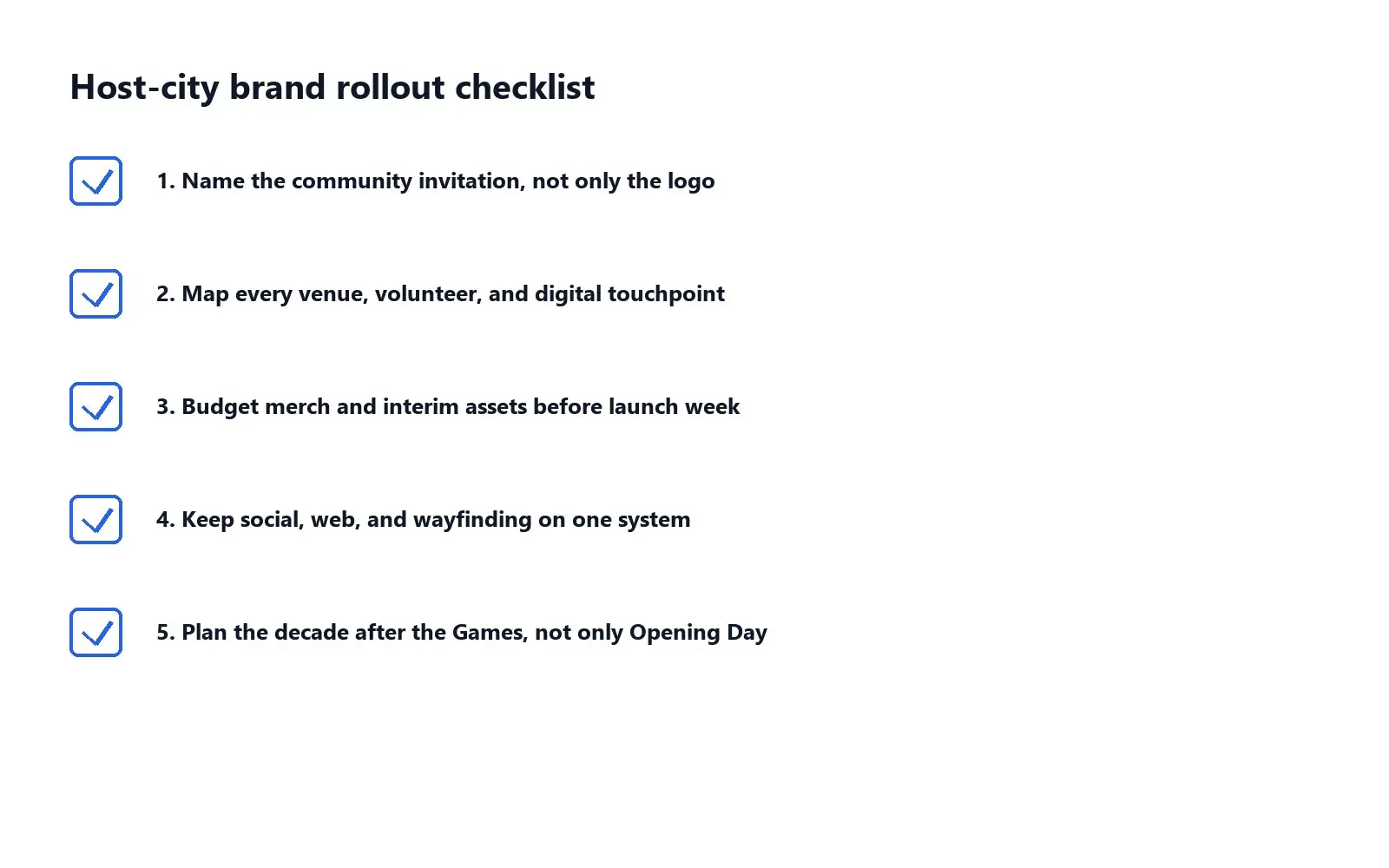
- Write a one-sentence invitation that tells people how to join your brand movement.
- Map hierarchy: primary local identity, partner marks, and future retail lockups.
- Inventory venues, campus, digital, and partner surfaces the way a host city inventories stadiums and an athlete village.
- Publish a simple partner FAQ on your site before procurement windows open.
- Align social and web naming so interim states do not look unfinished.
- Assign one owner who can approve both creative claims and operational readiness.
Consistency during the transition matters. A half-updated brand across web and social can look worse than an honest interim system. Treat Team OKC's patience on merch as a feature: ship what you can defend.
How Short Stereo Helps Brands Build Host-City Consistency
Short Stereo helps teams turn multi-year event narratives into practical identity systems: clearer websites, partner-ready messaging, and social content that matches what operations can deliver. After a launch like Team OKC, the brands that win are the ones that can keep one invitation intact across venues, campuses, and channels while logos and merch arrive on schedule.
Conclusion
OKC 2028 Olympics branding matters because Team OKC turns a host-city calendar into a joinable identity. Softball and slalom paddle give Oklahoma City a distinct LA28 role. The seven lessons above, invitation language, sequenced commerce, local creative, shared ownership, and early channels, are portable for any brand building beside a bigger stage. Close those gaps now, while you can still design the system instead of reacting under event pressure. If you want help turning that into a practical brand and website system, visit shortstereo.com.
Frequently Asked Questions
What is Team OKC branding for the 2028 Olympics?
Team OKC is Oklahoma City's local organizing and community brand ahead of hosting LA28 Summer Olympics events. Developed with VI Marketing and Branding and the city, it frames "We are Team OKC" as a community invitation, not only a logo.
Which Olympic sports will Oklahoma City host in 2028?
OKC will host two sports across seven events: the entire softball tournament and slalom paddle (formerly canoe slalom; the International Canoe Federation rebranded as Paddle Worldwide). It is the only city outside Southern California hosting an entire Olympic sport for 2028.
Who leads Team OKC and who designed the brand?
Mayor David Holt has framed Team OKC as a shared civic identity. Team OKC President Michael Byrnes leads the effort. Local branding was developed by VI Marketing and Branding in collaboration with the city. Merch and a separate LA28 logo for OKC are planned later.
What can brand teams learn from OKC 2028 Olympics branding?
Treat host-city identity as a system, not a reveal: name the invitation, sequence logos and merch, align venues and digital channels, involve local businesses early, and keep claims consistent across web, social, and physical touchpoints.