A premium product gets you in the door. Positioning, consistency, and trust are what get you a repeat customer. If you're searching how to grow a D2C clothing brand from India, this guide focuses on the practical gap between a well-made tee and a brand people recognize, trust, and buy again.
A founder recently posted a version of a question that comes up constantly in D2C circles on r/smallbusiness: they built a premium streetwear brand with 240 GSM tees, the kind of quality you can feel, and asked for growth tips. It's a fair, honest question, and it's the kind that a lot of clothing founders in India are quietly asking as the D2C apparel space gets more crowded by the month.

The uncomfortable truth is that a genuinely good product is necessary but not sufficient. Fabric weight, print quality, and fit matter, but they don't automatically translate into recognition, trust, or repeat purchases. This guide walks through the practical, unglamorous work that sits between "I made a great product" and "people actually buy it, and then buy again."
Short Stereo works with growing D2C and streetwear brands on exactly this gap, turning a strong product into a consistent, recognizable content and design system. That's the lens this guide comes from, not a promise that any single tactic here guarantees results.
The Real Challenge When You Want to Grow a D2C Clothing Brand
Here's the pattern that shows up again and again in small-business communities: a founder builds something genuinely well-made, prices it fairly, and assumes quality will be self-evident once people see it. It usually isn't, not because the product is weak, but because attention, trust, and purchase decisions in a crowded streetwear market depend on more than the item itself.
A 240 GSM tee is a real, specific product spec. But "240 GSM" means nothing to most shoppers scrolling Instagram late at night. The brand's job is to translate that spec into something a customer actually feels: durability, structure, a heavier drape that reads as premium the moment someone tries it on.
Start With a Clear Audience and Positioning
Who is this brand actually for?
Before touching content or ads, it's worth answering one question precisely: who is the ideal customer, specifically? "Young people who like streetwear" is too broad to design around. A clearer answer, say, college-age shoppers who care about fit and fabric quality more than logos, changes what you photograph, what you write, and where you post.
Turning "premium" into a specific, believable claim
"Premium" is an overused word in D2C fashion. It only works when it's backed by something concrete and specific: a fabric weight, a construction detail, a fit description. Vague premium claims get scrolled past. Specific ones get remembered.
Turning a Spec Like 240 GSM Into a Customer Benefit
Most shoppers don't know what GSM means, and they don't need to memorize it. They need to understand what it does for them. A brand can bridge that gap by explaining, in plain language, what a heavier fabric weight actually feels like: less see-through, better structure, a tee that holds its shape wash after wash. The spec becomes a story about durability and feel, not a number on a product page.
Making a Streetwear Brand Visually Recognizable
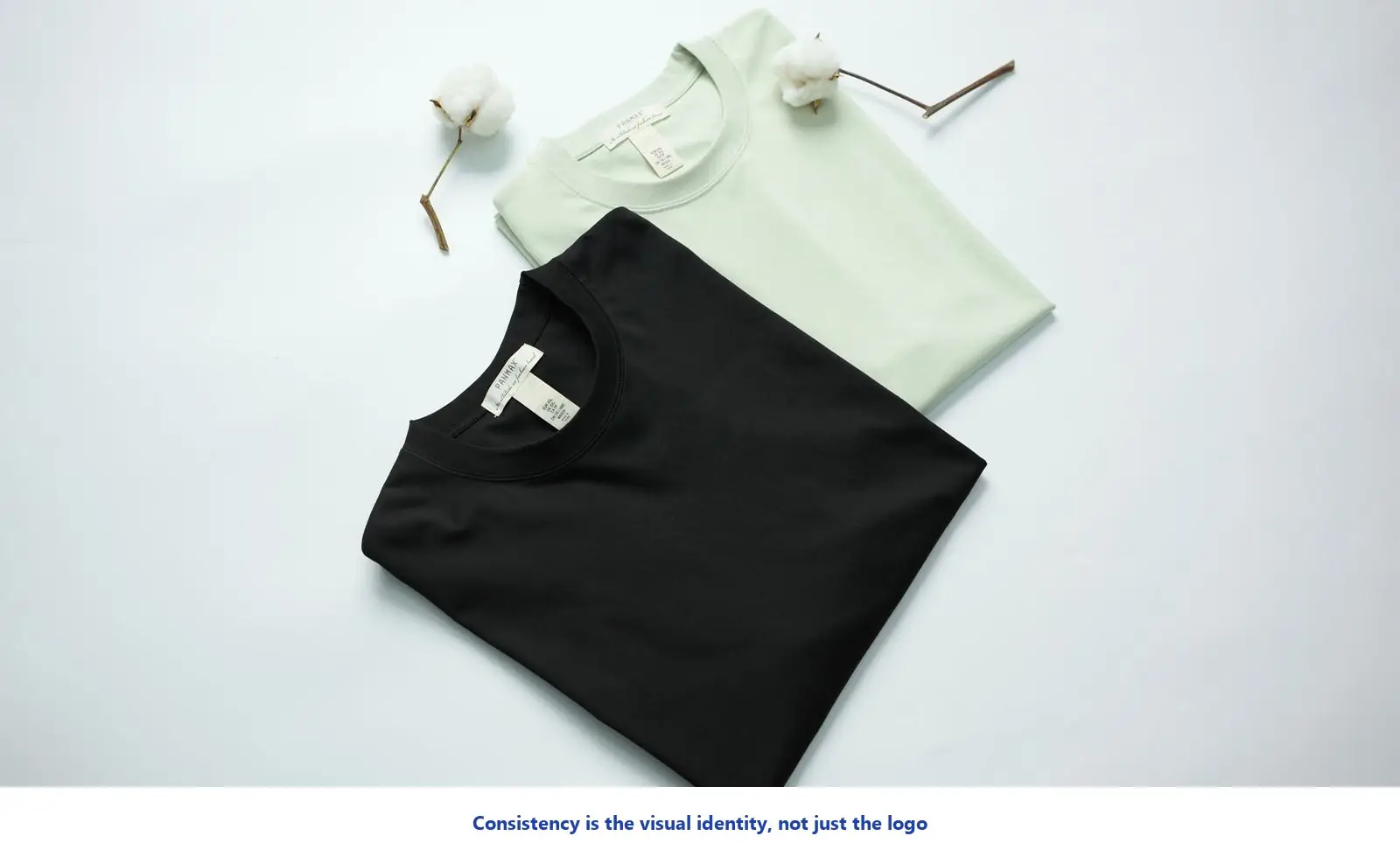
Consistency beats novelty in a crowded feed
Streetwear is a visually saturated category. What separates a memorable brand from an interchangeable one is rarely a single stunning photo. It's a consistent visual system: the same color treatment, the same photography angle, the same typography on every post, repeated until it's recognizable at a glance, even muted, even scrolling fast.
Building a Social Media Content System That Actually Builds Trust
Formats worth repeating
Rather than chasing a different content idea every day, most growing clothing brands benefit more from a small, repeatable set of formats:
- Product-in-motion clips (how the fabric moves, how it fits)
- Close-up texture shots that make the fabric quality visible
- Simple styling posts showing how to wear a piece two or three different ways
- Short, honest behind-the-scenes clips of the actual making or packing process
Repetition, done consistently, builds recognition faster than one-off creative swings.
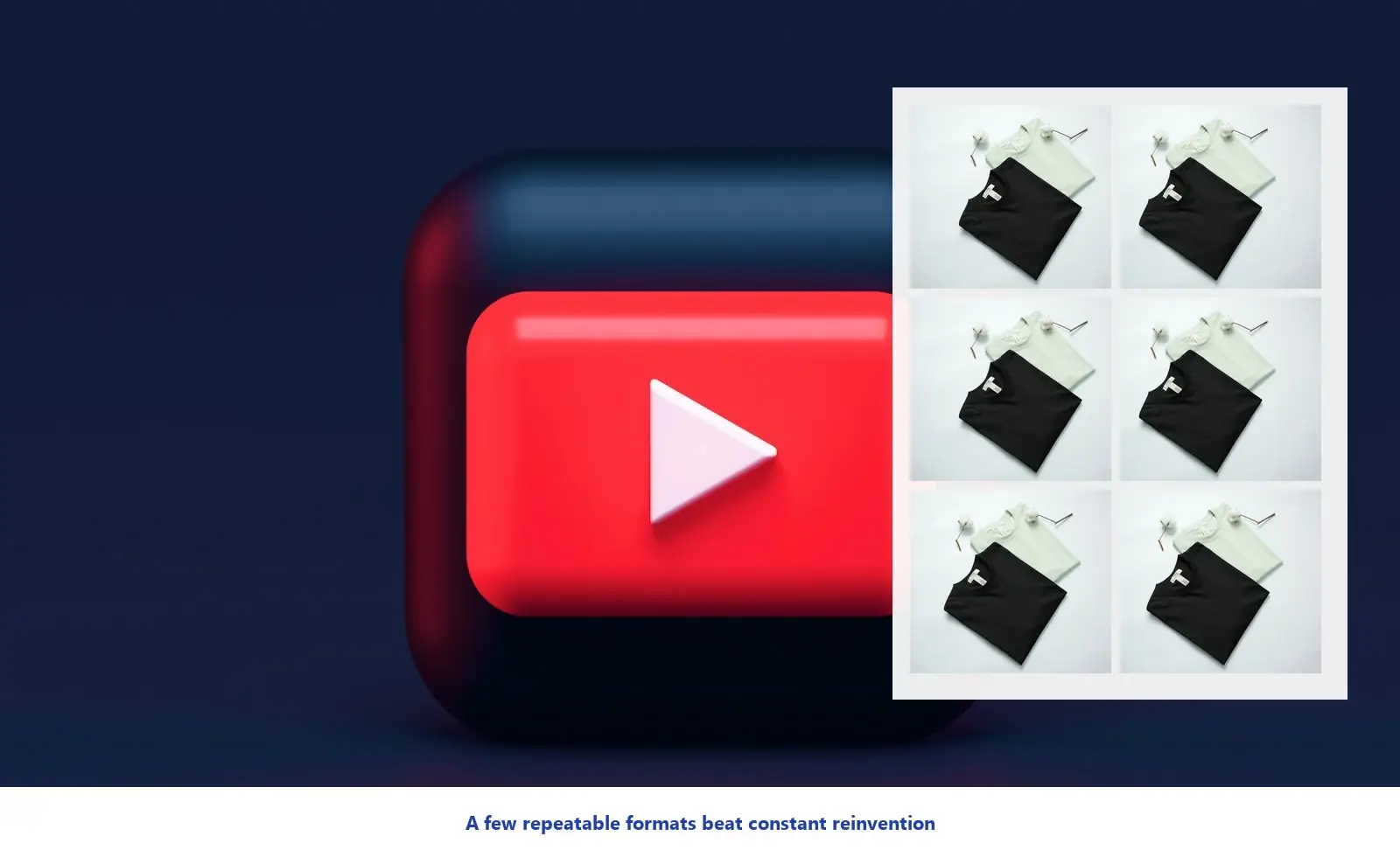
Keeping a content system running consistently is often the hardest part for a small team, not coming up with one good idea, but sustaining it week after week. Short Stereo's social media systems built for growing brands are built around exactly this kind of sustainable content cadence.
Creating a Shopping Experience That Reduces Buying Friction
A product page's job is to answer the questions a customer would ask in a store but can't ask online: How does this fit? What does the fabric feel like? What happens if it doesn't work out? Clear sizing information, honest fabric descriptions, and a visible, simple return policy do more for conversion than most people expect, because they remove hesitation at the exact moment a customer is deciding whether to trust an unfamiliar brand with their money.
Using Customer-Generated Content Without Faking It
Real customer photos and videos, reposted with permission, build more trust than polished brand content alone, simply because they're proof from someone with nothing to gain. The practical challenge for a new brand is volume: early on, there often isn't much customer content yet. That's fine. It's a reason to actively and transparently ask happy customers for a quick photo or video, not a reason to manufacture the appearance of social proof that doesn't exist yet.
Testing Before Spending: What to Validate First
Before increasing ad spend, it's worth testing cheaply: does a specific product angle, price point, or content format actually get more engagement or add-to-carts than another? Small, deliberate tests, one variable at a time, tell you more than a bigger budget spent on an unvalidated assumption. Scale that learning with AI-assisted content workflows that stay on approved brand language while you iterate formats.
A Practical Weekly Playbook for How to Grow a D2C Clothing Brand
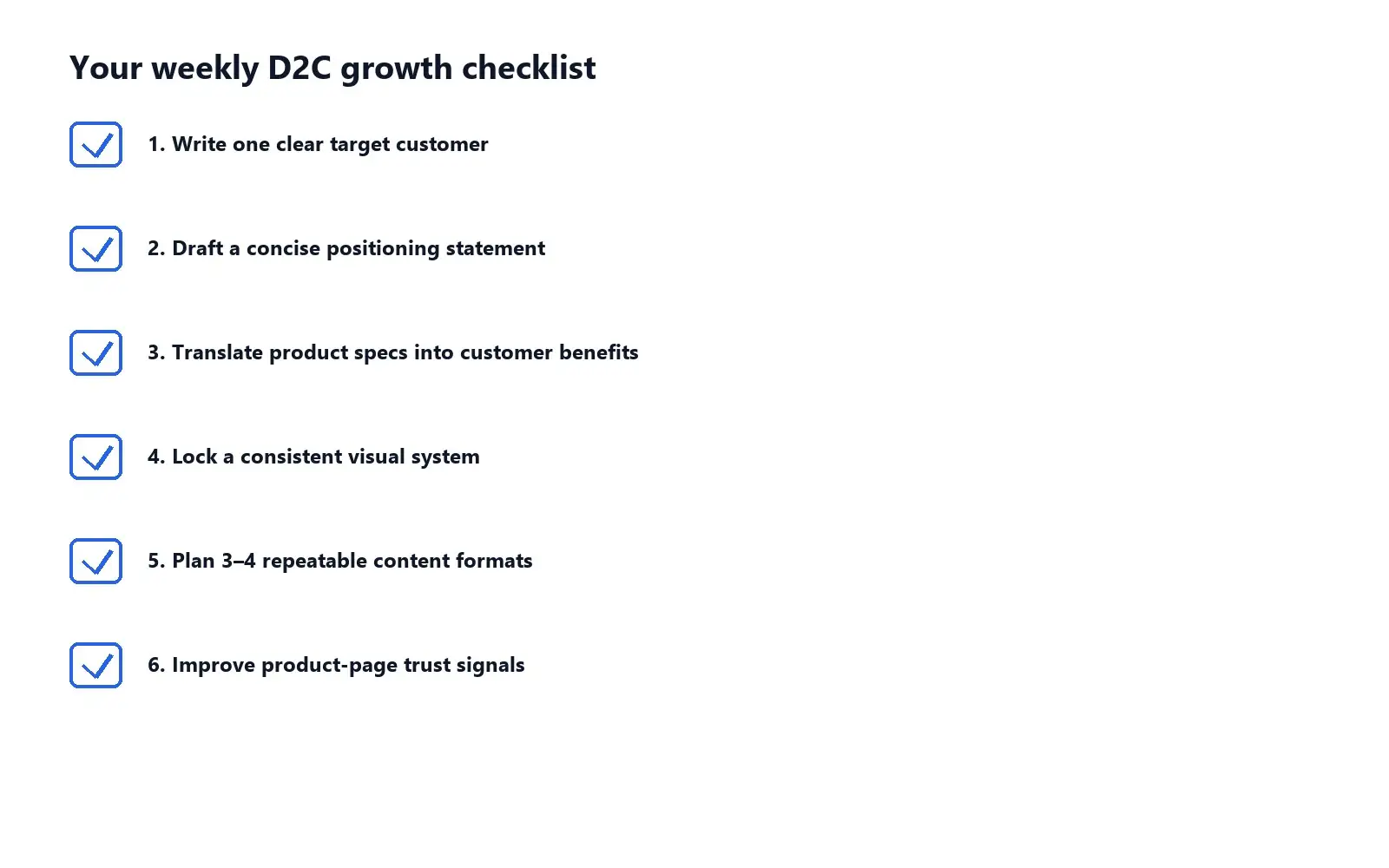
- Define one clear target customer. Write down who, specifically, this brand is for.
- Write a concise positioning statement. One or two sentences: what the brand is, who it's for, and why it's different.
- Explain the product's strongest benefit in plain language. Translate any spec (like GSM) into what it means for the customer.
- Build a consistent visual system. Same photography style, same color treatment, repeated deliberately.
- Plan 3,4 repeatable content formats. Not a new idea every day, a small set, executed well and often.
- Improve product pages. Clear sizing, honest fabric details, a visible return policy.
- Actively collect customer content. Ask directly. Don't wait for it to appear on its own.
- Test one marketing hypothesis at a time. Isolate variables before scaling spend.
- Track a few meaningful signals. Repeat visits, add-to-carts, and content engagement tell you more early on than raw traffic alone.
- Review and adjust weekly. Treat the system as something to refine, not something to set once and leave alone.
None of these steps guarantee a specific sales outcome. They're the practical groundwork that makes growth more likely to compound once it starts.

If your brand has the product right and needs help turning that into a consistent visual and content system, Short Stereo's design and motion work supports growing D2C and streetwear brands on design, social content, and AI-assisted workflows, built to support a brand's strategy, not replace it.
How Short Stereo Helps D2C Clothing Brands Build Consistency
Short Stereo helps small apparel teams lock positioning into practical systems: clearer product pages, repeatable social formats, and AI-assisted content that stays on-brand. After the same growth questions keep showing up in founder communities, the brands that move forward are usually the ones that pick one playbook step and ship it this week.
Conclusion
Learning how to grow a D2C clothing brand from India, or anywhere, rarely comes down to one clever tactic. It comes down to clear positioning, a visual system that's actually consistent, content formats worth repeating, and a shopping experience that removes hesitation instead of adding to it. A strong product, like a 240 GSM tee built to hold its shape, is the foundation, but the brand work is what turns that foundation into something people recognize, trust, and come back for. Start with one piece of this playbook this week, not all of it at once. If you want help turning that into a practical brand and content system, visit shortstereo.com.
Frequently Asked Questions
How do I grow a D2C clothing brand from India?
Start with clear positioning, a specific target customer and a concrete, believable version of your value proposition, then build a consistent visual and content system before increasing ad spend.
How can a new streetwear brand stand out?
Consistency in visual identity (photography style, color treatment, typography) tends to matter more for recognition than any single standout post, especially in a visually crowded category.
What type of content should a clothing brand post on social media?
A small set of repeatable formats, product-in-motion clips, texture close-ups, simple styling posts, and honest behind-the-scenes content, usually builds recognition faster than constantly inventing new content ideas.
How can a clothing brand communicate premium quality?
Translate technical specs like fabric weight into what they mean for the customer in plain language, durability, structure, and feel, rather than relying on the word premium alone.
How can design and video help a clothing brand grow?
Consistent design and video work support recognition and trust over time, but they work alongside a clear strategy. They're not a substitute for defined positioning or a tested content approach.