You've probably bought a Panasonic product without ever seeing the Panasonic name on it. Shoppers still type brands owned by Panasonic when they want the real ownership map behind Technics, Lumix, Eneloop, and Toughbook. This article turns that curiosity into a usable brand portfolio playbook.
BGR recently rounded up the tech brands hiding in plain sight under Panasonic's ownership, names like Technics, Lumix, Eneloop, and Toughbook, each with a devoted following that often has no idea a single Japanese electronics giant sits behind all of them. Panasonic, founded in 1918, has spent over a century building not just products but an entire portfolio of brands, each speaking to a completely different customer.

That's a more interesting story than "big company owns smaller companies." It's a working example of a brand architecture strategy most growing companies eventually have to think about: when to put your name front and center, and when to let a sub-brand carry the trust on its own.
Short Stereo works with brands navigating exactly this kind of portfolio decision, helping companies figure out which products deserve their own identity and which should stay under one unified brand. That's why Panasonic's approach is worth studying closely, not just skimming as trivia. Coverage of "9 Tech Brands You Might Not Realize Are Owned By Panasonic" is the attribution source; read the BGR roundup of Panasonic-owned tech brands for the original list.
The News: 9 Tech Brands You Might Not Realize Are Owned By Panasonic
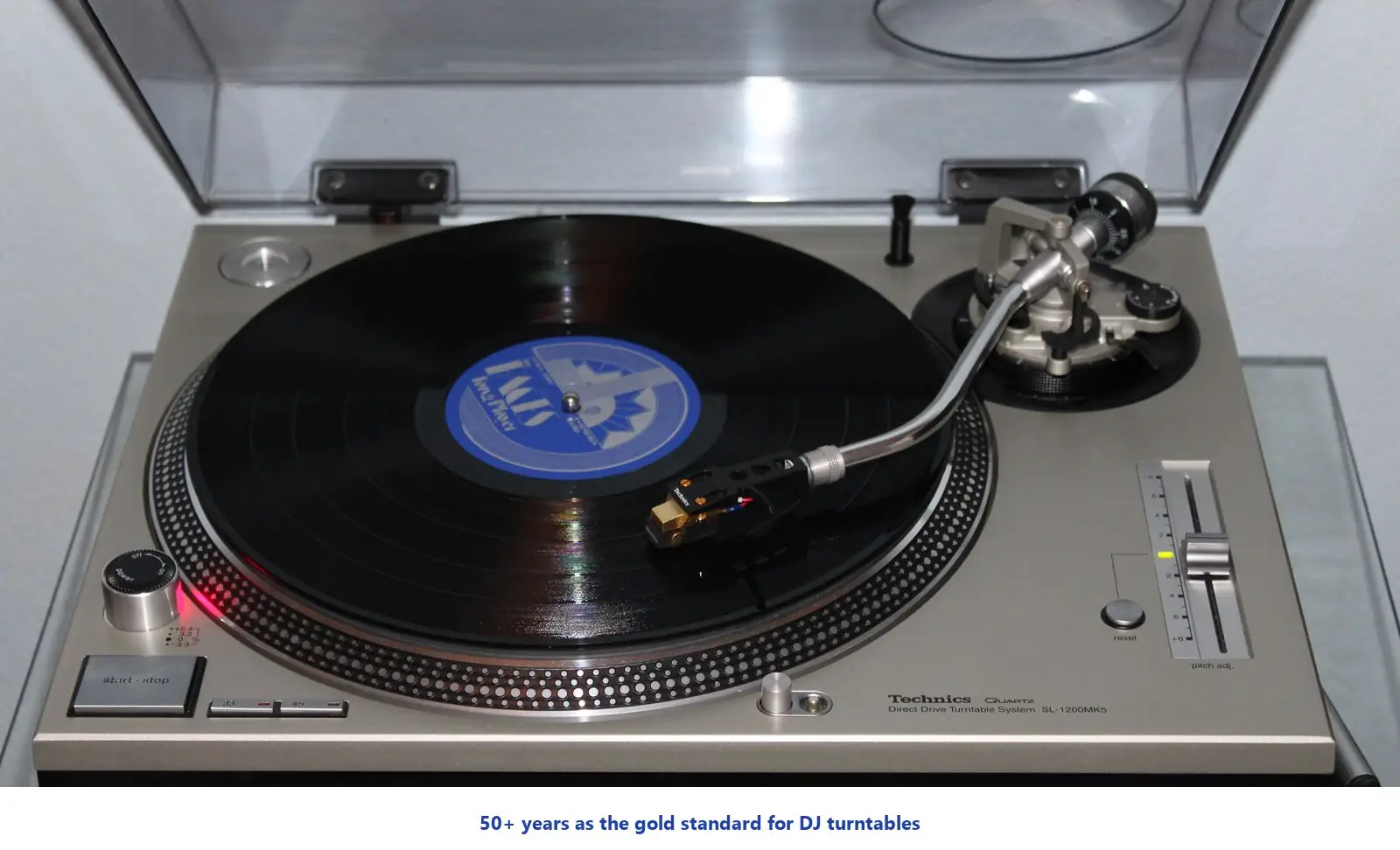
BGR's list makes the ownership map concrete. Technics serves hi-fi and DJ audiences. Lumix serves photographers. Eneloop serves everyday households buying rechargeable batteries. Toughbook serves field and industrial buyers who need rugged laptops. Different shelves, different promises, one parent company.
For founders and CMOs, the news is less about trivia and more about brand architecture: a house of brands can protect category trust while shared manufacturing and R&D stay invisible. That is the hidden design shift behind brands owned by Panasonic.
Why Panasonic Hides Its Name Behind Some of Its Best Products
Technics, the turntable brand hi-fi fans trust
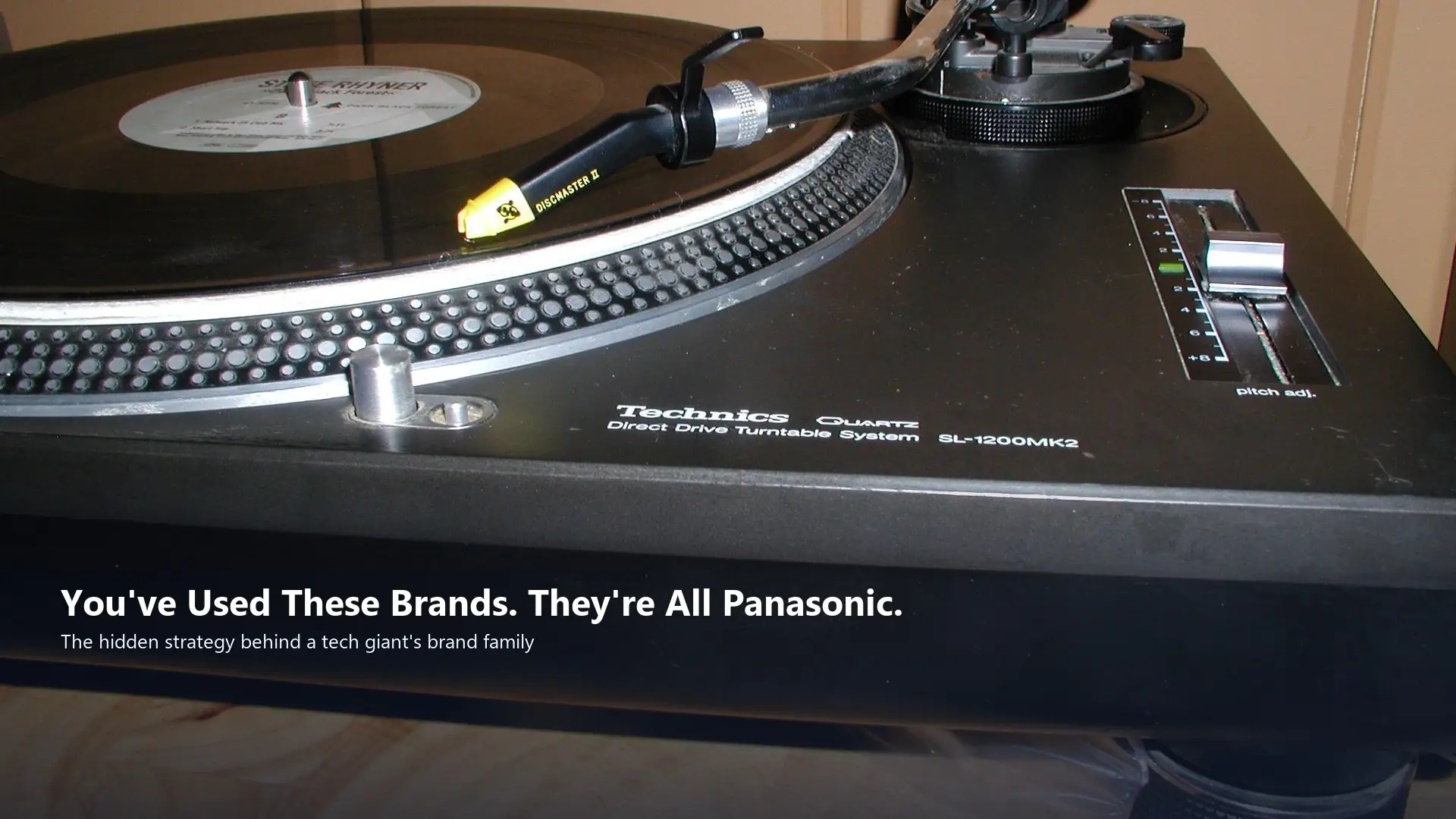
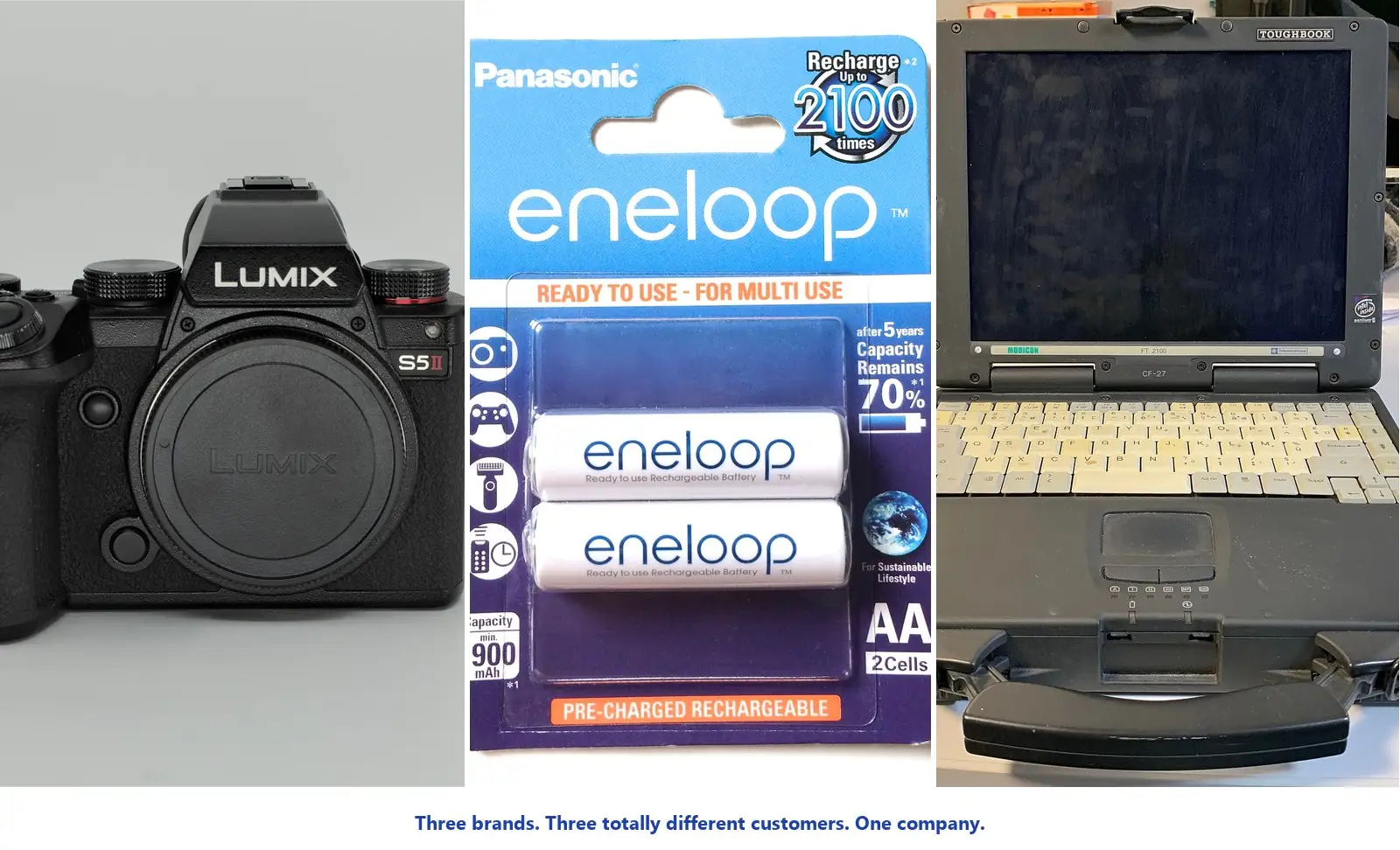
Technics has been part of Panasonic since the brand's inception in 1965, but ask a DJ or vinyl collector who makes their turntable and you'll rarely hear "Panasonic" as the answer. Technics built its own reputation, most famously through the SL-1200, the direct-drive turntable that became the standard for DJ decks for more than 50 years.
Lumix, Eneloop, and Toughbook, three very different audiences, one parent company
Panasonic didn't stop at one sub-brand. Lumix serves photographers who care about lenses and sensors, not corporate parentage. Eneloop serves everyday households buying rechargeable batteries, a category where trust is about reliability, not prestige. Toughbook serves field technicians and industrial buyers who need rugged, dependable laptops, a customer with almost nothing in common with a Lumix shooter or an Eneloop household.
The Consumer Trust Signals a "Hidden Owner" Strategy Creates
When a company runs multiple distinct brands instead of one master brand, it's making a deliberate trust decision. A hi-fi buyer trusts Technics because of turntables, not because of Panasonic's rice cookers or televisions. A field technician trusts Toughbook because of durability testing, not because of a shared parent company. Keeping these identities separate lets each one build a reputation suited to its own category, without the baggage, or the unrelated associations, of the parent brand.
6 Brand Portfolio Lessons From Panasonic's Sub-Brand Strategy
Lesson 1, A sub-brand can outlive its own category shifts
Technics has survived changing formats, changing audio trends, and even a period when Panasonic itself de-emphasized the brand, because the sub-brand's reputation didn't depend on the parent company's fortunes.
Lesson 2, Distinct identities reach audiences a parent brand can't
A photographer buying a Lumix camera and a household buying Eneloop batteries are different audiences with different priorities. Trying to sell both under one identical brand voice would serve neither well.
Lesson 3, Trust transfers quietly, even when the name doesn't
Even without visible co-branding, Panasonic's manufacturing quality and R&D show up in each sub-brand's reliability, proof that trust can transfer through product quality even when it doesn't transfer through a shared logo.
Lesson 4, Reviving a legacy name resets its story without erasing its credibility
Panasonic discontinued and later revived Technics, and the brand came back with its heritage intact rather than needing to rebuild trust from zero. A well-managed legacy brand is an asset worth preserving even during a pause.
Lesson 5, Not every product needs your logo on it
Toughbook, Lumix, and Technics succeed in part because they read as category specialists first, not as "a Panasonic product." That is a lesson for any company expanding into a category where the parent name might not be the strongest asset.
Lesson 6, A portfolio strategy needs deliberate design consistency behind the scenes
Even with separate public identities, Panasonic maintains shared manufacturing standards, supply chains, and internal design discipline across its sub-brands, the coordination customers never see but always benefit from.

Companies managing more than one brand or product line often struggle to keep them coordinated once responsibility for each is split across different teams. Short Stereo's brand-led website experiences are built around exactly this kind of multi-brand coordination, distinct identities that still feel like they come from one disciplined organization.
What Brands Should Implement If They're Building a Portfolio
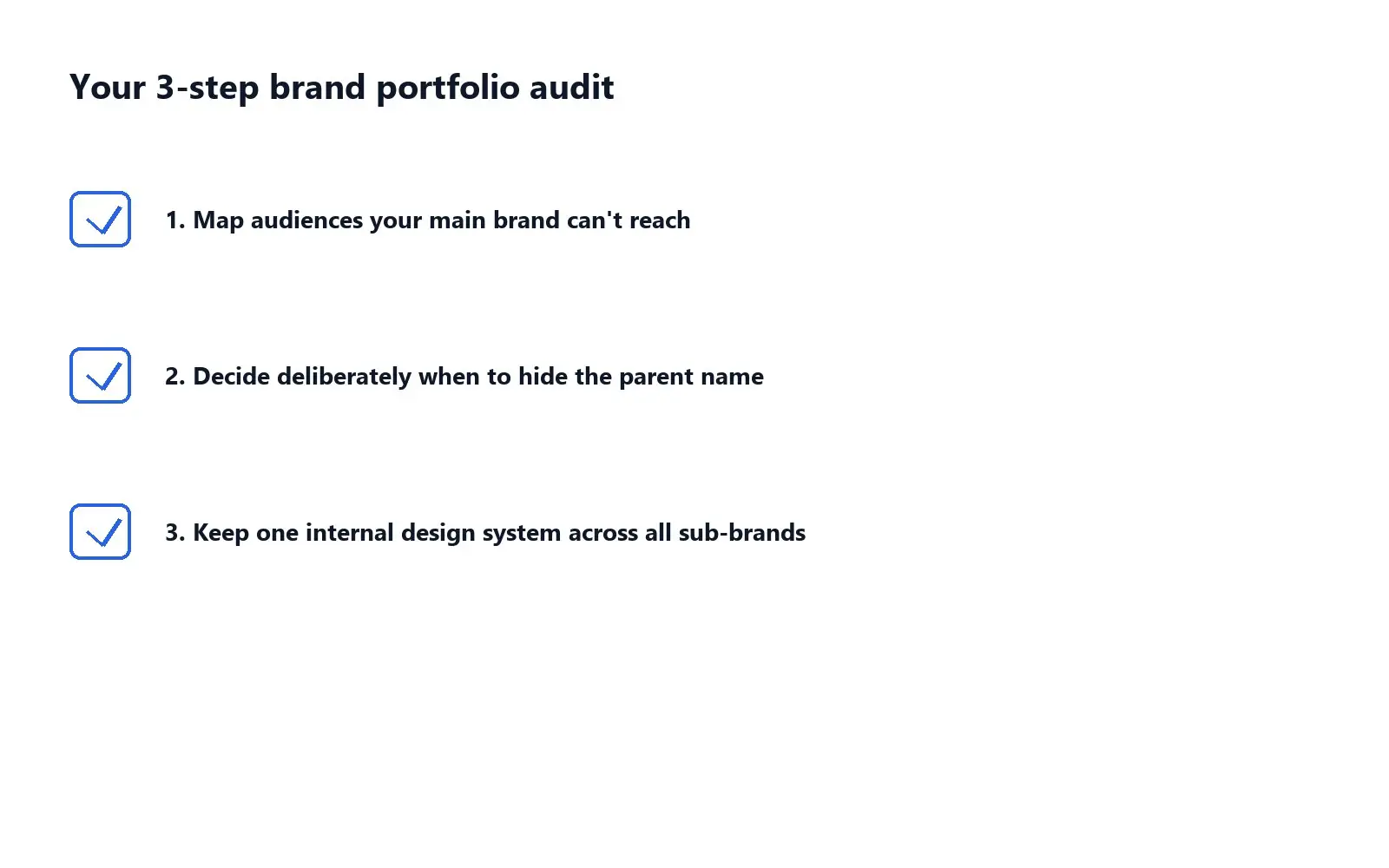
You don't need Panasonic's scale to apply this thinking. Start with three moves:
- Map which audiences your main brand can't reach. If a new product line serves a meaningfully different customer with different priorities, that's a signal it might deserve its own identity.
- Decide deliberately when to hide the parent name. This should be a strategic choice based on audience trust and category fit, not an accident of how a product line grew.
- Keep an internal design system even when the outward identities differ. Shared quality standards, tone guidelines, and production discipline should connect every sub-brand, even if customers never see the connection.
Consistency behind the scenes matters even when identities differ outwardly. A fractured internal system eventually shows up as inconsistent quality or messaging across brands. This is where social content systems built for brand consistency tend to help most once a company is managing more than one public identity. Scale that education with AI-assisted content and growth workflows that stay on approved brand rules instead of inventing a new voice for every launch.
Where Most Brands Get This Wrong
The most common mistake is either forcing every product under one identical brand voice regardless of audience fit, or spinning up new sub-brands without any shared internal discipline connecting them. Panasonic's approach works because it's deliberate on both ends: sub-brands get real independence where it helps trust, but shared standards keep quality and coordination intact behind the scenes. Most companies pick one extreme and miss the balance.

If your company is weighing whether a new product line needs its own brand identity, Short Stereo's design and motion work spans design, motion, and AI-led content to help growing companies build a portfolio strategy that actually holds together.
How Short Stereo Helps Brands Apply Panasonic's Portfolio Logic
Short Stereo helps teams translate house-of-brands decisions into practical systems: clearer websites, consistent social content, and AI-assisted workflows that respect each public face without fracturing the internal standard. After ownership stories like BGR's Panasonic list, the brands that win are the ones that can keep audience fit and backstage discipline in the same brief.
Conclusion
Technics, Lumix, Eneloop, and Toughbook all trace back to one century-old Japanese electronics company, and most of their customers have no idea. That's not an accident. It's a deliberate brand portfolio strategy that lets each sub-brand earn trust on its own terms while Panasonic's manufacturing discipline and R&D quietly support all of them. Any growing company facing the same choice, one unified brand or several specialized ones, can borrow the same logic about brands owned by Panasonic: let audience fit decide the identity, and keep the internal system disciplined no matter how many public faces the company wears. If you want help turning that into a practical brand and website system, visit shortstereo.com.
Frequently Asked Questions
What tech brands does Panasonic actually own?
Panasonic's portfolio includes Technics (turntables and hi-fi audio), Lumix (mirrorless cameras), Eneloop (rechargeable batteries), and Toughbook (rugged laptops), among other brands identified in BGR's roundup of nine Panasonic-owned names.
Why would a company hide its ownership of a well-known brand?
Separating a sub-brand from its parent company lets it build trust specific to its own category and audience, rather than being weighed down by unrelated associations tied to the parent's broader reputation.
Is a "house of brands" strategy right for smaller companies too?
It can be, if a new product line serves a meaningfully different audience. The key is applying the same deliberate audience-fit thinking Panasonic uses, not spinning up sub-brands without a clear strategic reason.
What's the risk of running multiple brands under one parent company?
The main risk is losing internal coordination. Without shared design and quality standards behind the scenes, a portfolio of sub-brands can drift into inconsistent quality or messaging even while their public identities stay distinct.