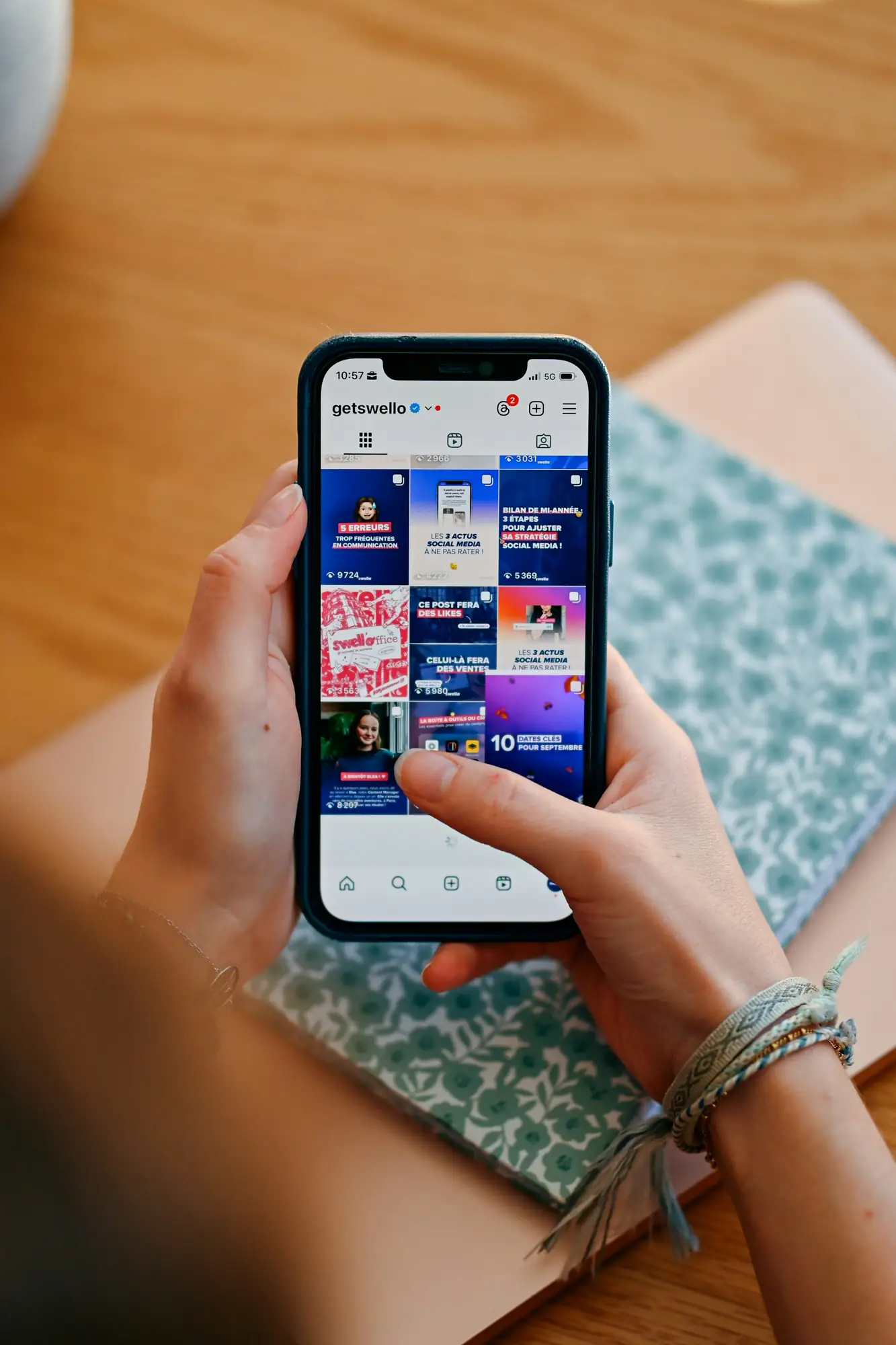
Instagram ads aren't a side channel for fashion brands anymore, they're becoming the main event. Instagram ads for fashion brands now sit at the center of how labels win attention, drive discovery, and convert shoppers who never open a traditional product catalog.
That shift is not only about media budgets. It is about brand design, customer experience, and whether your visual system can hold up at feed speed when every scroll is a competition for one second of focus.
Industry reporting, including coverage from The Business of Fashion, has underlined a clear direction: fashion is leaning harder into Instagram as a paid growth channel. For founders, CMOs, and design leads, the real question is what that spend demands from branding strategy, Instagram ad design, and the experience after the tap.
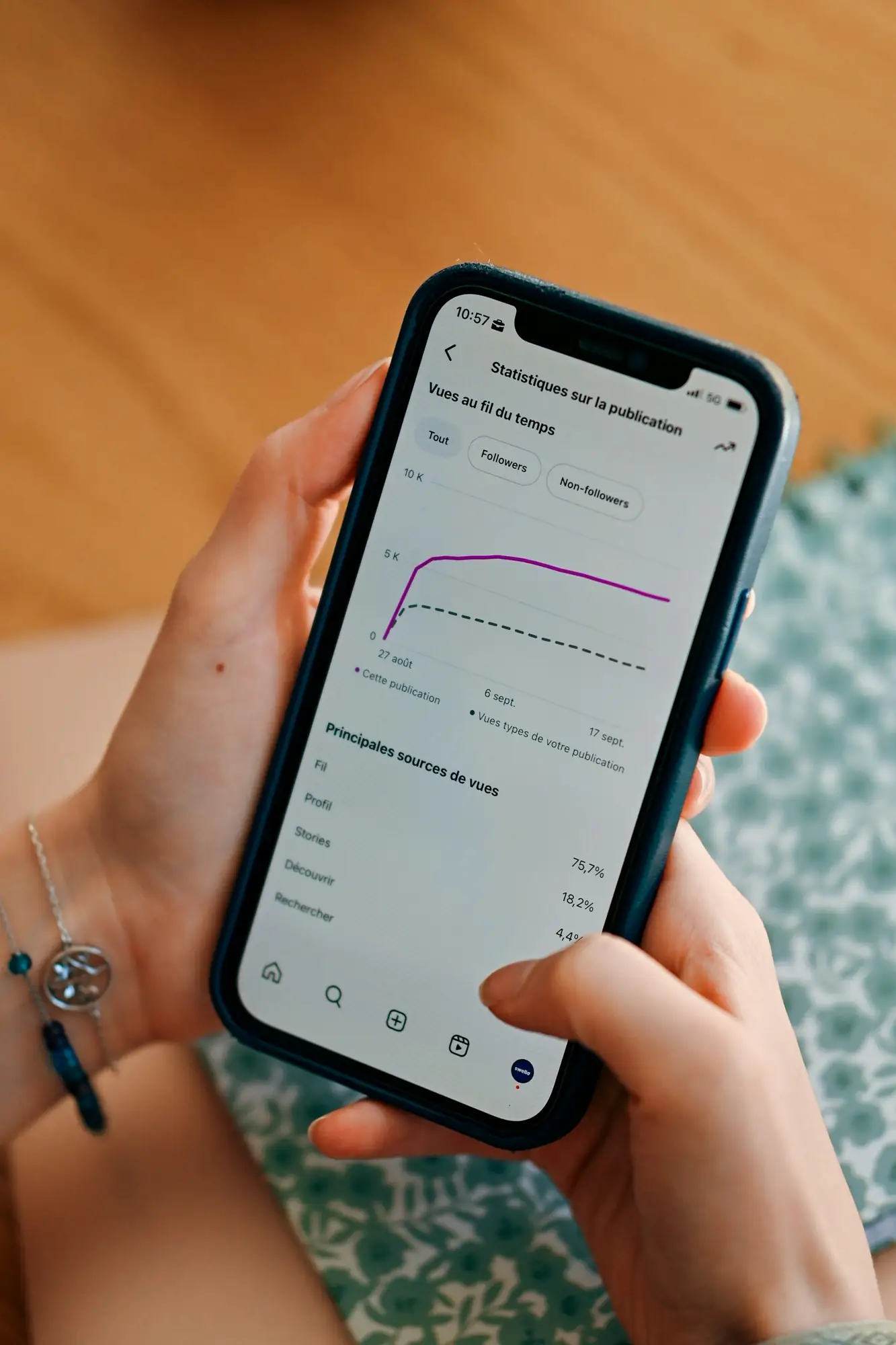
Here are seven lessons fashion brands need to understand about Instagram ads right now, and how to turn 2026 Instagram marketing pressure into a cleaner brand system.
Why Fashion Brands Are Doubling Down on Instagram Ads
Fashion brand marketing has always lived where culture and commerce meet. Instagram is where that intersection is most concentrated today: discovery, social proof, product tags, and in-app shopping all sit inside one feed. When organic reach gets harder, paid social fills the gap, and Instagram becomes core infrastructure rather than a campaign add-on.
That is why Instagram marketing 2026 planning looks different from a few years ago. You are not only buying impressions. You are buying the right to present brand identity in a high-speed environment where weak creative dies quickly and strong creative becomes the storefront.
Every dollar shifted into Instagram ads puts more pressure on digital brand identity, ad creative consistency, and the path from click to checkout. If the system cannot hold up, more budget just means more waste.
1. Instagram Ads Are Becoming the Storefront, Not Just the Billboard
Instagram ads used to be about awareness: get seen, drive a little traffic, let the website close the sale. That model is fading. In-app shopping features, product tags, and one-tap checkouts mean the ad itself is often the first and last stop before a purchase decision.
For fashion, that matters even more. Fit, fabric, and styling cues have to land inside the creative, not only on a product detail page the customer might never patiently read. Instagram ads for fashion brands now carry storefront expectations, not billboard expectations.
What this means for product pages and checkout flow
If your Instagram ad promises a seamless buy, your landing page and checkout need to match that speed. A slow-loading product page after a fast, polished ad is where fashion brands lose the sale they just paid for. Align merchandising, inventory messaging, and mobile checkout with the promise the ad made in the first three seconds.
Treat paid social as the top of a continuous experience design loop, not a disconnected media channel. That loop is also where website design services stop being a separate project and become part of the ad system.
2. Instagram Branding Now Has to Work at Thumb-Stopping Speed
The average scroll speed on Instagram does not leave room for a slow brand reveal. Logo, color, and message need to register in under a second. Social media branding that only works on a carefully designed homepage will fail in a vertical feed where attention is rented, not owned.
Instagram branding strategy in this environment is less about perfect composition for a gallery wall and more about instant recognition under motion, compression, and noise. If someone cannot identify your brand with sound off and caption unread, the creative is not feed-ready.
Visual hierarchy for scroll-speed attention
- Lead with the strongest visual, product motion, color block, or face, before secondary details
- Keep text minimal and high contrast, one idea, not a paragraph on screen
- Protect brand marks, logo placement and palette should still read at small sizes
- Design for mute-first viewing, captions and on-screen cues cannot depend on audio alone
Thumb-stopping Instagram ad design is a brand craft problem first and a media buying problem second.
3. Ad Creative and Brand Identity Can No Longer Live Apart
For years, many fashion brands treated brand design and ad creative as two separate teams with two separate looks. That gap is now a liability. When ad creative does not match brand identity, customers feel a disconnect, even if they cannot name why.
The strongest-performing fashion ads on Instagram right now are the ones where the ad is the brand system, just formatted for a 9:16 canvas. Color, type, photography style, and tone of voice should feel continuous from campaign film to product tile to product page.
This is the practical core of brand experience design for paid social: templates, type rules, and image direction that marketers can reuse without improvising a second visual language every week.
4. Instagram Ad Design Is Reshaping Website and App Experience
Matching landing pages to ad creative is quickly becoming a baseline expectation, not a nice extra. If a customer clicks an ad with a specific color palette, product framing, and tone of voice, and lands on a page that looks like a different brand entirely, trust drops immediately.
This is where Instagram ad strategy and website design have to work as one system, not two separate projects handled by two separate teams. Message match is conversion design. Creative continuity is UX.
Matching landing pages to ad creative
Carry the same hero product framing, palette, and offer language from the ad into the first screen of the landing experience. Remove friction that only appears after the click: surprise shipping costs, unrelated merchandising, or a homepage dump that forces shoppers to re-find what the ad already sold.
5. Video-First Instagram Ads Are Outperforming Static Posts
Static product shots still have a place, but short-form video is where attention and conversion are concentrating. Fashion, in particular, benefits from movement: fabric, fit, and texture are hard to communicate in a still frame.
Brands that are still leaning heavily on static image ads are increasingly competing at a disadvantage against brands that treat every Instagram ad as a tiny piece of brand film. Instagram ad trends favor motion that teaches the product in seconds, then hands the viewer a clear next step.
That does not mean every asset needs a cinema budget. It means your Instagram branding strategy needs video templates: opening hooks, product proof moments, and end cards that stay on-brand under tight production timelines. Pair that system with AI-driven content workflows so variations ship without breaking identity.
6. Personalization Is Raising the Bar for Instagram Ad Relevance
Generic ad creative is getting more expensive to run, not less. Instagram's ad delivery increasingly rewards creative that feels relevant to a specific audience segment, which means fashion brands need more creative variations, not fewer.
This is less about writing more ad copy and more about having a flexible brand system that can produce many on-brand variations quickly, without starting from scratch each time. Audience modules, seasonal colorways, and offer frames should all plug into the same digital brand identity rules.
Personalization without brand guardrails becomes chaos. Personalization with a modular system becomes Instagram marketing that feels specific without looking accidental.
7. Measurement and Creative Testing Are Now Non-Negotiable
Increasing Instagram ad investment without a testing framework is just increasing risk. The brands seeing real returns are running structured creative tests, swapping one variable at a time (hook, visual, offer) and tracking what actually moves performance.
Measurement is not only ROAS dashboards. It is a creative learning loop: which openings stop the scroll, which product proofs convert, which landing matches retain the click. Without that loop, branding trends become guesswork and budgets become noise.
Build a weekly cadence. Keep a simple scorecard. Archive winners as reusable templates so Instagram ads for fashion brands get smarter over time instead of resetting every campaign brief.
A 2026 Instagram Branding Playbook From Short Stereo
If your Instagram ad strategy needs a reset, start with a practical sequence you can run this week. This is the same systems lens Short Stereo uses when paid social, brand design, and digital experience have to move together.
- Audit current ads, pull your last 90 days of Instagram ad creative and check it against your actual brand guidelines.
- Align with brand system, make sure ad templates use your real color, type, and logo rules, not a marketer's improvised version.
- Test creative weekly, commit to at least one structured creative test per week, changing only one variable.
- Scale what performs, once a format proves itself, build a repeatable template so your team is not reinventing it every time.
Support the loop with social media systems that can ship variants fast, and keep website, creative, and measurement in the same operating rhythm.
If your team needs support turning this into a repeatable system rather than a one-off project, explore more at shortstereo.com.
Conclusion
The surface story is simple: fashion brands need more Instagram ads than ever. The deeper story is what that demand does to brand design, experience design, and 2026 marketing budgets. Instagram ads for fashion brands only pay off when ad creative matches identity, landing pages protect the click, video earns attention, personalization stays modular, and testing stays honest.
Brands that treat this as a design problem, not just a media-buying problem, are the ones turning increased ad spend into real growth. Start with an honest audit of your current Instagram ads, align the brand system, then build the weekly loop that makes every next campaign smarter than the last.
Frequently Asked Questions
Do fashion brands really need to increase Instagram ad spend in 2026?
Industry reporting points to rising competition and shifting consumer shopping behavior on Instagram, which is pushing many fashion brands to increase ad investment to stay visible in feeds dominated by paid content.
What makes an Instagram ad "on-brand" versus generic?
An on-brand Instagram ad uses the same color system, typography, tone of voice, and visual composition as the rest of the brand, so it feels like a continuation of the brand experience rather than a separate marketing artifact.
How much of a fashion brand's marketing budget should go to Instagram ads?
This varies by brand size, margin, and customer acquisition cost, but the broader trend is that Instagram is claiming a growing share of paid social budgets for fashion and lifestyle brands specifically.
Do Instagram ads need to match the brand's website design?
Yes, when ad creative and landing page design don't match, customers experience a trust gap that can hurt conversion rates, even if the mismatch is subtle.
What's the biggest mistake fashion brands make with Instagram ads?
Treating ad creative as disconnected from brand identity, which leads to inconsistent visuals, weaker recognition, and wasted ad spend as budgets increase.