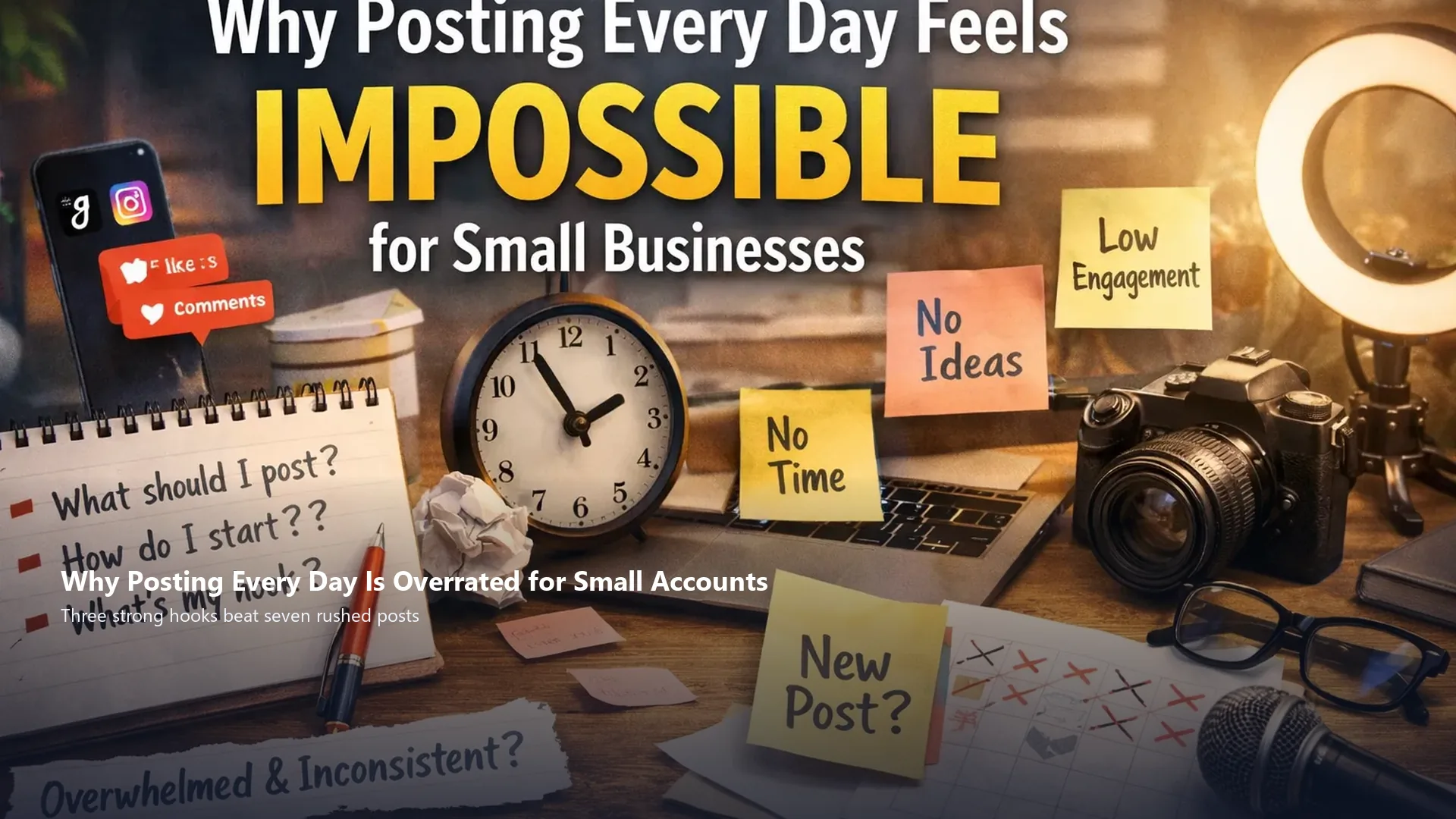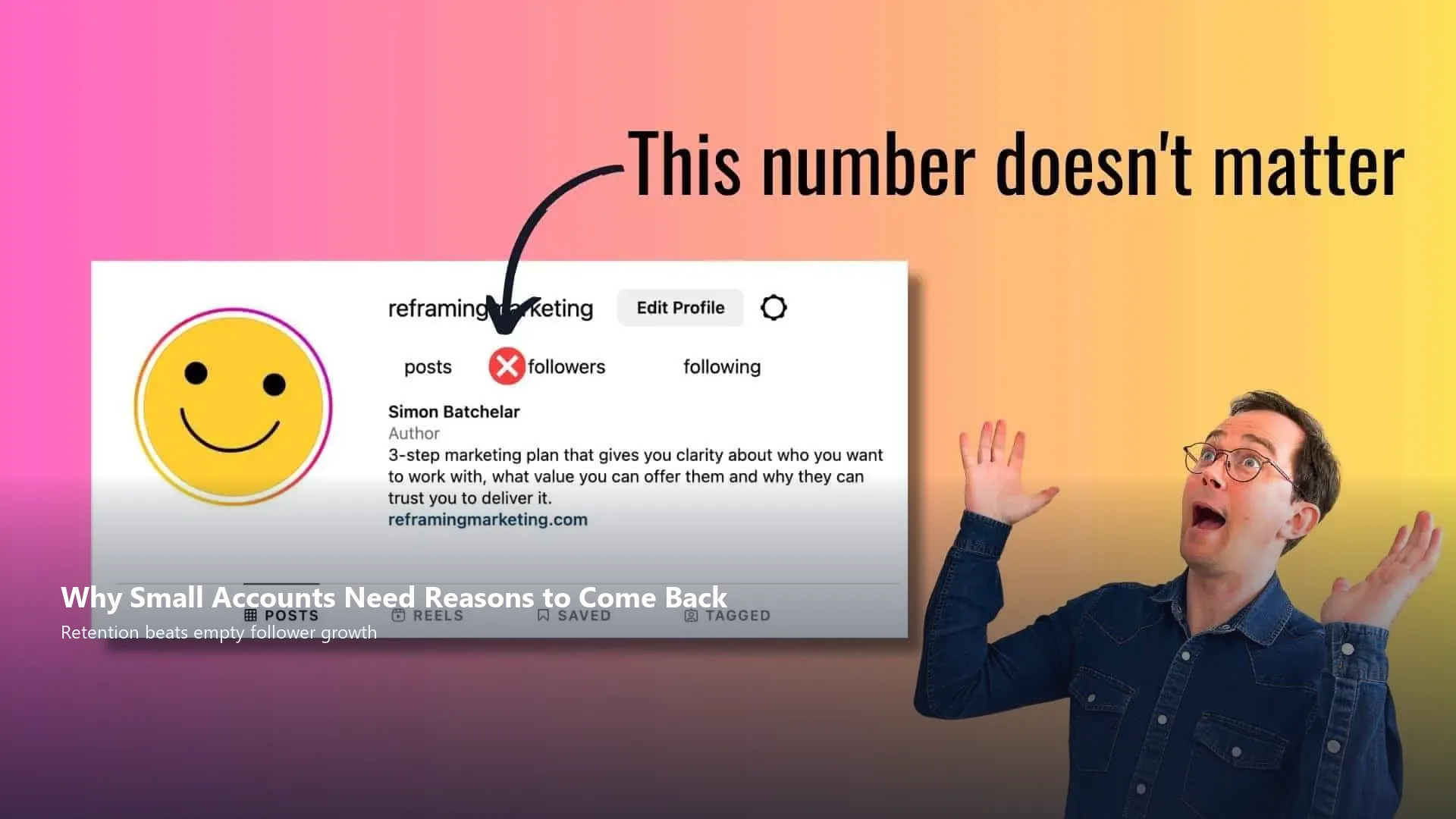
If you run a small account and keep chasing growth hacks, collabs, hashtags, and trending audio, pause. Most accounts with a few hundred followers do not need more strangers. They need a reason for the ones they have to come back.

That hot take showed up in an r/socialmedia thread about accounts in the 300 to 800 follower range. Profiles jumped topics and styles with no series and nothing to look forward to, while owners chased new eyes. The practical claim: until about 1 in 10 current followers would notice if you stopped posting, more followers mostly inflate the number. This article reframes that community pain into branding, experience design, and business decisions without inventing stats or promising outcomes.
Social media branding for small accounts is less about empty reach and more about digital brand identity people recognize. When every post looks like a different company, there is no habit to return to. When one promise, one visual system, and one recurring format show up reliably, followers have a reason to check again.
Founders feel pressure to grow because platforms celebrate big counts. The quieter truth is that a smaller audience that returns, replies, and remembers your offer is more useful than a larger audience that scrolls past and forgets. Design the return habit first. Let growth ride on something worth returning to.
Why Follower Growth Without Return Reasons Fails
New followers arrive with low context. If the grid is a collage of unrelated tips, memes, and random product shots, they leave. Growth hacks then become a treadmill: more acquisition to replace people who never bonded with the brand.
Businesses feel this as weak inquiries and quiet DMs despite a rising count. Experience design on social means designing for recognition and next steps, not only first impressions. A follower who returns is closer to trust than a follower who never comes back.
Chasing trending audio without a brand spine also trains the wrong muscle. The account becomes a remix machine. Viewers may stop once, but they do not learn what you stand for. Branding strategy asks a harder question: what should people expect from you next week?

The 1-in-10 Notice Test
Ask a blunt question: if you went quiet for two weeks, would roughly 1 in 10 followers notice or ask where you went? If the answer is no, acquisition is premature. Fix the reason to return first.
This is a branding strategy test, not a guilt trip. It tells you whether your content creates expectation. Expectation is the asset growth hacks cannot buy.
Practical move
Message five warm followers and ask what they expect from your account. If answers are vague or conflicting, your series and promise are not clear yet.
Pick One Recurring Series People Can Expect
The community advice was simple: pick one recurring thing, a weekly breakdown, a series, a running motif, and do it until people expect it. That is content architecture. It turns a feed into a show.
Choose one job for 90 days. Weekly tip. Customer proof. Process behind the scenes. Product teardown. Keep the frame, type, and end card stable. Rotate topics inside the format. Do not invent a new genre every Monday.
Series also reduce creative burnout. Episode two is easier when episode one already defined the system. Small teams win when design decisions happen once and reuse for weeks.
Name the series in the first line or on-screen title. Consistency of naming helps followers remember to look for the next drop. A nameless tip pile does not create anticipation. A named weekly breakdown does.
Keep Visual Style Stable Across Posts
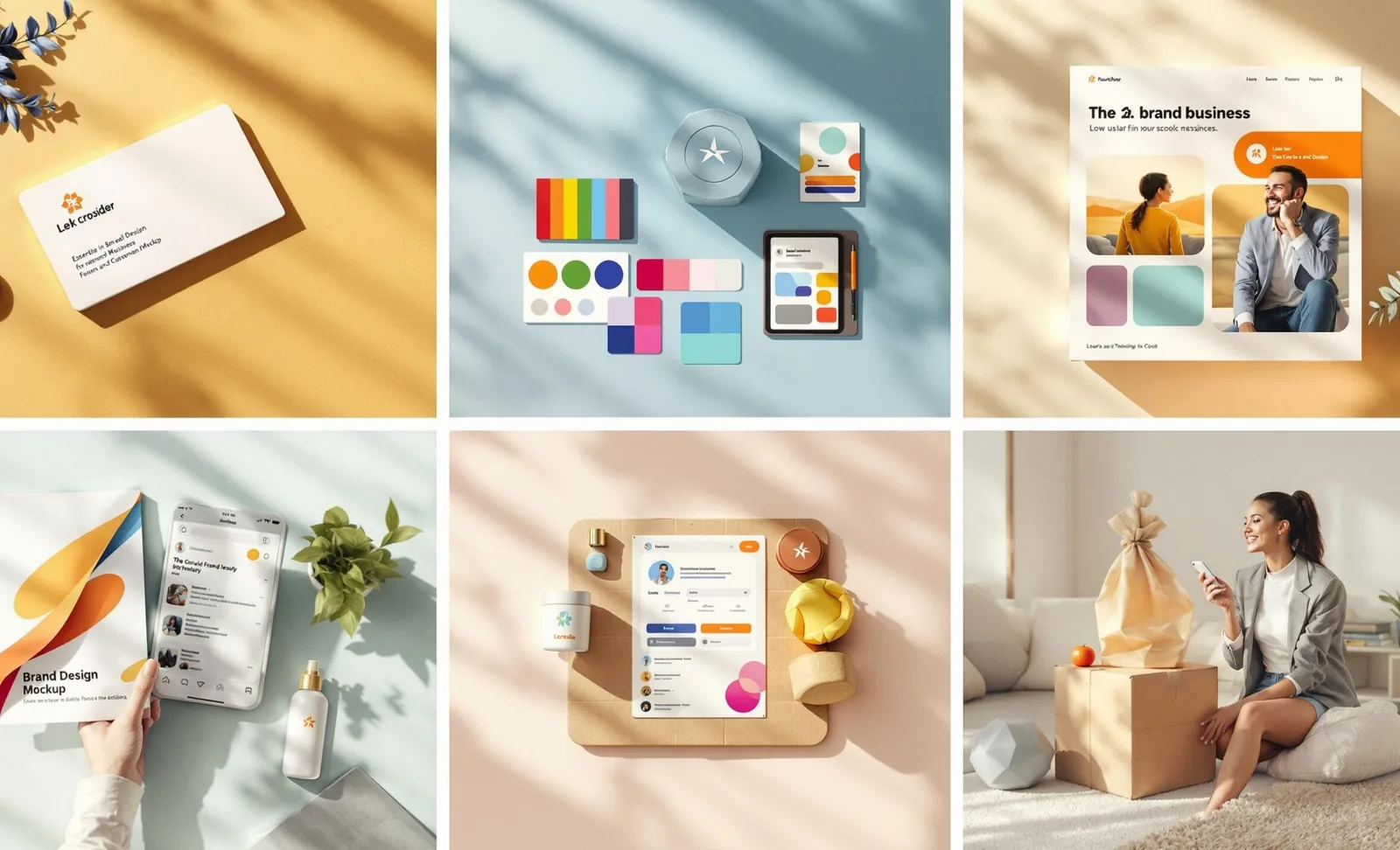
Different topics can still share one visual language. Same palette, type hierarchy, logo placement, and caption structure. When style flips every post, brand memory resets. When style holds, even quieter weeks still teach recognition.
Build four templates: education, proof, process, and offer. That is social media branding as a system. Operators who rely on social media systems usually keep series alive because the design work is already done.
If your current grid looks like five different brands, pause new formats for 30 days. Rebuild the last six posts into the same visual system. Recognition often improves before follower count does, and that is a healthy signal.
Make the Profile a Brand-Ready Storefront
Followers who return land on the profile first. Match avatar, cover, bio, and highlights to your website design. State the outcome you deliver in one sentence. Pin the series. Remove clutter that contradicts the promise.
Treat the profile like a storefront window. If a stranger cannot name what you sell in five seconds, growth only multiplies confusion. Digital brand identity should make the return path obvious.
Pin the strongest series episode and a clear proof post. Remove outdated highlights that contradict the current offer. A clean storefront makes return visits feel intentional instead of accidental.
Align Social Promises With Website Paths
A reason to come back should connect to a reason to act. When a series points to a clear offer, the post-click path must match: same headline, proof, and one next step. Misalignment wastes return attention.
Support drafting with AI content workflows, then edit for accuracy and brand voice. Tools speed production. They do not replace the judgment that decides what deserves a recurring slot.
If followers return to the feed but bounce on the site, fix UX before you add more series episodes. If the site is clear but social looks random, fix templates next. Retention is a cross-surface problem.

Use Short Video and Static Posts as a Return Loop
Short video creates anticipation when episodes feel familiar. Open on the problem or result, keep branding visible, and end with the series name or next episode cue. Static posts deepen proof, FAQs, and brand memory between video drops.
Together they form a loop: watch, recognize, return, act. That loop is more valuable than a one-time hashtag spike. Motion and branding work best when they share one system.
Batch two weeks of series assets in one session. Schedule them. Leave room for replies from people who already follow you. Conversation with existing followers often teaches more than another cold growth tactic.
Measure Return Signals, Not Only New Followers
Track profile revisits, series episode completion, saves, replies from known followers, and next-step clicks. New follower count is an input. Return behavior is closer to brand health.
If return signals rise while follower growth is modest, the account is getting better. If followers rise while nobody would notice silence, the number got bigger, not stronger. Never promise that retention tactics guarantee sales, rankings, or conversions.
Review the scoreboard weekly with whoever owns product and design. Retention becomes a shared system instead of a lonely posting streak. When the series is working, then consider careful growth experiments that attract people who already match the promise.
How Short Stereo Helps Small Accounts Earn Return Visits
After founders ask whether small accounts need more followers or a reason to come back, the teams that improve usually fix series design, brand consistency, and website follow-through together. Short Stereo helps connect those pieces so retention becomes a designed habit instead of a hope.
Conclusion
Why do small accounts need reasons to come back? Because growth without expectation inflates numbers and weakens trust. Build a recurring series, keep visual style stable, make the profile a storefront, align the website path, loop video with proof posts, and measure return signals. None of these moves guarantee followers, sales, or conversions. They improve the conditions under which people choose to return. If you want help turning that playbook into execution, visit shortstereo.com.
Frequently Asked Questions
How can a design agency help small accounts keep followers coming back?
A design partner clarifies the promise, builds a coherent visual system, designs recurring series templates, and aligns social creative with website UX so people have something recognizable to return to. Agencies do not guarantee followers, sales, or rankings.
What branding changes should businesses make to earn return visits?
Pick one offer line, stabilize fonts and colors across posts, pin a clear series, and stop switching topics and styles every day. Digital brand identity should feel like a storefront people recognize, not a random collage of trends.
How to use social media and video content so followers come back?
Launch one recurring format, such as a weekly breakdown or short demo series. Keep openings branded, end with a next step, and batch creative so the series stays reliable. Short video builds anticipation when the episode rhythm is predictable.
Do small accounts need more followers before they focus on retention?
Usually no. If current followers would not notice if you stopped posting, new followers mostly inflate the count. Build a reason to return first, then growth compounds on a stronger base.
What is a good recurring series for a small business account?
Choose one job: weekly tip, customer proof, process behind the scenes, or product breakdown. Keep the frame, type, and end card stable. Consistency of format matters more than inventing a new genre every week.