
Ask a marketer to name the most important company in B2B marketing, and you'll hear Salesforce, HubSpot, or Google before anyone says Microsoft. But look at where B2B buyers actually spend their day, LinkedIn, Teams, Outlook, and now Copilot, and one company owns nearly the entire path from first impression to closed deal.
Microsoft B2B marketing influence has grown quietly, and most brand leaders haven't updated their strategy to reflect it. It's not just an ad platform, a CRM, or a chat app. It's all three, and that concentration is the problem for marketers who haven't noticed.
Understanding where buyer attention actually lives, and building brand experiences that don't depend entirely on one platform, is core to how we think about strategy at Short Stereo, from social media systems to website design services and AI-driven brand content.
How Microsoft Quietly Became a B2B Marketing Powerhouse
Microsoft's B2B dominance didn't happen through a single flashy campaign. It happened through acquisition and integration: LinkedIn for professional networking and advertising, Teams for daily workplace communication, Dynamics for CRM, and Copilot layering AI across all of it.

The result is a company that touches a B2B buyer's research, communication, and decision-making, often without the buyer (or the marketer) realizing it's all the same ecosystem. That is Microsoft marketing strategy at the platform level: own the day, not just the ad slot.
The Microsoft Products Already Running Your Marketing Funnel
Where marketers already live
- LinkedIn, the default channel for B2B content, thought leadership, and paid advertising
- LinkedIn Ads, one of the few remaining B2B ad platforms with genuine professional targeting data
- Microsoft Advertising (Bing), a growing share of B2B search traffic, especially in enterprise queries
Where AI is quietly taking over
- Microsoft Copilot, increasingly the first place employees ask questions, including product and vendor research
- Teams, where B2B sales conversations, demos, and follow-ups now happen by default
- Dynamics 365, CRM data increasingly feeding AI-driven marketing personalization
Together, LinkedIn marketing, Microsoft Copilot marketing, and enterprise software marketing sit inside one commercial orbit. B2B marketing trends 2026 aren't only about creative formats, they're about who mediates the funnel.
What This Means for Consumer and Buyer Experience
For B2B buyers, this consolidation feels convenient, research, communication, and even AI assistance happen inside tools they already use daily. But convenience for the buyer means concentration of power for the platform.
When Copilot summarizes vendor options or LinkedIn's algorithm decides which content gets seen, Microsoft increasingly shapes the buyer's first impression before a brand ever gets a chance to make its own case. Microsoft branding, in this sense, is ambient: the interface is someone else's, even when the product is yours.
The Branding & Design Risk of Platform Dependence
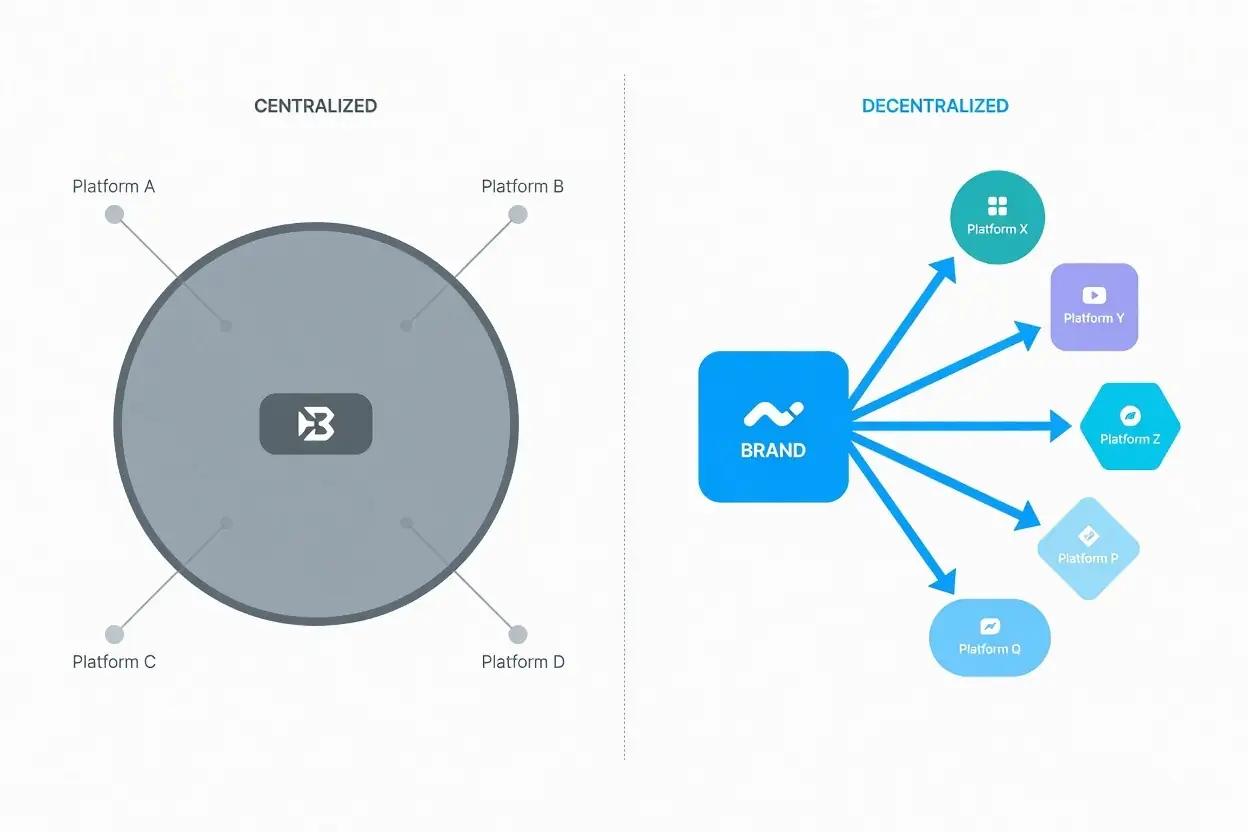
Losing control of the customer relationship
When most of your funnel lives inside LinkedIn, Teams, or Copilot-surfaced results, your brand experience is filtered through someone else's interface, someone else's algorithm, and someone else's design rules. B2B lead generation still works, but the relationship file may not fully be yours.
Sameness across LinkedIn-native content
Because so much B2B content now optimizes for the same platform (LinkedIn) and the same AI assistant (Copilot), brand voices are converging. Carousel posts, thought-leadership formats, and even tone start to look interchangeable across competitors.
This is where a deliberate brand-owned digital experience, a website, content hub, or social presence with your own design language, matters more than ever, rather than relying entirely on platform-native formats.
A Playbook: Marketing Smart in a Microsoft-Dominated Stack
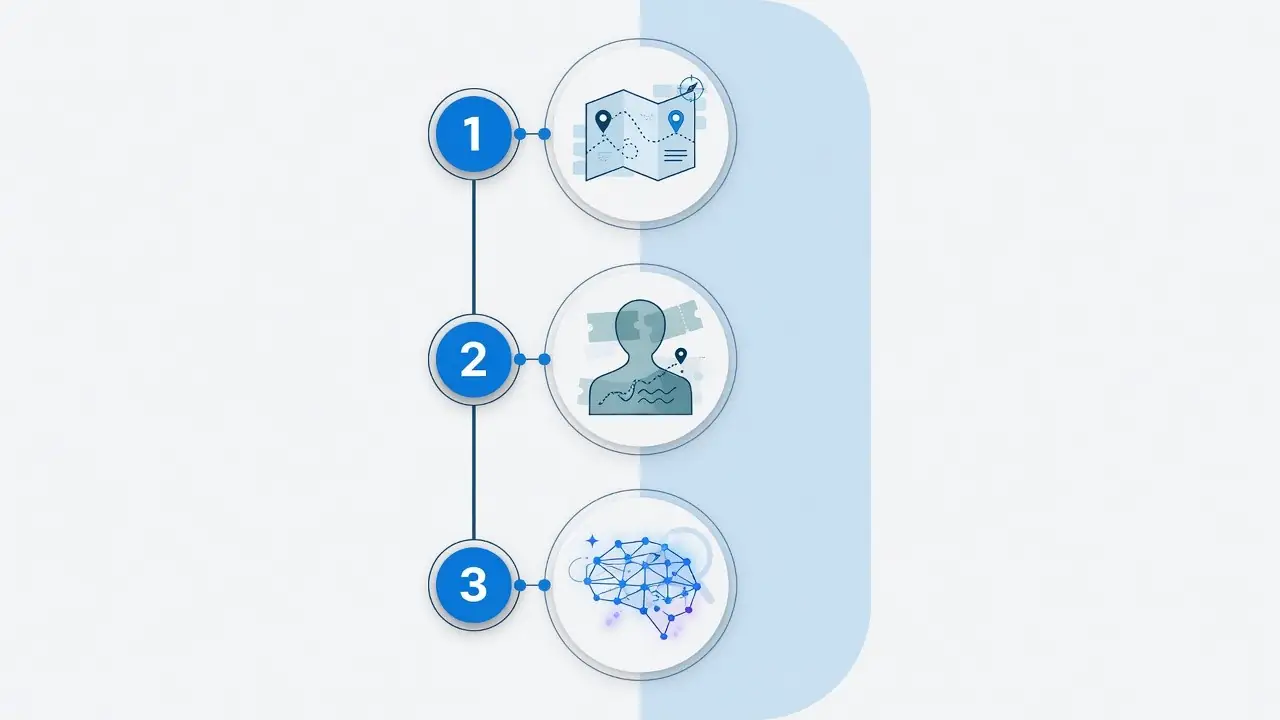
Step 1, Map your platform dependence
List every touchpoint where Microsoft products currently control your buyer's experience, LinkedIn content, Copilot-surfaced answers, Teams-based sales conversations. Awareness is step one. You cannot diversify a marketing tech stack you haven't mapped.
Step 2, Own your brand experience outside the platform
Invest in a website, content hub, or email presence that reflects your actual brand design system, not just a platform template. This is where your visual identity, tone, and story stay fully yours. Owned channels are the counterweight to Microsoft ecosystem business concentration.
Step 3, Use AI tools without losing differentiation
Use Copilot, LinkedIn's AI features, or other assistants for speed and research, but keep final brand voice, positioning, and creative decisions with your own team, not the platform's defaults. Speed without differentiation is just efficient sameness.
Microsoft's growing grip on B2B marketing isn't a reason to panic, but it is a reason to make sure your brand doesn't live entirely inside someone else's ecosystem. That's exactly what we help teams build at Short Stereo: design, motion, and automation for brand experiences that stand on their own. Explore our website design services or see how we approach social media strategy.
Conclusion
Microsoft didn't need a single dramatic announcement to become one of the most important companies in B2B marketing, it built the stack quietly, one acquisition and integration at a time.
For marketing leaders, the takeaway isn't to abandon LinkedIn, Teams, or Copilot. It's to make sure your brand has a genuine home outside of them too, one where your design, voice, and customer relationship belong to you, not to a platform's algorithm. That is the real lesson of Microsoft B2B marketing influence today: use the ecosystem, but don't become it.
How Short Stereo Helps Brands Apply This
At Short Stereo, we turn insights like these into design systems, digital experiences, and content workflows that stay on-brand, so strategy does not stop at the article.
Frequently Asked Questions
Is Microsoft really a marketing company now?
Not officially, but functionally, yes. Through LinkedIn, Teams, Dynamics, and Copilot, Microsoft now touches nearly every stage of the B2B marketing and sales funnel.
Does this affect LinkedIn advertising strategy?
Yes. As LinkedIn increasingly integrates with Microsoft's broader AI and data ecosystem, ad targeting and content distribution are becoming more tied to Microsoft's overall platform behavior, not just LinkedIn in isolation.
Should brands reduce reliance on Microsoft's ecosystem?
Not necessarily reduce, but diversify. Brands should maintain a strong presence outside Microsoft's tools (owned website, email, other channels) so they aren't entirely dependent on one company's algorithms and product decisions.
How does Copilot affect B2B buyer research?
Increasingly, buyers ask Copilot directly for vendor comparisons or recommendations, meaning how your brand is represented in Microsoft's AI training and data matters more than before.
What's the first step for marketers worried about this trend?
Audit every touchpoint where a Microsoft product currently mediates your buyer relationship, then prioritize strengthening your owned channels, website, email, and direct content, as a counterbalance.