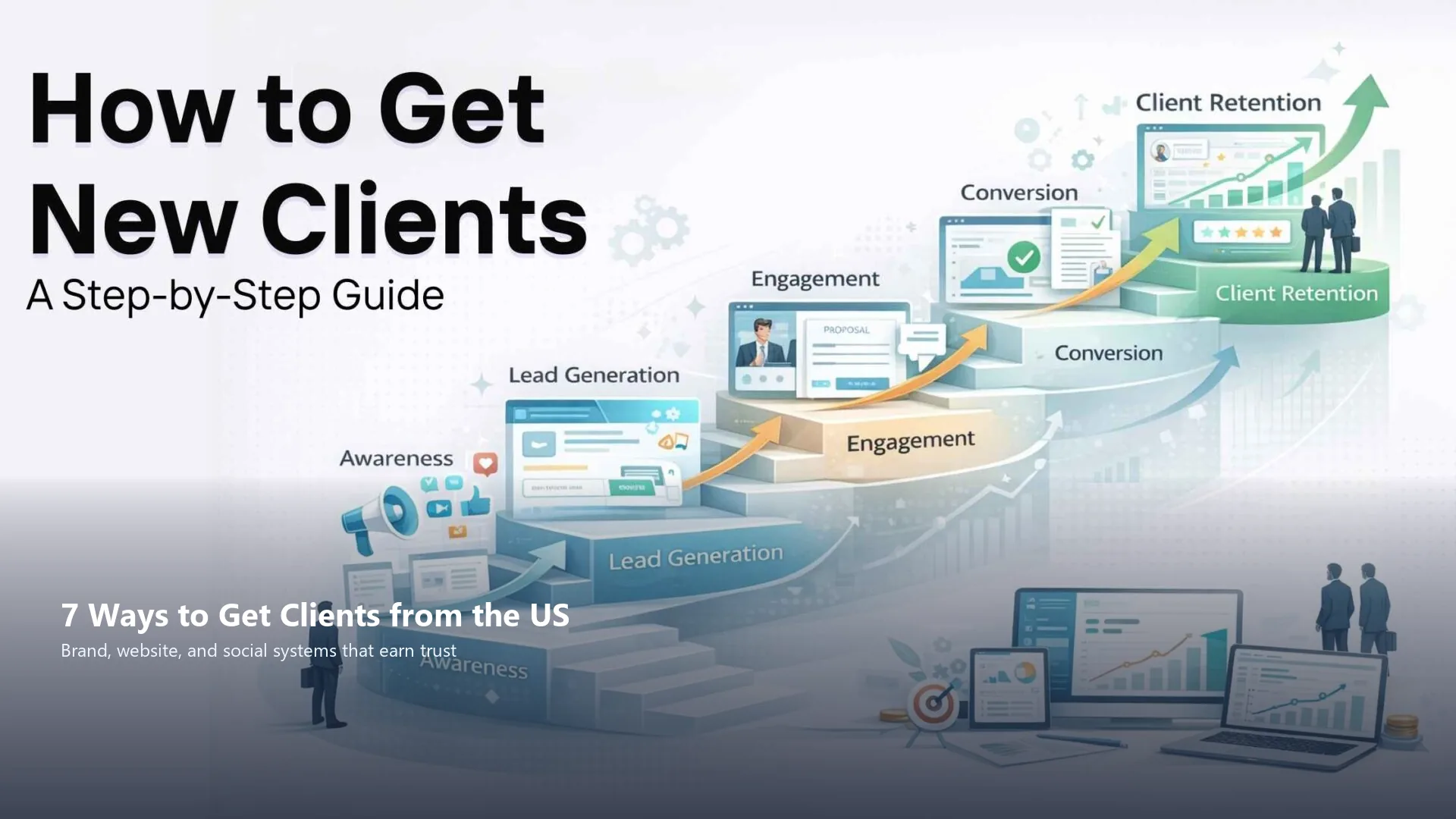
If you are asking how to get clients from the US, you are usually asking a branding and trust question, not only an outreach question. US buyers move quickly past vague offers, weak websites, and profiles that look unfinished. The real work is experience design: make your promise clear, visible, and easy to act on.
That exact question shows up often in operator communities, including an r/smallbusiness thread titled how to get clients from US. The ask is short, but the pain is familiar for freelancers, agencies, and product teams outside or inside the United States. This playbook stays faithful to that search intent without inventing win rates, fake testimonials, or guaranteed pipelines. It turns the question into seven practical methods for branding strategy, website UX, LinkedIn, Instagram, and marketplace-to-brand systems.
LinkedIn, Instagram, Fiverr, Upwork, Facebook, and your own website all appear in related searches for a reason. Channels differ. The trust problem is shared. Digital brand identity must travel with you across every surface a US prospect checks in the first five minutes.
US buyers often compare two or three vendors quickly. They open the site, skim LinkedIn, maybe check Instagram, then decide whether a reply is worth their time. If those surfaces disagree, you lose before the sales call. Treat acquisition as a designed brand experience, then add outreach volume.
1. Choose One US Niche and One Clear Offer Line
US clients do not hire "we do everything." They hire a sharp outcome for a sharp audience. Pick one niche and one offer line for the next 90 days: who it is for, what changes, and what the first engagement looks like. Write that line on your website hero, LinkedIn headline, and Instagram bio.
This is branding strategy before prospecting. Outreach volume on a muddy offer trains ignored messages. Clarity makes every channel work harder.
Name the niche in plain language. "US ecommerce brands that need weekly short-form video" is clearer than "creative marketing solutions." Specificity filters bad fits and attracts better conversations.
Practical move
Delete three secondary services from public pages for one quarter. Feature the offer US buyers ask about most.
2. Build a Brand-Ready Website US Buyers Trust
Your website is often the silent closer. US prospects click from LinkedIn, Instagram, or a marketplace and judge seriousness in seconds. Match colors, type, and proof language. Lead with the outcome. Show process. Make contact obvious on mobile.
Invest in website design that feels local-trustworthy even if your team is remote: clear English, specific case cues, time-zone friendly scheduling language, and no cluttered stock collage. Experience design here is commercial, not decorative.
If the site under-explains the offer, fix UX before you buy more ads or send more cold emails. Traffic without trust is expensive noise.
Add a simple next step US visitors can take without friction: calendar link, short form, or WhatsApp-style business chat if that fits your model. Ambiguous "contact us someday" pages leak interest.
Also check page speed and mobile readability. A beautiful desktop mockup that collapses on a phone still loses US buyers who browse between meetings. Trust includes performance.
3. Prove Outcomes with Case-Style Social Proof
US buyers look for evidence. Use before/after snapshots, process breakdowns, anonymized metrics when honest, and short client quotes you actually have permission to share. Do not invent numbers. Specific proof beats vague "trusted by brands worldwide" claims.
Place proof on the homepage, service pages, and the first posts prospects see. Social media branding should echo the same proof language so the brand feels consistent everywhere.
If you are early and proof is thin, show process transparently: frameworks, sample walkthroughs, and realistic timelines. Honest process still builds trust. Inflated claims destroy it.
4. Use LinkedIn with a Consistent Brand Voice
LinkedIn remains one of the strongest answers to how to get clients from LinkedIn for B2B and professional services. Make the profile match the website promise. Publish short posts that teach one problem and point to one next step. Comment in niche conversations with useful takes, not copy-paste pitches.
Operators who use social media systems usually win because templates and voice guidelines keep LinkedIn recognizable week after week. Consistency builds familiarity before the ask.
Batch content weekly. Spend the rest of the time on real conversations with people who match the niche. LinkedIn is a relationship surface first and a broadcast channel second.
When you message someone, reference a real detail from their company and connect it to your one offer line. Generic "quick question" openers signal spam. Specific relevance signals professionalism.
5. Pair Instagram and Short Video with the Same Promise
Instagram and short video help when buyers want to see personality and process. Demo the work. Show the workflow. Keep openings branded and end with a website or message next step. Random aesthetic content that ignores the offer line rarely converts US commercial interest.
Support drafting with AI content workflows, then edit for accuracy and voice. Tools speed production. They do not replace judgment about what a US buyer needs to believe.
Keep one visual system across Reels, carousels, and static posts. When Instagram looks like a different company than LinkedIn, trust resets. Social media branding is the habit of looking like one business everywhere.
Repurpose one strong case into a Reel, a carousel, and a LinkedIn post in the same week. That is how small teams look active without inventing seven unrelated ideas.
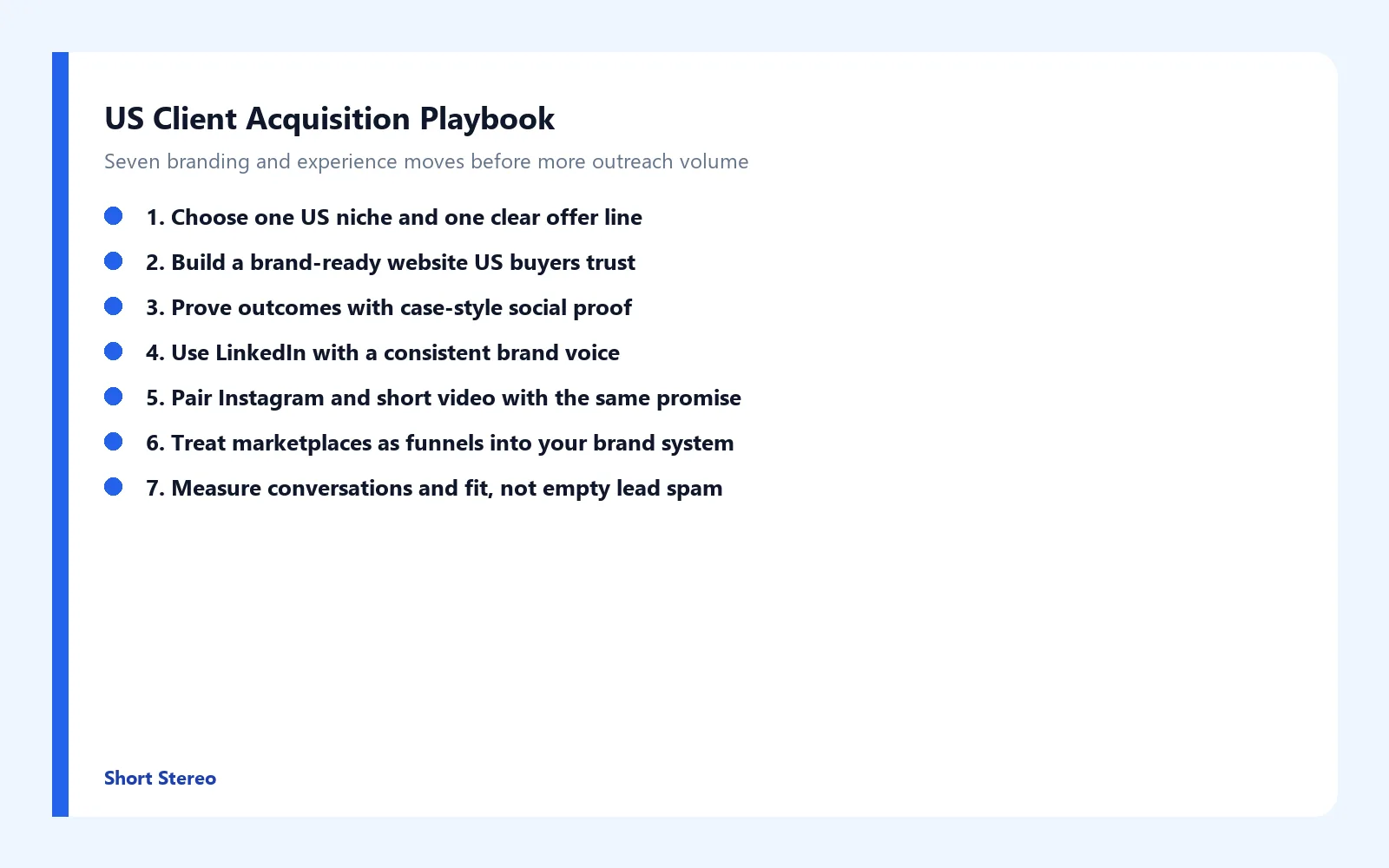
6. Treat Marketplaces as Funnels into Your Brand System
Fiverr and Upwork can answer how to get clients from freelancing platforms, especially early. Use them to learn demand language and gather proof. Then invite qualified buyers onto your brand-owned site and LinkedIn relationship. Marketplace profiles should look coherent: same promise, same visual cues, same professionalism as the website.
Staying forever in a price race is a business decision, not a branding strategy. Own the relationship when fit is strong.
Facebook groups and communities can help discovery too, but the same rule applies: show up with a clear promise and a brand-ready destination. Community spam without a credible site rarely converts serious US buyers.
Think of every marketplace and social profile as a door into the same storefront. If doors lead to different brands, prospects leave. If doors lead to one coherent system, conversations compound.
7. Measure Conversations and Fit, Not Empty Lead Spam
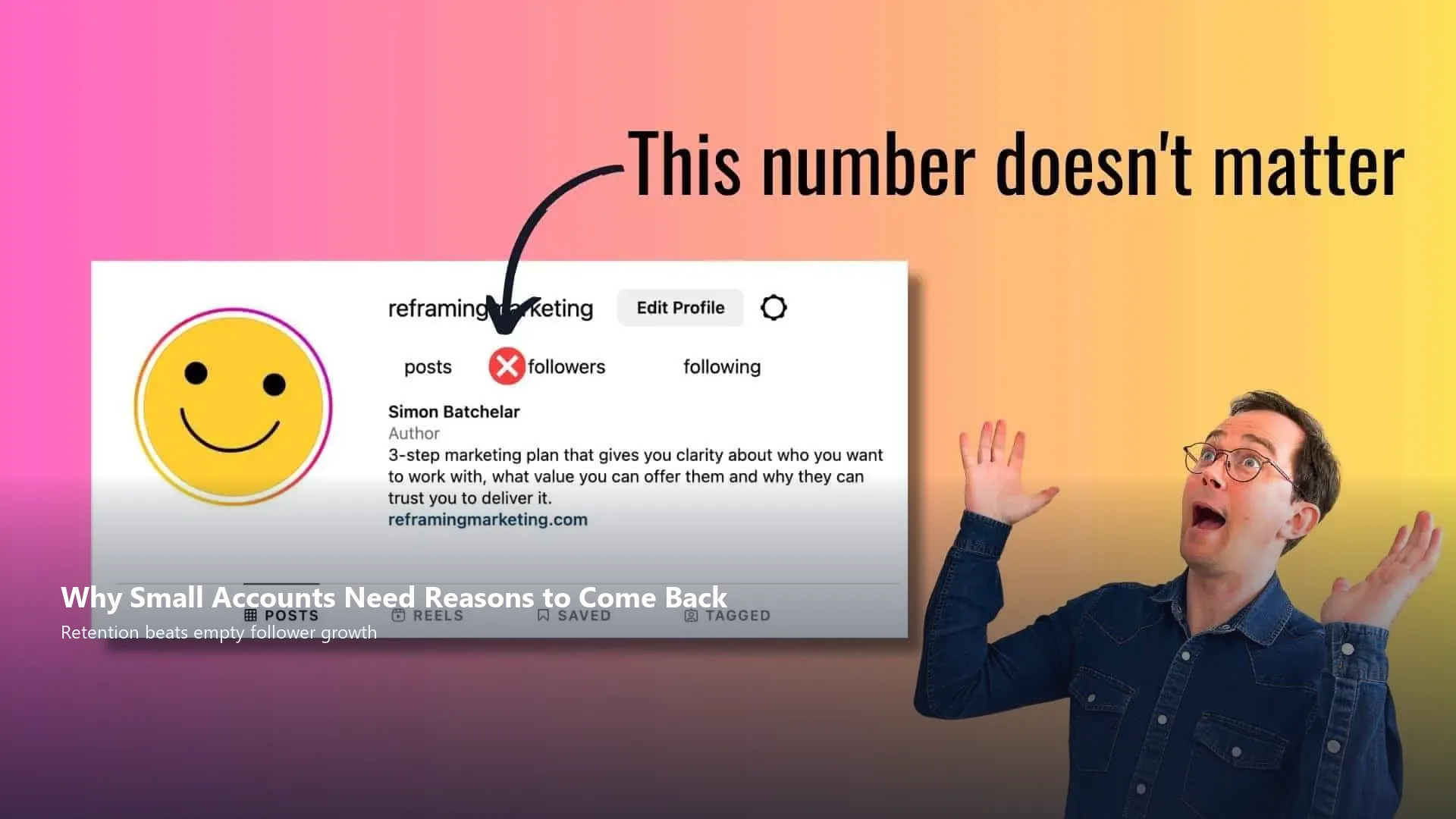
Track qualified conversations, booked calls, proposal fit, and retained relationships. Ignore vanity metrics like raw connection counts. A smaller set of US prospects who understand your offer beats a large list that never replies.
Never promise that LinkedIn, Instagram, Fiverr, Facebook, or a redesign will guarantee clients, sales, or rankings. Systems improve the conditions under which trust can form. Fit still decides the deal.
Review the pipeline weekly: niche clarity, website bounce on offer pages, LinkedIn conversation quality, and proposal fit. Fix the weakest trust surface before you scale the loudest channel.
How Short Stereo Helps Teams Win US Client Trust
After founders ask how to get clients from the US, the teams that improve usually fix offer clarity, website trust, and channel consistency together. Short Stereo helps connect those pieces so outreach has a clearer chance to turn into real conversations.
Conclusion
How to get clients from the US? Build a niche offer, a brand-ready website, honest proof, LinkedIn and Instagram systems that match the promise, marketplace profiles that funnel into owned channels, and metrics that value fit over spam. None of these moves guarantee clients, sales, or conversions. They improve the conditions under which US buyers can trust you. If you want help turning that playbook into design and content execution, visit shortstereo.com.
Frequently Asked Questions
How to get clients from the US?
Start with one niche offer US buyers understand, a brand-ready website, proof, and outreach on channels where those buyers already spend time, especially LinkedIn and a clear site path. Volume without trust rarely works. Agencies can help with branding and systems, but they do not guarantee clients, sales, or rankings.
How to get clients from LinkedIn?
Make your profile match your website promise, publish short proof-led posts, and start conversations around a specific problem. Avoid generic connection spam. Consistent digital brand identity on LinkedIn makes warm intros more likely than cold pitches alone.
How to get clients from a website?
Treat the site as a sales experience: clear outcome headline, proof, pricing or package cues when possible, and one contact path. Fast mobile UX and coherent branding matter as much as traffic. Website design should make US visitors feel they found a serious partner.
How to get clients from Instagram?
Use Instagram for proof and personality that match the same offer line as your site. Short video demos, process clips, and case-style carousels work better than random aesthetic posts. Link to a landing page that continues the promise.
How to get clients from Fiverr or Upwork without staying stuck there?
Use marketplaces to learn demand and collect early proof, then invite qualified buyers onto your brand-owned website and social systems. Platform profiles should look like a coherent brand, not a price race. Do not promise that marketplace gigs alone create a US pipeline.