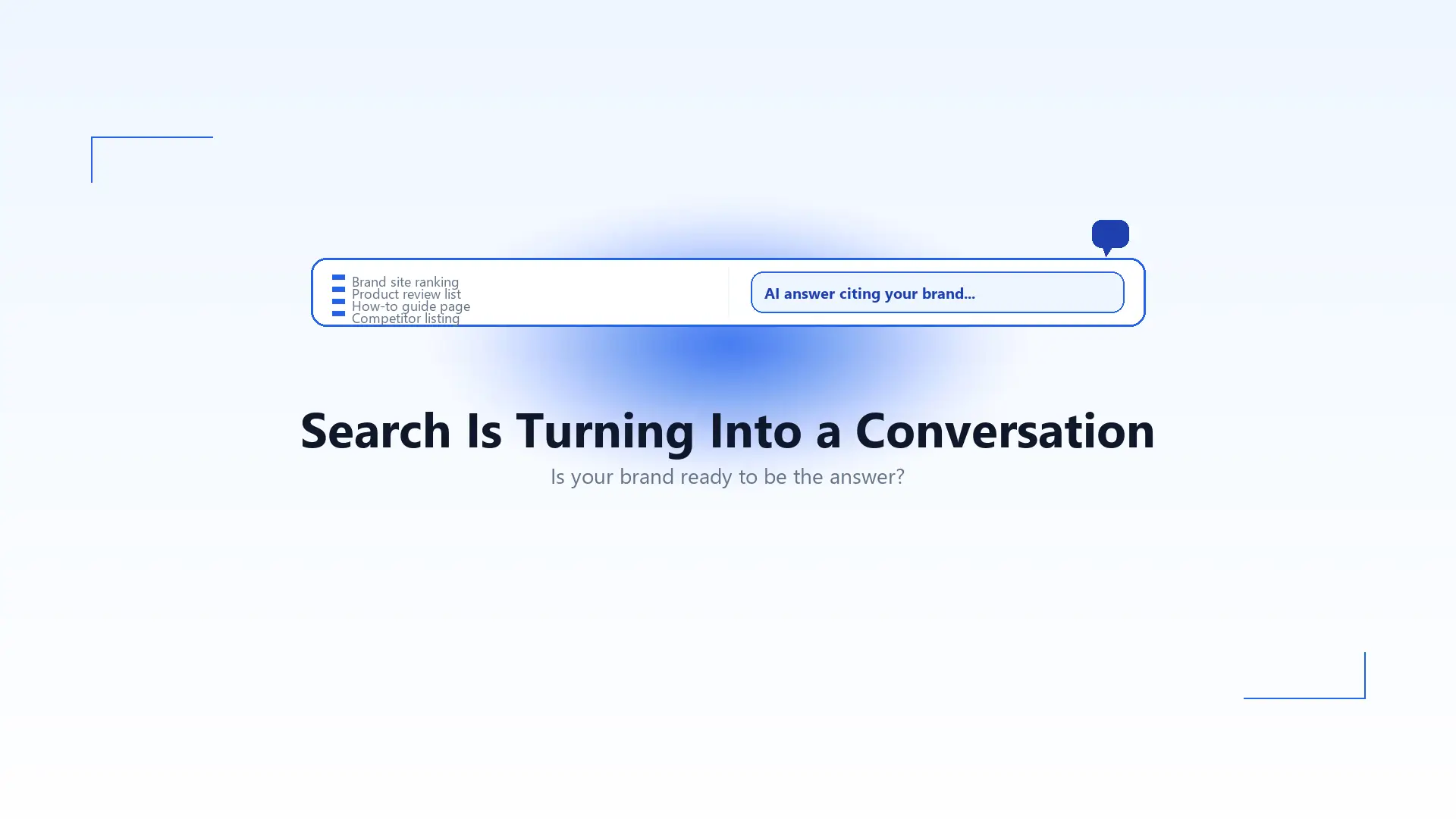
When a platform feels slow, buggy, or unreliable, users rarely open a support ticket. They leave. That is why Google Core Web Vitals became a mainstream search topic for founders, CMOs, and design leads: Google turned page experience into language teams can measure. But Core Web Vitals alone will not protect brand UX. The sharper question is which platform stability metrics catch experience degradation before it becomes churn, reputation damage, and wasted acquisition spend.
A recent UX Design brief highlighted five stability signals teams monitor to prevent that quiet erosion. Reframed for brand leaders, those signals sit next to Google Core Web Vitals as a practical scorecard for websites, apps, and digital products. This guide explains what each metric means for experience design, why users compare you to Instagram and Netflix, and what to implement this quarter.

Teams that already invest in experience design know the gap: a beautiful interface can still feel broken if the platform stumbles. Website design services worth using treat performance and clarity as brand materials, not afterthoughts.
Why Google Core Web Vitals Set the Search Demand Bar
People search Google Core Web Vitals because Google made the topic unavoidable for SEO and product quality. Largest Contentful Paint, Interaction to Next Paint, and Cumulative Layout Shift give teams a shared language for loading, responsiveness, and visual stability. That fame is useful. It gets executives to care about UX in numbers instead of vague complaints about a site that "feels off."
The trap is treating Core Web Vitals as the whole story. They measure critical moments on a page, but brand experience also includes checkout paths, login loops, form failures, and the long tail of slow requests that never show up in a tidy average. A homepage can pass vitals while the purchase flow quietly fails under load. UX design trends now push teams to connect SEO vitals with operational stability, because users feel both, and search rankings alone will not repair trust once it is lost.
For growth marketers, this is also a budget issue. Paid traffic that lands on an unstable experience raises acquisition cost while lowering conversion. Measuring stability next to Google Core Web Vitals gives a cleaner story for where design, engineering, and media spend should go first.
What Users Expect After Instagram and Netflix
Consumer experience has already moved. People spend hours in Instagram feeds and Netflix streams that feel instant enough to disappear into habit. That becomes the silent benchmark for every other digital brand interaction, a storefront, a SaaS onboarding flow, a booking form, a support portal. Fair or not, your product is judged against those daily defaults.
When your product hesitates, shifts layout, or errors mid-task, the comparison is emotional, not technical. Users do not say "our P99 is high." They say the brand feels unreliable. That is branding strategy territory as much as engineering territory. Visual polish cannot outrun repeated friction. After two or three failed attempts, many users will not give the brand another chance, especially when a competitor is one search away.
This is why platform stability belongs in experience design reviews, not only in incident postmortems. Design teams that preview loading, empty, and error states alongside happy paths reduce the gap between the brand story and the product people actually touch.
5 Platform Stability Metrics That Protect Brand UX
Here is the practical list. Use it beside Google Core Web Vitals, not instead of them.
1. P95 and P99 Response Times
Averages hide pain. If most requests are fast but the slowest 1% to 5% take seconds, a meaningful share of users experience friction on every visit. Track P95 and P99 on journeys that matter: signup, search, checkout, content load, authentication.
Ask whether the tail is stable over time, spikes under traffic, or worsens in specific regions. Those questions turn "site speed" into a brand-risk metric.
2. Error Rate by Endpoint
A low overall error rate can still wreck conversion if failures concentrate in payments, account creation, or a key API. Endpoint-level error rates expose where the brand promise breaks. Rising errors without an incident response are a monitoring gap, and users feel that gap first.

3. Availability and Planned Downtime Ratio
Uptime is a classic metric, but the mix matters. Planned maintenance shows operational control. Unplanned outages train users to distrust the product. Brands that communicate planned windows and recover cleanly protect digital brand identity. Brands that go dark without context look careless, even if the logo is perfect.
4. Session Error Rate and User-Facing Failures
Infrastructure can fail silently. Users only remember the failures they see: a form that will not submit, a blank state after tap, a feature that returns an error. Session error rate answers the brand question: how often does something visibly go wrong while someone is trying to get value?
Watch the pattern across releases. If every deploy briefly raises session failures, your release process is teaching users that updates equal risk.
5. Core Web Vitals Across Device Types
Google Core Web Vitals still belong on this list because they are the most searchable and most shared language for page experience. The upgrade is segmentation. Desktop scores that look healthy while mobile fails mean most consumer traffic may be living a different brand. Split LCP, INP, and CLS by device, then fix the experience users actually have.
Branding and Experience Design Implications
These metrics change how teams talk about branding strategy. Visual systems, motion, and content still matter, but reliability is now part of the brand surface. A campaign that drives traffic into a fragile experience burns trust faster than it builds awareness.
For design leads, that means performance and failure states belong in the design system: skeleton screens that do not thrash layout, error copy that sounds human, empty states that guide recovery, and loading patterns that feel intentional. Social media branding also has to stay honest. Promoting a "seamless" product while the app stalls under load creates a credibility gap people notice.

If your team is rebuilding key journeys, connect design decisions to these metrics early. A strong website design brief should include target response tails, error handling, and mobile Core Web Vitals, not only moodboards.
What Businesses Should Implement This Quarter
Design and Product
Map the five metrics to your top three user journeys. Add failure and slow-state designs to those flows. Treat layout shift and delayed interaction as brand defects, not "tech debt" language that never reaches the roadmap.
Social and Content
Align public claims with lived experience. If you publish speed or reliability promises, verify them first. A consistent social media system helps avoid overpromising while you improve the product underneath.
AI Content and Operations
Use AI to summarize incident patterns and draft clearer status updates, but keep humans on tone and accuracy. AI content and growth systems work best when they support clarity during stressful moments, not when they automate vague reassurances.
How Short Stereo Helps Brands Apply These Metrics
Short Stereo helps teams translate stability into experience design: websites that load with intention, interfaces that recover cleanly, and content systems that match what the product can actually deliver. The goal is not vanity dashboards. The goal is a brand that feels as reliable as it looks when traffic spikes, campaigns launch, or a release lands on a Friday afternoon.
A Simple Platform Stability Checklist
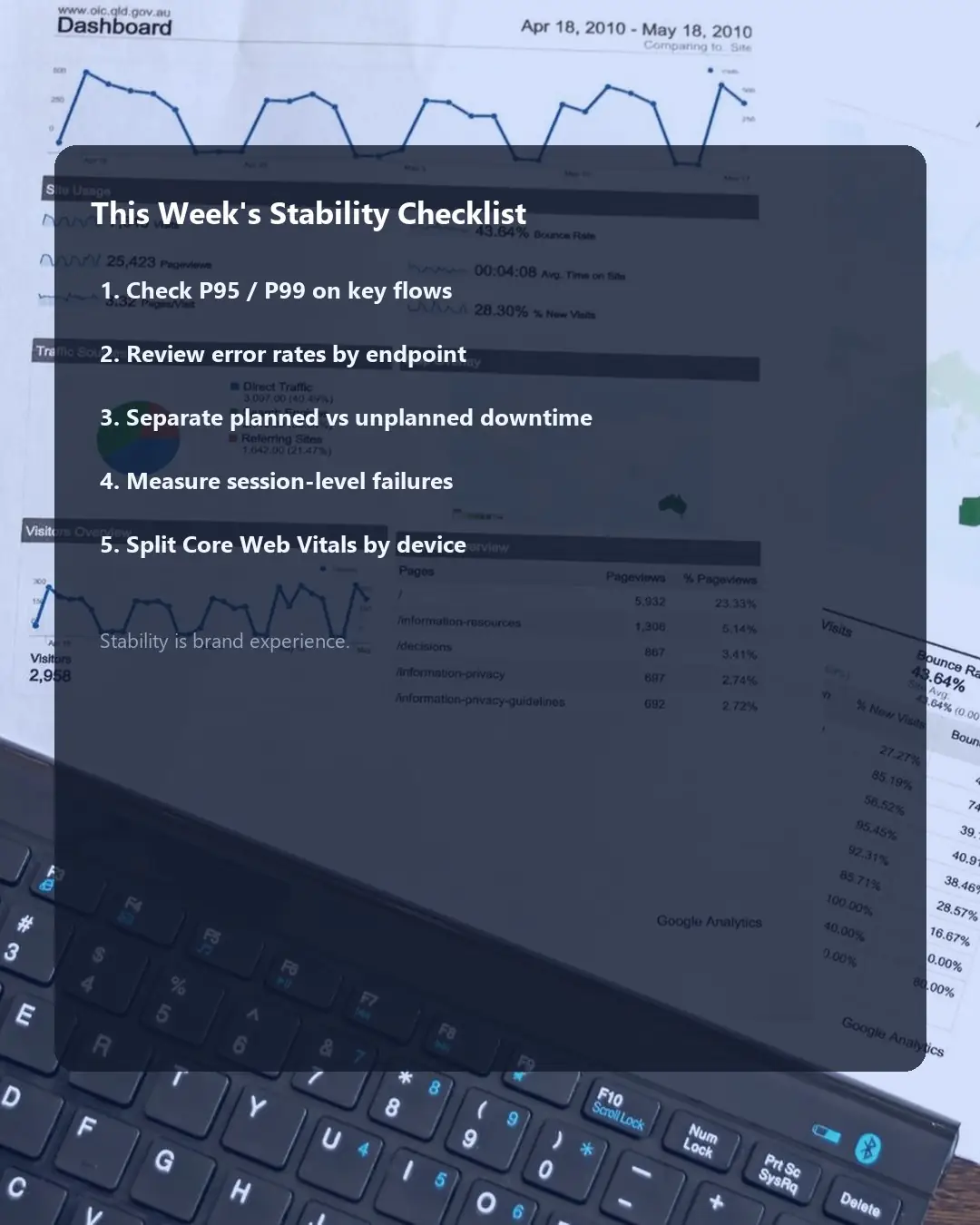
Run this in the next seven days:
- Confirm Google Core Web Vitals for mobile and desktop separately.
- Report P95 and P99 on signup, search, and checkout (or your equivalents).
- Break error rates down by endpoint on conversion-critical paths.
- Review the last 90 days of planned versus unplanned downtime.
- Measure session error rate after each major release.
- Assign an owner for each metric in design, product, and engineering.

Conclusion
Google Core Web Vitals made page experience famous, and that fame is earned. Brands still need a wider stability lens: response-time tails, endpoint errors, downtime quality, session failures, and device-split vitals. Those five metrics protect branding, experience design, and business decisions before users quietly leave. Treat stability as part of digital brand identity now, and your product will feel as strong as your positioning. When you want help turning that into a concrete site and content system, visit shortstereo.com.
Frequently Asked Questions
What are Google Core Web Vitals?
Google Core Web Vitals are Google's main page-experience metrics for loading, interactivity, and visual stability. They matter for SEO and for how fast and stable a website feels to real users.
Are Core Web Vitals enough to protect brand UX?
No. Core Web Vitals are essential, but brands also need response-time tails, endpoint error rates, downtime quality, and session-level failures to catch experience degradation early.
Why do Instagram and Netflix set the bar for platform stability?
People compare every product to the apps they use daily. If Instagram or Netflix feels instant, a slow checkout or flaky form on your site feels like a broken brand.
What should a marketing or design team track first?
Start with P95/P99 on key journeys, endpoint errors on conversion paths, planned versus unplanned downtime, session error rate, and Core Web Vitals split by device.
How does this affect branding strategy?
Stability is part of digital brand identity. A polished visual system cannot rescue a product that fails mid-task. Reliability is now a brand message users feel.